Showing posts with label Pico-Union. Show all posts

Thursday, April 13, 2023

The Militant's Epic CicLAvia Tour XLIV!!


Springtime is here! Dodger baseball is in full swing (pitch clock and all...), wildflowers are in bloom, our local transverse mountain ranges are significantly greener in color, and the second of eight CicLAvias in 2021 (the 44th iteration of Los Angeles' open streets event) is upon us this weekend, this time running four miles through the southern end of Central Los Angeles. It's not a new route - The "Mid-City Meets Pico-Union" alignment was last done on June 30, 2019, and the first "To The Sea" CicLAvia route on April 21, 2013 ran through the Venice Boulevard section of this route. Sandwiched between Hancock Park/Koreatown to the north and South Los Angeles al sur, the Mid-City neighborhoods feature a diverse mix of African American, Latín, Immigrant African, Korean and Caribbean residents.

It's an area that was an "urban suburb" of streetcar corridors (The Pacific Electric on Venice, the Los Angeles Railway on Washington), houses, shops and houses of worship in popular early 20th-century aesthetic styles, with well-defined artistic pockets, both historic and contemporary. As usual, see you or not see you on the streets this Sunday!

1. Powers Place - Shortest Street in Los Angeles
1904
Powers Place and Alvarado Terrace, Pico-Union

You all know that the longest street in Los Angeles is Sepulveda Boulevard, right? But the shortest street in the city is right here! It's called Powers Place, a whopping 30 feet in length! Named after onetime Los Angeles City Council president (1900-1902) Pomeroy Powers, who spearheaded the effort to create a city park (originally named Terrace Park) at the neighborhood of Craftsman, Tudor and Victorian-style houses built in the early 1900s decade. All six historic houses along Alvarado Terrace were designated by the City as Historic-Cultural Monuments in 1971.


2. Iglesia Adventista Central/1st Church of Christ, Scientist
1912
1366 S. Alvarado Street, Pico-Union

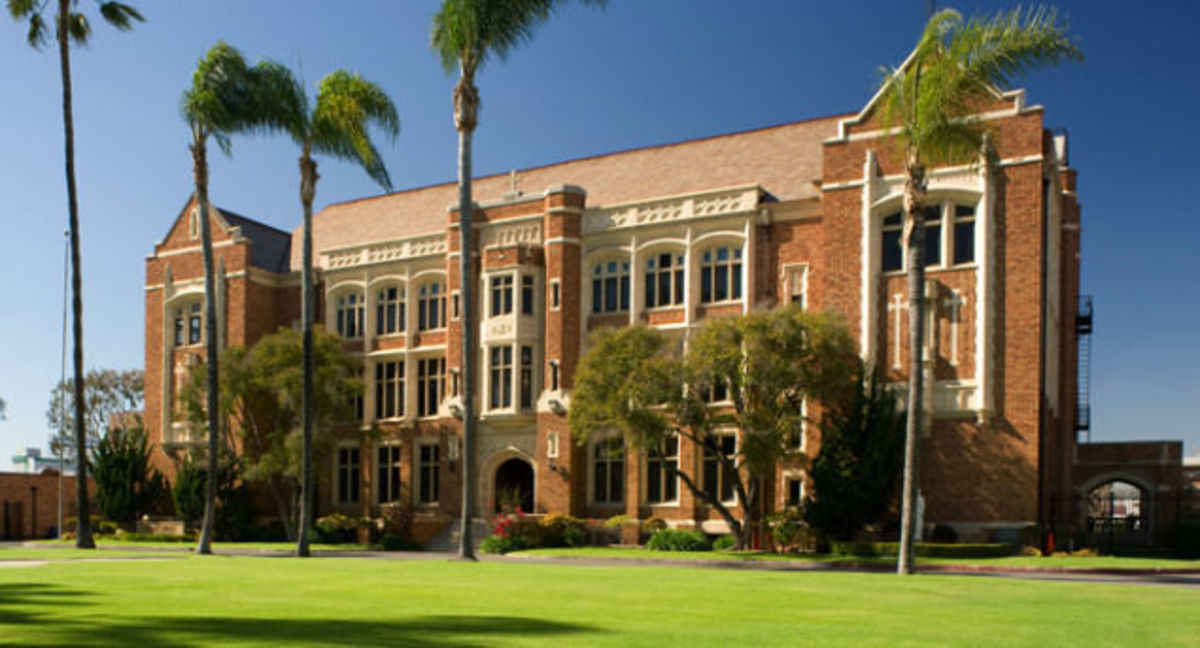
Currently the site of a 7th Day Adventist Church catering to a Spanish-speaking congregation, this 107-year old Mediterranean Romanesque Revival house of worship has changed owners - even denominations - and has had a long, and even dark, history behind it. Built in 1912 as the 1st Church of Christ, Scientist, it served its Christian Science congregation for six decades, before it became a Jewish synagogue for a few years. In the mid-1970s, it became the Los Angeles location of The People's Temple, the cult founded by Jim Jones, who infamously led over 900 his followers to live in a commune in Jonestown, Guyana, and consequently, to die in the largest mass-suicide in history (which spawned the euphemism, "Don't drink the Kool-Aid"). The current Adventist church has been there since the late 1970s, since, Jim Jones uh...couldn't really use it anymore. The church structure was inducted into the National Register of Historic Sites in 1984.


3. Hoover Street - Original City Boundary
1850
Hoover Street, Pico-Union

The CicLAvia route begins/ends at this street, but note how all the streets east of Hoover run in a diagonal fashion, and all the streets west run perfectly east-west. Yes, Virginia, Los Angeles was not always big and sprawled. From 1850 to 1896, Hoover was the original western boundary of the City of Los Angeles, which meant that over 120 years ago, you'd be on the Westside. On April 2, 1896, the "Western Addition" was annexed into the City, extending the boundaries a few miles west to Arlington Avenue (more on this later...)


4. Loyola High School
1917
1901 Venice Blvd, Byzantine-Latino Quarter

Founded in 1865 at St. Vincent Court off of 7th Street in Downtown (a spot on the "Heart of LA" CicLAvia Tour), this Jesuit-run Catholic boys' high school is the oldest continuously-running educational institution in Los Angeles. The school moved to its current location in 1917 after splitting from the affiliated Loyola Marymount University, and after Irish philanthropist Thomas P. Higgins (who owned the Higgins Building on 2nd and Main in Downtown) donated land in what was then the southwestern corner of the city. Home of the Cubs, the school celebrated its sesquicentennial in 2015. Famous alums include volleyball great Sinjin Smith, Vons grocery founder Wilfred Von der Ahe, broadcaster Stan Chambers and holy Homeboy Fr. Greg Boyle.


5. Angelus-Rosedale Cemetery
1884
1831 W. Washington Blvd, West Adams

This 65-acre memorial park, originally established as Rosedale Cemetery, has been serving Los Angeles for nearly 140 years, and is the final resting place of a number of historic Angelenos, such as Port of Los Angeles founder Phineas Banning, the City of Burbank's namesake Dr. David Burbank, jazz legend Eric Dolphy, actress Hattie McDaniel and mayors George Alexander, Arthur C. Harper, Owen McAleer, John G. Nichols, Frank Rader and Frederick T. Woodman. One of the most notable graves is that of Catalina Island developer George Shatto, who is interred in a pyramid (pictured above)!

6. Westmoreland Heights Tract Gateway
1902
Westmoreland Avenue and Venice Boulevard, Harvard Heights

In an era before cities erected standard street signs on corners, tract home developments established concrete or masonry gateway monuments bearing the name of the development as well as the street. This one bears the name of the Westmoreland Heights tract, established in 1899, featuring homes built in the Craftsman, Tudor/Craftsman and American Foursquare styles. Many of the residents were the owners of large local businesses. If you notice, the sign facing Venice Blvd bears the name "16th Street." West of Downtown, 16th Street is nowhere to be found on any maps (not even in La Guía de los Hermanos Tomas) - that's because 16th Street was re-named Venice Boulevard in 1932.

7. Ray Charles RPM International Studios
1964
2107 W. Washington Blvd, Harvard Heights.

Just a few blocks south of the CicLAvia route, this 11,488 square foot, two -story building, designed by Joe Adams and Ray Charles himself, opened in 1964 as the legendary musician's personal recording studio and offices (he lived in nearby Leimert Park at the time). One of his biggest hits, "Georgia On My Mind" was recorded here, as well as his 2004 Grammy-winning swan song album, Genius Loves Company. It was designated as a Historic-Cultural Monument by the City of Los Angeles in 2004, just prior to Charles' death, and since 2010 functions as the Ray Charles Memorial Library, a museum dedicated to the singer's career, featuring free tours of the facility (by appointment) on Mondays thru Wednesdays.


8. Arlington Ave - Old City Boundary
1909
Arlington Ave, Arlington Heights

Continuing the Los Angeles City Boundary history, Arlington Avenue was once the westernmost border of the City from 1896 to 1909, when the Colegrove Addition (which stretched north towards Hollywood) was annexed into the City. Note how the street dramatically widens west of Arlington - that, of course, was to accommodate both automobiles and the Pacific Electric Red Car tracks, which run the rest of the way along Venice Blvd.


9. Washington Square Market/Swap Meet
1964
4060 Washington Blvd, Mid-City

This shopping center, built in the mid-1960s used to feature a Ralphs supermarket (hence the vestigal red oval sign) and local shops. Since the 1980s the shopping center has hosted an indoor swap meet, akin to the large Slauson Swap Meet in South Los Angeles, an indoor bazaar featuring clothing, shoes, sporting goods, repair/service stalls, salons and eateries owned by upstart immigrant entrepreneurs.


10. St. Paul's Catholic Church
1937
4120 Washington Blvd, Mid-City

Originally established on the site of a convent in 1917 among bean fields and oil derricks, the current Romanesque church building (inspired by the Basilica Papale San Paolo fuori le Mura in Rome) was built 20 years later and designed by famed Los Angeles architects John C. Austin and Frederick Ashley, who also designed the Griffith Observatory (which opened two years earlier). Today, St. Paul's serves a Spanish, English and Korean-speaking congregation.


11. Wellington Square
1914
Victoria Avenue, Wellington Road, Virginia Road and Buckingham Road (south of Washington Boulevard), Mid-City

Developed by M.J. Nolan on land formerly owned by George L. Crenshaw (Yup - that Crenshaw), this four-block neighborhood features over 200 Spanish Colonial, Tudor, French Norman, Craftsman and Revival-style residences. Today, the neighborhood is starting to get Capital "G," but you can check out their weekly Farmers' Market on the parking lot at Wellington Road and Washington Boulevard, also happening during CicLAvia Sunday (and every Sunday) between 9 a.m. and 1 p.m.


12. First Presbyterian Church of Los Angeles
1924
1809 West Boulevard, Mid-City

This Presbyterian church community, which moved several times around Los Angeles in its 136-year history, settled at this location in 1924. The congregation became predominantly African American in makeup in the 1960s, which it remains today, although the church shares the building with a separate Korean church. This Gothic Revival church structure was also designed by John C. Austin and Frederick Ashley (architects of St. Paul's down the street, remember?), along with Frederic Roehrig, who designed Pasadena's iconic Hotel Green. Check out the old-school incinerator chimney facing Washington Blvd!


13. Nate Holden Performing Arts Center/Ebony Showcase Theater
2004/1950
4718 Washington Blvd, Mid-City

Named after the longtime African American Los Angeles city councilman (1987-2002), this City-owned facility, which opened in 2004, hosts community-based performing arts and arts education programs. It was built on the site of the Ebony Showcase Theater, the first African American-owned theater building in Los Angeles, which was founded in 1950 by actor Nick Stewart (who voiced Brer Bear in Disney's "Song of the South") and his wife Edna. That theater featured community-based performing arts programs which ran until the 1998, when the City's Community Redevelopment Agency took over the Northridge earthquake-damaged building by eminent domain.


14. Trabue Pittman Building/Willing Workers Building
1931
4801 Washington Blvd, Mid-City

This Art Deco structure, built in 1931 at the northwest corner of Washington and Rimpau (where the Los Angeles Railway's W Line ended) was designed by celebrated architect S. Charles Lee. Owned by the Tabue Pittman Corporation, it was leased to various businesses over the years, including an F.W. Woolworth's store and a Bank of America branch. Today it is the home of Willing Workers, Inc, a non-profit that trains developmentally-disabled adults for workforce employment.


15. St. Elmo Village
1969
4830 St. Elmo Drive, Mid-City

This unique artists community was founded by the late African American artist Rozzell Sykes and his nephew Roderick, who purchased several homes in the neighborhood to save them from demolition and create a multicultural artists' community as an urban experiment. The community organizes the annual St. Elmo Festival every May to celebrate the arts. Over 50 years later, now run by Roderick Sykes, the community is still going strong.


16. U.S. Post Office, West Adams Ray Charles Station
1983
4960 W. Washington Blvd, Mid-City

This post office building, which opened in 1983 and serves the 90016 ZIP code, was dedicated as the Ray Charles Station U.S. Post Office in August 2005, in memory of the one of neighborhood's most prominent figures, whose RPM International Studios is located just a mile and a half east (See #7 on this guide). The post office joins other facilities named after legendary musical artists, such as Nat King Cole on Western and 3rd and Marvin Gaye, on Vermont and 35th.

Happy CicLAvia!

BONUS: THE OFFICIAL MILITANT ANGELENO EPIC CICLAVIA TOUR FOOD GUIDE!


1. Dino's Chicken and Burgers
2575 W Pico Blvd, Los Angeles, CA 90006
www.dinoschickenandburgers.com

Get the Chicken and Fries. French fries, drenched in spicy grilled chicken grease. Served with cole slaw and tortillas. All for $7.95.

2. Papa Cristo's
2771 W Pico Blvd, Los Angeles, CA 90006
papacristos.com

They're one of the reasons (along with St. Sophia's Orthodox Church and the annual Greek Festival) for the "Byzantine" part in the Byzantine-Latino Quarter. One of Los Angeles' iconic long-time eateries for a Hellas-good meal.

3. Pupusa Stand

S. Bronson Avenue, south of Washington Boulevard, Mid-City.

Nice neighborhood sidewalk pupusa stand. Not guaranteed to be here during CicLAvia, but they're usually there on Sundays to serve churchgoers from across the street. Stop by to check it out!

4. Gish Bac
4163 W Washington Blvd, Los Angeles, CA 90018
gishbac.com

A nice Oaxacan option in Mid-City to get your mole on.

5. Simply D'Licious
4641 W Washington Blvd, Los Angeles, CA 90016
www.simplydliciousca.com

If Soul Food is what you're craving on CicLAvia Sunday, this is just the place, but don't be surprised if it's crowded or there's a line forming at the door, as it's already a popular local spot on normal Sundays.

6. Roscoe's House of Chicken and Waffles
1865 S La Brea Ave, Los Angeles, CA 90019
https://www.roscoeschickenandwaffles.com/

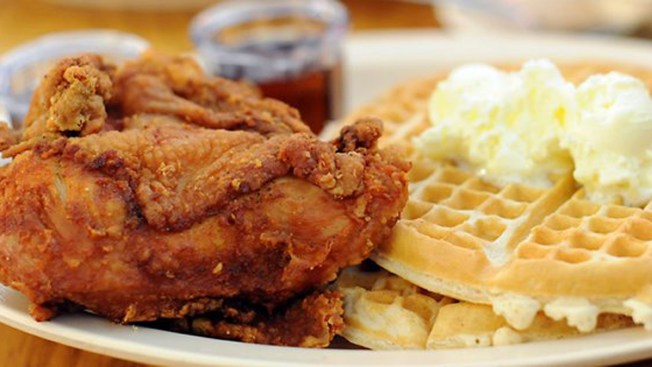
The classic, well-loved, presidentially-endorsed Pico location may now be gone, but this modern replacement for it is right here if you're craving some 'Scoes.

7. Leo's Tacos Truck
1515 South La Brea Ave, Los Angeles, CA 90019
leostacostruck.com

The O.G. location of what is regarded as the best Al Pastor in town, long lines form at the parking lot of this Sinclair gas station every evening, but you just might have a chance to get your trompo with the piña on the top with a shorter wait during CicLAvia.

Enjoy this Epic CicLAvia Tour guide? Show some support to The Militant Angeleno via PayPal!

Thursday, June 27, 2019

The Militant's Epic Militant CicLAvia Tour XXXI!!!


Click here to view larger map!

Happy Summer, everyone! The third (of six!) CicLAvia of 2019 and the 31st iteration of Los Angeles' open streets event is here again, this time running through the southern end of Central Los Angeles. While technically not a new route (The first "To The Sea" CicLAvia alignment in April, 2013 ran through the Venice Boulevard section of this route), this does bring the communities of Los Angeles' Mid-City into the CicLAvia fold for the first time. Sandwiched between Hancock Park/Koreatown to the north and South Los Angeles al sur, the Mid-City neighborhoods feature a diverse mix of African American, Latín, Immigrant African, Korean and Caribbean residents.

It's an area that was an "urban suburb" of streetcar corridors (The Pacific Electric on Venice, the Los Angeles Railway on Washington), houses, shops and houses of worship in popular early 20th-century aesthetic styles, with well-defined artistic pockets, both historic and contemporary. So, see you or not see you on the streets this Sunday! And here we go...

1. Powers Place - Shortest Street in Los Angeles
1904
Powers Place and Alvarado Terrace, Pico-Union

You all know the longest street in Los Angeles, right? It's Sepulveda Boulevard. But what's the shortest street in the city? It's right here! It's Powers Place, a whopping 30 feet in length! Named after Los Angeles City Council president Pomeroy Powers, who spearheaded the effort to create a city park (originally named Terrace Park) at the neighborhood of Craftsman, Tudor and Victorian-style houses built in the early 1900s decade. All six historic houses along Alvarado Terrace were designated by the City as Historic-Cultural Monuments in 1971.

2. Iglesia Adventista Central/1st Church of Christ, Scientist
1912
1366 S. Alvarado Street, Pico-Union

Currently the site of a 7th Day Adventist Church catering to a Latín congregation, this 107-year old Mediterranean Romanesque Revival house of worship has changed owners, and even denominations, and has had a long, and even dark, history behind it. Built in 1912 as the 1st Church of Christ, Scientist, it served its Christian Science congregation for six decades, before it became a Jewish synagogue for a few years. In the mid-1970s, it became the Los Angeles location of The People's Temple, the cult founded by Jim Jones, who infamously led over 900 his followers to live in a commune in Jonestown, Guyana, and consequently, to die in the largest mass-suicide in history (which spawned the euphemism, "Don't drink the Kool-Aid"). The current Adventist church has been there since the late 1970s, since, Jim Jones uh...couldn't really use it anymore. The church structure was inducted into the National Register of Historic Sites in 1984.

3. Hoover Street - Original City Boundary
1850
Hoover Street, Pico-Union

CicLAvia only runs for a few yards on this street, but note how all the streets east of Hoover run in a diagonal fashion, and all the streets west run perfectly east-west. Yes, Virginia, Los Angeles was not always big and sprawled. From 1850 to 1896, Hoover was the original western boundary of the City of Los Angeles, which meant that over 120 years ago, you'd be on the Westside. On April 2, 1896, the "Western Addition" was annexed into the City, extending the boundaries a few miles west to Arlington Avenue (more on this latter...)

4. Loyola High School
1917
1901 Venice Blvd, Byzantine-Latino Quarter

Founded in 1865 at St. Vincent Court off of 7th Street in Downtown (a spot on the "Heart of LA" CicLAvia Tour), this Jesuit-run Catholic boys' high school is the oldest continuously-running educational institution in Los Angeles. The school moved to its current location in 1917 after splitting from the affiliated Loyola Marymount University, and after Irish philanthropist Thomas P. Higgins (who owned the Higgins Building on 2nd and Main in Downtown) donated land in what was then the southwestern corner of the city. Home of the Cubs, the school celebrated its sesquicentennial in 2015. Famous alums include volleyball great Sinjin Smith, Vons grocery founder Wilfred Von der Ahe, broadcaster Stan Chambers and holy Homeboy Fr. Greg Boyle.

5. Angelus-Rosedale Cemetery
1884
1831 W. Washington Blvd, West Adams

This 65-acre memorial park, originally established as Rosedale Cemetery, has been serving Los Angeles for the past 135 years, and is the final resting place of a number of historic Angelenos, such as Port of Los Angeles founder Phineas Banning, the City of Burbank's namesake Dr. David Burbank, jazz legend Eric Dolphy, actress Hattie McDaniel and mayors George Alexander, Arthur C. Harper, Owen McAleer, John G. Nichols, Frank Rader and Frederick T. Woodman. One of the most notable graves is that of Catalina Island developer George Shatto, who is interred in a pyramid!

6. Westmoreland Heights Tract Monument
1902
Westmoreland Avenue and Venice Boulevard, Harvard Heights

In an era before cities erected standard street signs on corners, tract home developments established concrete or masonry monuments bearing the name of the development as well as the street. This one bears the name of the Westmoreland Heights tract, established in 1899, featuring homes built in the Craftsman, Tudor/Craftsman and American Foursquare styles. Many of the residents were the owners of large local businesses. If you notice, the sign facing Venice Blvd bears the name "16th Street." West of Downtown, 16th Street is nowhere to be found on any maps (not even in La Guía de los Hermanos Tomas) - that's because 16th Street was re-named Venice Boulevard in 1932.

7. Ray Charles RPM International Studios
1964
2107 W. Washington Blvd, Harvard Heights.

This 11,488 square foot, two -story building, designed by Joe Adams and Ray Charles himself opened in 1964 as the legendary musician's personal recording studio and offices (he lived in nearby Leimert Park at the time). One of his biggest hits, "Georgia On My Mind" was recorded here, as well as his 2004 Grammy-winning swan song album, Genius Loves Company. It was designated as a Historic-Cultural Monument by the City of Los Angeles in 2004, just prior to Charles' death and since 2010 functions as the Ray Charles Memorial Library, a museum dedicated to the singer's career, featuring free tours of the facility (by appointment) on Mondays thru Wednesdays.

8. Arlington Ave - Old City Boundary
1909
Arlington Ave, Arlington Heights

Continuing the Los Angeles City Boundary history, Arlington Avenue was once the westernmost border of the City from 1896 to 1909, when the Colegrove Addition (which stretched north towards Hollywood) was annexed into the City. Note how the street dramatically widens west of Arlington - that, of course, was to accommodate both automobiles and the Pacific Electric Red Car tracks, which run the rest of the way along Venice Blvd.

9. Washington Square Market/Swap Meet
1964
4060 Washington Blvd, Mid-City

This shopping center, built in the mid-1960s used to feature a Ralphs supermarket (hence the vestigal red oval sign) and local shops. Since the 1980s the shopping center has hosted an indoor swap meet, akin to the large Slauson Swap Meet in South Los Angeles and the soon-to-close Union Discounts in East Hollywood, an indoor bazaar featuring clothing, shoes, sporting goods, repair/service stalls, salons and eateries owned by upstart immigrant entrepreneurs.

10. St. Paul's Catholic Church
1937
4120 Washington Blvd, Mid-City

Originally established on the site of a convent in 1917 among bean fields and oil derricks, the current Romanesque church building (inspired by the Basilica Papale San Paolo fuori le Mura in Rome) was built 20 years later and designed by famed Los Angeles architects John C. Austin and Frederick Ashley, who also designed the Griffith Observatory (which opened two years earlier). Today, St. Paul's serves a Spanish, English and Korean-speaking congregation. Their annual Parish Festival also happens to be scheduled concurrently with CicLAvia, so one can check out the rides, games and food in their parking lot.

11. Wellington Square
1914
Victoria Avenue, Wellington Road, Virginia Road and Buckingham Road (south of Washington Boulevard), Mid-City

Developed by M.J. Nolan on land formerly owned by George L. Crenshaw (Yup,, that Crenshaw), this four-block neighborhood features over 200 Spanish Colonial, Tudor, French Norman, Craftsman and Revival-style residences. Today, the neighborhood is starting to get Capital "G," but you can check out their weekly Farmers' Market on the parking lot at Wellington Road and Washington Boulevard, also happening on Sunday between 9 a.m. and 1 p.m.

12. First Presbyterian Church of Los Angeles
1924
1809 West Boulevard, Mid-City

This Presbyterian church community, which moved several times around Los Angeles in its 132-year history, settled at this location in 1924. The congregation became predominantly African American in makeup in the 1960s, which it remains today, although the church shares the building with a separate Korean church. This Gothic Revival church structure was also designed by John C. Austin and Frederick Ashley (architects of St. Paul's down the street, remember?), along with Frederic Roehrig, who designed Pasadena's iconic Hotel Green. Check out the old-school incinerator chimney facing Washington Blvd!

13. Nate Holden Performing Arts Center/Ebony Showcase Theater
2004/1950
4718 Washington Blvd, Mid-City

Named after the longtime African American Los Angeles city councilman (1987-2002), this City-owned facility, which opened in 2004, hosts community-based performing arts and arts education programs. It was built on the site of the Ebony Showcase Theater, the first African American-owned theater building in Los Angeles, which was founded in 1950 by actor Nick Stewart (who voiced Brer Bear in Disney's "Song of the South") and his wife Edna. That theater featured community-based performing arts programs which ran until the 1998, when the City's Community Redevelopment Agency took over the Northridge earthquake-damaged building by eminent domain.

14. Trabue Pittman Building/Willing Workers Building
1931
4801 Washington Blvd, Mid-City

This Art Deco structure, built in 1931 at the northwest corner of Washington and Rimpau (where the Los Angeles Railway's W Line ended) was designed by celebrated architect S. Charles Lee. Owned by the Tabue Pittman Corporation, it was leased to various businesses over the years, including an F.W. Woolworth's store and a Bank of America branch. Today it is the home of Willing Workers, Inc, a non-profit that trains developmentally-disabled adults for workforce employment.

15. St. Elmo Village
1969
4830 St. Elmo Drive, Mid-City

This unique artists community was founded by the late African American artist Rozzell Sykes and his nephew Roderick, who purchased several homes in the neighborhood to save them from demolition and create a multicultural artists' community as an urban experiment. The community organizes the annual St. Elmo Festival every May to celebrate the arts. Fifty years later, now run by Roderick Sykes, the community is still going strong.

16. Dodgers Mural House
2018
1626 S. La Brea Ave, Mid-City

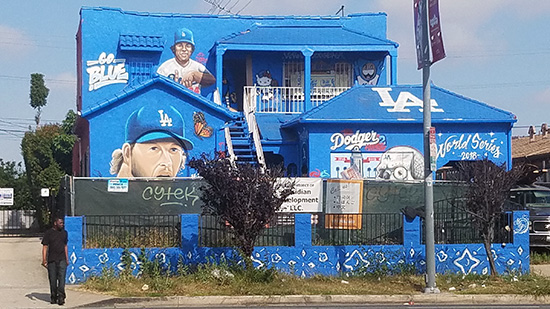
This unoccupied single-story house built in 1927 awaiting rehabilitation became a canvas for muralist and Dodger fan Hector "Tetris" Arias to celebrate the team's appearance in the 2018 World Series. Painted blue and featuring legendary lefties Fernando Valenzuela and Clayton Kershaw, the mural garnered media attention last Fall. The artist also painted a mural of third baseman Justin Turner on a condemned house near 62nd and Broadway in South Los Angeles prior to the team's 2017 World Series appearance, but that has been since demolished and a new structure has taken over. This mural, like the likelhood of the Dodgers' appearing in the next World Series, still remains, so expect the artist to simply upgrade the year on the mural.

17. Roscoe's House of Chicken & Waffles (New Location)
2019
Washington Boulevard and La Brea Avenue, Mid-City

Roscoe's House of Chicken & Waffles, which was founded by Herb Hudson (no one actually knows who "Roscoe" is...) and first opened on Gower Street in Hollywood in 1975, needs no introduction. But the so-called flagship location on Pico Boulevard (visited by President Barack Obama in 2011) a half-mile north, is slated to be replaced with this new location, opening sometime this Summer, once all the permits are approved and Hudson finally pays off his Chapter 11 debt.

18. U.S. Post Office, West Adams Ray Charles Station
1983
4960 W. Washington Blvd, Mid-City

This post office building, which opened in 1983 and serves the 90016 ZIP code, was dedicated as the Ray Charles Station U.S. Post Office in August 2005, in memory of the one of neighborhood's most prominent figures, whose RPM International Studios is located just a mile and a half east. The post office joins other facilities named after legendary musical artists, such as Nat King Cole on Western and 3rd (seen in last August's "Celebrate LA" CicLAvia Tour) and Marvin Gaye, on Vermont and 35th,  dedicated earlier this month.

Happy CicLAvia!

Wednesday, October 14, 2015

The Militant's Epic Militant CicLAvia Tour 3.5!!!!


A certain state/local agency believes that the first 5 years of a child's life is crucial for its development and eventual success and well-being later in life. Our little youngster CicLAvia is now old enough for Kindergarten and during its first 5 years of life, it's taken us all over Los Angeles from Venice Beach to East Los Angeles, from North Hollywood down to South Central (and even Pasadena as well). Our little kindergartener has been well-loved by Angelenos, and well-cared for by its parents and godparents. Since it was born, it even has younger siblings born in places like San Diego and Long Beach. So, this child is off to a very happy start in life, and like every happy youngster, never fails to make us all smile. Happy 5 years, little CicLAvia!

As you may or may not know, The Militant has been doing these local CicLAvia guides ever since the second CicLAvia in April 2011. Though this "Heart of L.A." ride -- the 15th iteration of CicLAvia since it be can in 2010 -- runs through some very familiar territory, especially for you veteran CicLAvians (all you 15-timers, let's hear ya!), this is a City that's known for change, and even in the past 5 years, certain places have changed with a look towards the future. This Epic Militant CicLAvia Tour guide also reflects that, with a few updated locations added to the route, including a couple sites that will never look the same again.

To celebrate 5 years of CicLAvia, The Militant invites you to comment or tweet (Hashtag #EpicCicLAviaTour) some of your favorite memories from the past 5 years.

Happy CicLAvia and STAY MILITANT!

1. Hollenbeck Park
1892
4th and St. Louis streets, Boyle Heights

John Edward Hollenbeck was a rich dude in the late 19th century who founded the First National Bank of Los Angeles (more on this later) and purchased parcels of land in Downtown, the San Gabriel Valley and the Eastside, where he made his home. Hollenbeck was also credited with the creation of what is now called Exposition Park. His sister married his friend, James George Bell, who founded...Yep, you guessed it! After Hollenbeck's death in 1885, his widow, Elizabeth, donated a 21-acre parcel of land, which was essentially their front yard, to the City. One of the Los Angeles’ oldest parks, it was established in 1892 and continues to function today.

2. Hollenbeck Palms (Site of the Hollenbeck Residence)
1896
573 S. Boyle Ave, Boyle Heights

Take a quick detour from the CicLAvia route on 4th street and head down Boyle Ave a block and a half south. On the site of this retirement facility, which directly dates back to the Hollenbecks' involvement, John and Elizabeth Hollenbeck made their home. The original Hollenbeck residence had a room built for the care of John's elderly father. After John's death, Elizabeth donated land she owned across the street (since visually separated from Boyle Ave in the 1950s due to construction of the 5 Freeway) for Hollenbeck Park and, in another act of philanthropy, created the Hollenbeck Home for The Aged on her property in 1896, offering free board and care for the residents for the rest of their lives. After Elizabeth's death in 1918, the Hollenbeck Trust operated the elderly home (modernized in 1985), and continue to run it today.

3. 6th Street Viaduct
1932
6th Street (visible from the 4th Street Viaduct) at the Los Angeles River, Downtown

While on the 4th Street Viaduct, pause for a moment (when you're not pausing to take that group selfie with the Downtown skyline in the background), point your eyes due south and take a good look at your bridge's cousin, the 6th Street Viaduct, with its trademark double arches. This will most likely be the last time you'll see it in its present form.

In 2007, engineers discovered that the 3,500-foot concrete connection between Downtown and Boyle Heights had a condition since it was first built called Alkali-Silica Reaction, which meant that the high alkali content in the source material in the concrete causes a chemical reaction to weaken it, rendering the bridge extremely vulnerable to collapse during a stressful event such as an earthquake.  The City of Los Angeles will shut down the bridge in November and begin demolition work for its 21st century-style replacement -- but not before throwing a big-ass concert and street party (bridge party?) next Saturday.

4. Metro Division 20 subway car yard and site of old Santa Fe LaGrande Station
1992 / 1893
320 S. Santa Fe Ave (visible from the 4th Street Viaduct), Arts District

Take a break from riding/walking/skateboarding/pogo-sticking/etc. and take a glance off the north side of the bridge from the west bank of the River. This facility is where the 104 Italian-built subway cars of the Metro Red and Purple line cars are stored, repaired, serviced and cleaned. This was also the temporary storage and repair site of the Angels Flight railway cars after the fateful 2001 accident. The Militant actually visited this facility back in May 1992.

The subway cars are also serviced on the site of the old Santa Fe Railway La Grande Station (hence the name of the street) that was on Santa Fe and 2nd. Built in 1893, it was precisely where midwestern transplants arrived in Los Angeles after paying their $1 train ticket from Chicago. In 1933, the landmark dome was damaged by the Long Beach Earthquake and subsequently removed. In 1939, it was rendered obsolete by the opening of the new Los Angeles Union Passenger Terminal a few blocks north.

5. Site of Southern Pacific Arcade Station
1888-1914
4th and Alameda streets, Downtown Los Angeles

Before there was a Union Station, there were various rail passenger terminals in Los Angeles, many of them just a short distance from the Los Angeles River. On what currently stands as a large shopping mall, this was the original site of the Southern Pacific Railroad’s Arcade Station which served passengers up until 100 years ago. A popular landmark of this station was a young palm tree, which was moved a century ago to Exposition Park where it stands today, much taller, in front of the Los Angeles Memorial Coliseum. Unfortunately for indie rock fans, the Arcade Station was not devastated by a Fire, but was dismantled and replaced by a new station, the Central Station, located one block south.

6. Metro 1st St /Central Station Site
2020
1st Street and Central Avenue, Little Tokyo

Up until last year, this lot was home to the popular Señor Fish taco joint (formerly the site of '70s-'80s punk venue Atomic Cafe) and Weiland Brewery Restaurant (which opened replacement locations in Echo Park and Uptown Long Beach, respectively). Both buildings were demolished in early 2014 to make room for this new Metro subway station for the Regional Connector Transit project, which, upon opening by 2020, will merge three light rail lines into two and allow passengers to ride from East Los Angeles to Santa Monica and from Azusa to Long Beach, without a transfer to the Red/Purple lines. This new station will replace the surface-level Little Tokyo/Arts District station across the street.

7. Site of Quaker Dairy, Original Little Tokyo Restaurant
1890
304 E. 1st St., Little Tokyo
On the southeast corner of 1st and San Pedro streets once stood the Quaker Dairy, a restaurant started on this site in 1890 by Sanshichi Akita, an immigrant from Japan. Though preceded five years earlier by another restaurant on First St (location unknown), this is the oldest traceable location of a Little Tokyo business. By the end of the 19th century, there were over 16 Japanese-owned restaurants in this stretch of 1st Street, creating what we know as Little Tokyo.

8. Los Angeles Sister Cities Monument
1987
1st and Main streets, Downtown

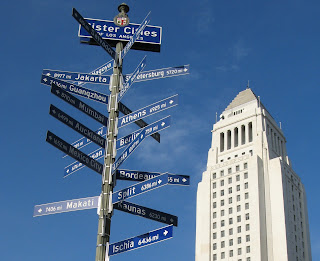
On the northeast corner of 1st and Main streets stands a pole bearing signs (in the "Blue Blade" style, no less) for every one of Los Angeles' 25 Sister Cities, each pointing towards their location. The signs range from Lusaka, Zambia (the farthest sister city, 10,017 miles) to Vancouver, Canada (the nearest, 1,081 miles) and everywhere in between. Nagoya, Japan is Los Angeles' oldest sister city (1959); Yerevan, Armenia is the newest (2007). Los Angeles, an Olympic host city (1932, 1984) also has that in common with sister cities Athens (1896, 2004), Berlin (1936), Mexico City (1968) and Vancouver (2010). Okay, the Militant is just filling up this paragraph with mindless trivia.

9. Los Angeles Police Administration Building
2009
100 W. 1st St, Downtown

Having opened less than two years ago, there's nothing really historic about this building, but do stop and take a picture of City Hall's reflection from the facade's glass panel. It's like, the thing to do!


[NOTE: If going on the northern leg to Chinatown, skip down to 21.]


10. Site of the Wilcox Building, First National Bank
1896
2nd and Spring streets, Downtown

Remember Mr. Hollenbeck? He be makin' serious bank! Oh wait, he literally did. As was mentioned, he founded a bank called the First National Bank of Los Angeles, which made its original home here on the southeast corner of 2nd and Spring in what once stood the Wilcox Building. Check this out: First National Bank merged with the Farmers and Merchants Bank to become the Security-First National Bank, which became Security Pacific National Bank (1967), and was eventually purchased by Bank of America in the 1990s. 

11. Site of Hollenbeck Hotel & Metro 2nd St/Broadway Station Site
1884/2020
2nd and Spring streets, Downtown

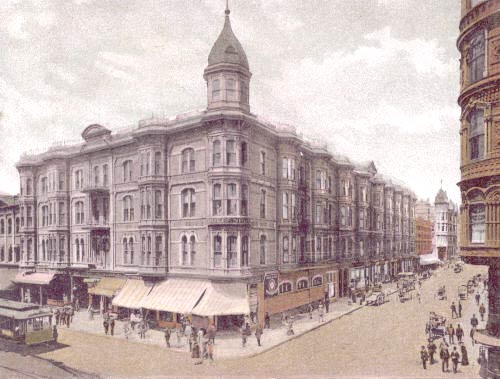
Man, this Hollenbeck dude got around! We're not quite through with him yet. Directly across Spring Street from the bank stood the Hollenbeck Hotel, a pretty swanky, bougie inn back in the day. He owned not just the hotel, the entire block the hotel stood on (He sooo money!). As more hotels were being built in Downtown, this one eventually lost ground to its competitors and was demolished in 1933. The site has been a parking lot for the past several decades, but is currently the construction site for the upcoming Metro Rail Regional Connector Transit Project 2nd/Broadway Station, one of three new light rail subway stations coming to Downtown in 2020.

12. Broadway-Spring Arcade Building
1924
541 S. Spring St, Downtown

This unique building is actually three, opened in 1924 on the site of Mercantile Place, a 40-foot street cut between 5th and 6th streets connecting Broadway and Spring. Mercantile Place was a popular shopping and gathering locale in the early 1900s. Having fallen into decay by the 1970s, it was recently renovated and is now famous for, of all things, vendors selling rock band t-shirts. It also becomes an artistic venue during the DTLA ArtWalk. And The Militant probably doesn't need to mention that this building is home to the DTLA Guisado's.

13. Site of Original Ralphs Supermarket
1873
6th and Spring streets, Downtown

Before the Hotel Hayward building was built in 1905, George A. Ralphs (see, that's why there's no apostrophe) and his brother Walter B. started the Ralphs Bros. Grocers on the southwest corner of 6th and Spring. Their company still continues to this day, and in 2007, the company that started in DTLA returned to the area after some 50 years.

14. St. Vincent Court
1868
St. Vincent Ct and 7th Street, Downtown

You'd hardly knew it was there, but this alley nestled between Broadway and Hill (blink and you'll miss it!), with its decorative brick pavement and European decor, seemingly belongs to another world. Originally the site of a Catholic college that was the predecessor of today's Loyola Marymount University, today it's a unique food court featuring Armenian and Middle Eastern eateries. The Militant calls it, "Littler Armenia." Check out this Militant Angeleno post on St. Vincent Court from 2008 for more info!

15. The Bloc (Formerly Broadway Plaza/Macy's Plaza)
1973
7th Street between Flower and Hope streets, Downtown

A poster child for change in Downtown, this shopping center, originally built in 1973 and designed by Charles Luckman & Associates as the first suburban-style mall in DTLA combined an indoor (though massively truncated) indoor galleria, a hotel and a 32-story office building. Initially known as Broadway Plaza, named after the old upscale Southern California department store anchor tenant, its name was changed to Macy's Plaza in 1996 after The Broadway merged with the NYC-based equivalent Macy's. Its blocky, street-unfriendly design was derided by many, especially in an era where the outdoor mall format pioneered by Santa Monica's Third Street Promenade, and Rick Caruso's faux-urban monstrosities (and more recently, the newly-opened The Village at Westfield Topanga),  so in 2013 it was re-conceptualized as "The Bloc" and currently stands as a work-in-progress, (which will also feature a direct entrance to the 7th Street/Metro Center subway station). Expect its 2016 grand opening to feature a big-ass Bloc party (The Militant made a funny, hardy har har...).

16. Wilshire Grand Center Site
2017
Wilshire and Figueroa (SW corner), Downtown

What's with all this construction going on here?

Previously the site of the Wilshire Grand Hotel, and formerly (in reverse chronological order) the Omni Hotel, Los Angeles Hilton, Statler Hilton and Statler Hotel, on this site will rise the Wilshire Grand Center, Los Angeles' (and the West's -- suck on it, Salesforce Tower SF!) tallest building at 73 stories and 1,100 feet (kinda sorta, there's a spire, you see...). It will also be Los Angeles' only modern skyscraper without a flat roof, which will house Wilshire Grand Hotel 2.0 and a bunch of shops and condos. The building will also have a "sky lobby" up at the top and will be the first skyscraper anywhere to sport a mohawk.

In February 2014, this construction site earned a Guinness World Record as the longest continuous concrete pour for its foundation structure.

17. City View Lofts/Young's Market Company Building
1924
1610 w. 7th St., Pico-Union

Ever wondered what's the deal with this 4-story Italian Renaissance-style building? It was built in 1924 as a liquor warehouse and original headquarters for Young's Market Company, which still operates today as the largest liquor distributor in the West. This building features actual marble columns and a decorative frieze made of terra cotta. The company, in the roaring, pre-depression 1920s, just felt like it. The building was looted and burned in the 1992 Riots and was rehabbed in 1997 to become the City View lofts. The building is in the National Register of Historic Places.

18. Gen. Douglas MacArthur Monument
1955
Southeast corner of MacArthur Park, Westlake

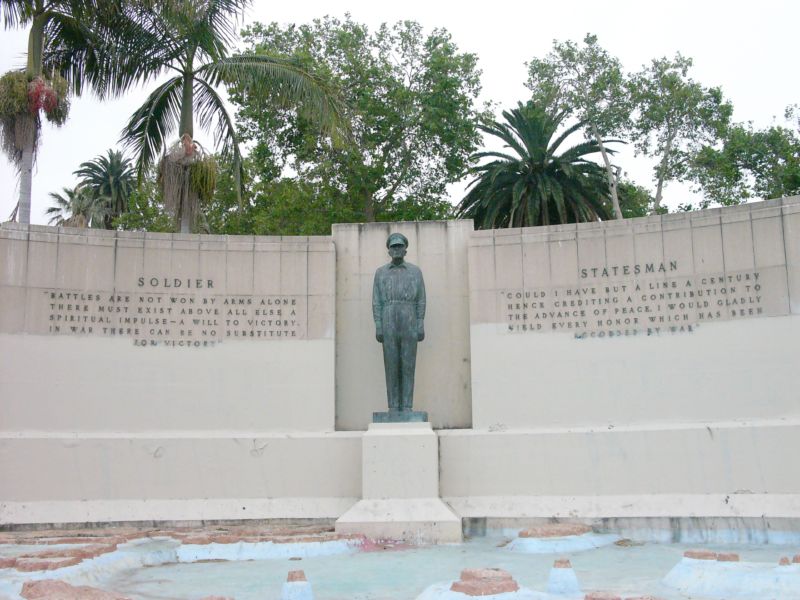
It's sort of strange how a monument to the park's namesake seems almost invisible (Gen John Pershing, MacArthur's WWI counterpart, could totally identify). In fact, most people don't know it's even there, but on the southeast shore of the lake is a dormant memorial fountain featuring a statue of the WWII general overlooking a model of the Pacific theatre (no, not that one) where he led allied forces to eventual victory. It was designed and built in 1955 by Roger Noble Burnham, who previously sculpted the Tommy Trojan statue on the USC campus and taught at the Otis Art School, formerly located nearby.

19. The Spheres at MacArthur Park
2015
MacArthur Park Lake, Westlake

This public art installation by Santa Monica-based nonprofit Portraits of Hope, is one of several projects the organization has done nationwide as a form of creative therapy to benefit seriously ill and disabled children. Nearly 3,000 vinyl spheres, decorated by Portraits of Hope volunteers, were placed in the water (each anchored by a sack of rocks and rope) starting in August, and were originally intended to stay until the end of September. But fortunately, just for you CicLAvians, the installation will remain in time for Sunday, so get your floating ball selfie action on!

20. Gen. Harrison Gray Otis Statue
1920
Northeast corner of Wilshire and Park View, Westlake

Gen. Otis is perhaps the most visible statue at the park, which predates MacArthur's WWII service. This general served in the Spanish-American and Philippine-American wars, and also fought as a Union soldier in the Civil War. But in Los Angeles, he is most known for being the founder, owner and publisher of the Los Angeles Times.

So why is he here? His Wilshire Blvd mansion, called The Bivouac, was located across the street, was later donated to Los Angeles County and became the original campus of Otis Art Institute. It's thought that his statue is pointing to the site of the Elks Lodge, but he's probably just pointing to his old house.

Northern Leg (To Chinatown):


21. Federal Courthouse Site
2016
145 S. Broadway, Downtown

That big-ass hole in the ground by 1st and Broadway has been here for, like, forever. But it was once the site of the Junipero Serra State Office Building, which was damaged in the 1994 Northridge Earthquake and abandoned and demolished in 1998. Right now,  it’s the construction site for a 10-story, 400-foot-tall U.S. Federal Courthouse building (don't we already have a few of those?), designed by Skidmore Owings and Merrill, which will open in 2016.


22. Grand Park
1960, 2012
Open space between Grand Avenue and Spring Street, Downtown

Grand Park isn't really a new park, but a renovation and re-branding of what used to be the Los Angeles County Mall.  Since then, it's become Los Angeles' new town square, hosting everything from concerts, to festivals, to weekend movie screenings, to holiday programs, to just a place where kids can splash around in the fountain. The Militant was there on its opening day back in July 2012!

23. Hall Of Justice
1926
Temple Street and Broadway, Downtown

No, you won't find Superman or any of the Super Friends here.  But this building, the oldest surviving government building in the Los Angeles Civic Center, was built in the mid-1920s as the original Los Angeles County Courthouse and Central Jail (which once housed the likes of Busy Siegel, Sirhan Sirhan and Charles Manson), as well as the headquarters for the Sheriff's Office, the District Attorney and the County Coroner. This Beaux Arts-style building was designed by Allied Architects Association, an all-star team of local architects put together to design publicly-funded buildings. At the moment, its facade is covered in scaffolding and tarp, as part of a major renovation project to modernize the facilities and repair damage from the 1994 Northridge Earthquake. It recently re-opened as a LEED Gold Certified building (gotta be sustainable, y'all), and the Sheriff's and District Attorney's offices will return.

24. Site of Los Angeles' French Quarter
c. 1830s-1960s
Aliso Street and Arcadia Street, Downtown

Beleive it or non, Los Angeles had a French ethnic enclave, called The French Quarter. Before today's Hollywood Freeway trench and nearby parking lots was a bustling community of Franco-American businesses and institutions. When Frenchman Jean-Louis Vignes bought up land on the Yangna village site a few blocks east on Aliso Street, he essentially became the anchor of our French community. In 1912, businessman Marius Taix opened the Champ D'Or Hotel on Commercial Street and then opened his namesake restaurant in the same building in 1927. But the most famous constibution to our French Quarter was Philippe Mathieu's restaurant, which opened in various locations in the area. In 1918, his restaurant on 246 Aliso Street gave birth to The French Dip sandwich. But urban development (and cultural assimilation by the community) destroyed the French Quarter. In 1951, Philippe's moved a few blocks north to their present location on Alameda Street due to Hollywood Freeway construction, and Monsieur Taix's restaurant moved a decade later to Echo Park.

25. Chinatown Gateway Monument
2001
Broadway and Cesar E. Chavez. Avenue, Chinatown

Designed to be the symbolic entrance to Los Angeles' Chinatown District, The Chinatown Gateway Monument, a.k.a. the Twin Dragon Towers Gateway, depicts two dragons grabbing at a central pearl, which symbolizes luck, prosperity, and longevity. The 25-foot-tall structure was put up in 2001 and occasionally emanates steam coming from the dragons' mouths. Unlike Anglo dragons, the creatures in Chinese folklore are the good guys, meant to scare away evil spirits.

26.  Buu Dien
c. 1990s
642 N. Broadway (Facing New High St, south of Ord), Chinatown

If you're ever in some TV trivia contest on your way to being a millionaire and the host asks you, "What is the Militant Angeleno's favorite Vietnamese banh mi place west of the Los Angeles River?" you won't need to call a lifeline, because the answer is Buu Dien. When the Militant has only $4 in his pocket and wants to get a meal in Downtown, this is his go-to joint. A literal hole in the wall in every regard, this place serves bomb-ass (do people still use that phrase) Viet sammiches for less than $3 a pop. And the bread is awesome. And nice and warm. Plus they also serve up spring rolls, desserts, pastries, Vietnamese coffee and pho (never had it here yet, but The Militant's favorite pho WOTLAR is Pho 79 just up the street). People complain about parking in his micro-mini mall, but this is CicLAvia!

27. Capitol Milling Co.
1883
1231 N. Spring St, Chinatown

One of the last visible vestiges of Los Angeles' agricultural industry, this family-owned flour mill operated from 1831 to 1997, before moving its operation to a much larger facility in Colton. The facility that still stands today was built in 1883. The mill supplied flour to clients such as Ralphs, Foix French Bakery and La Brea Bakery. In 1999, the family-owned operation was purchased by industry giant Con-Agra Co.


The historic building, built even before the railroads arrived in Los Angeles, still has a horse-tethering ring, back to the days when grain was hauled by horse carriage from farms in the San Fernando Valley.

28. Old (New?) Chinatown Central Plaza
1937
Gin Ling Way between Broadway and Hill, Chintown

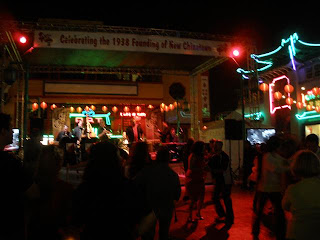
The new northern terminus of CicLAvia is no stranger to public events; it was made for them. In the Summer it hosted three very popular Chinatown Summer Nights events. But don't let the "Old Chinatown" neon sign fool you -- This is actually Los Angeles' new Chinatown, which dates back to the 1930s. The real Old Chinatown was several blocks south, where a thriving community of Cantonese-speaking immigrants

lived near the river, north of Aliso Street. Of course, they were kicked out in the early '30s to make room for Union Station. So they moved a few blocks north, in the former Little Italy, and they've been there ever since. Well, not really, since some of them moved east to the San Gabriel Valley and were supplemented with Mandarin-speaking immigrants from Taiwan and Mainland China. But you get the idea.