Showing posts with label Exposition Park. Show all posts

Sunday, December 4, 2022

The Militant's Epic Militant CicLAvia Tour XLII!!


Interactive map! Click here for larger version.

We've reached the last of four CicLAvias to end the 2022 season, the 42nd open streets event since its inception in October 2010. According to author Douglas Adams, the answer to live, the universe and everything is "42." Is it no coincidence that this 7.3-mile route from Exposition Park to Watts crosses 42nd Street?

This Sunday's route may or may not be a new route, although it incorporates parts of four previous CicLAvia alignments. Parts of Central Avenue and Martin Luther King Jr. Boulevard were first explored in the December, 2014 CicLAvia, and the last quarter of this route into Watts was part of the four-legged Southeast Cities route from May, 2016. The Central Avenue/Watts section was part of the February, 2020 South L.A. route, and Martin Luther King Jr. Boulevard was part of the December, 2021 route a year ago.

Who knows what's in store for 2023?

It may or may not rain on CicLAvia today - and it has before - but somehow, some way, the sun always shines on CicLAvia. You know the drill - See you or not see you on the streets this Sunday!


1. George Lucas Museum of Narrative Art
2023
Vermont and 39th St, Exposition Park

Taking shape on west side of Exposition Park like a Naboo Royal Starship is the George Lucas Museum of Narrative Art (or, "The Luke," as The Militant would like to call it), a state-of-the-art visual, cinematic and interactive museum founded by 'Star Wars' creator and filmmaker George Lucas and his wife Mellody Hobson. The site, located in close proximity to Lucas' alma mater, USC, beat out other site proposals in San Francisco (home of Lucasfilm, Ltd) and Chicago (Lucas' birthplace) when it was announced in 2017. Originally intended to open in 2021, it was delayed to 2023 due to the COVID-19 pandemic.


2. Los Angeles Swimming Stadium
1932
Bill Robertson Drive & Park Lane, Exposition Park

The Coliseum's little brother, the Los Angeles Swimming Stadium was the 10,000-seat venue for the 1932 Olympic swimming, diving and water polo competitions, as well as the aquatic portions of the pentathlon event. Olympians such as Buster Crabbe swam in its waters. After the games, it became a public pool, and in the '50s, USC's swim team used it as their training and competing venue. After over a half century of wear, and damage from the 1994 Northridge Earthquake, the swim stadium was renovated in 2002 and operates today as the LA84 Foundation/John C. Argue Swim Stadium. Marco...Polo!


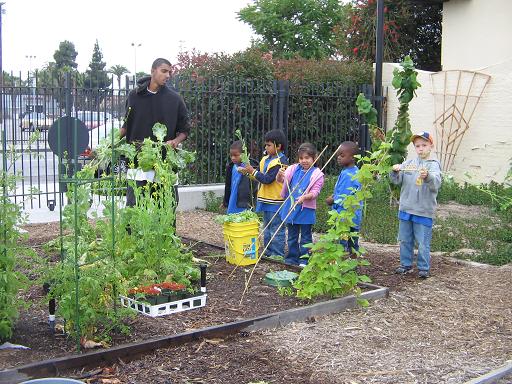
3. Community Services Unlimited Urban Garden
2003
Bill Robertson Lane and Martin Luther King Jr Blvd, Exposition Park

Did you know there's an urban garden along the CicLAvia route? Local nonprofit Community Services Unlimited (an organization that, interestingly enough, originated from the Black Panther Party's community outreach programs in the 1970s) grows their own organic fruits and vegetables in this Exposition Park urban garden that they sell and distribute in this predominantly food desert area to help local residents gain access to fresh, healthy produce. They sell this produce at a stand outside the LA84/John C. Argue Swim Stadium next door on Thursday afternoons from 3 to 6 p.m.


4. Historic Southern Pacific Palm Tree
Re-planted 1914
3901 S. Figueroa St, Exposition Park

Back in the late 1800s-early 1900s, the Southern Pacific Railroad operate out of a train station called the Arcade Station, on 5th and Alameda streets. A lone palm tree stood outside the station and functioned as a landmark for arriving passengers coming in from San Francisco or points east. In 1914 (dude, over a hundred years ago) the Arcade Station was demolished (no, it wasn't consumed by a fire) to make way for a more modern station, called Central Station, and the palm tree had to go. So sentimental was the palm tree, instead of being cut down, it was moved to Exposition Park, where it has stood ever since. Like its neighbor the Space Shuttle Endeavour, it was a popular icon back in its day, and it's probably safe to assume that its transport through town was an event in itself. A little-known historic market at the base of the tree tells the whole story. So if you want to see a palm tree that was planted there over 100 years ago, there you go.

5. Banc of California Stadium
2018
3939 S. Figueroa St, Exposition Park

Home of the 2022 MLS Cup Champion Los Angeles Football Club soccer team, this $350 million, 22,000-seat venue is the first open-air stadium to be built in the City of Los Angeles since Dodger Stadium opened in 1962. It was built on the former site of the 16,000-seat Los Angeles Memorial Sports Arena (1959-2016), which was the first Los Angeles home of the Lakers (1960-1967), the Clippers (1984-1999) and hosted the Boxing matches during the 1984 Olympics. Banc Stadium is also the home venue of the Angel City FC National Women's Soccer League team and will host the Men's and Women's Soccer tournaments during the 2028 Olympics.


6. Site of Wrigley Field
1925 (demolished 1969)
Avalon Blvd & 42nd Place

Just a few blocks south of the CicLAvia route is Gilbert W. Lindsay Park, named after Los Angeles' first African American city councilman. But years ago, this was the place where home runs, strikeouts and 7th Inning Stretches took place in the City of Angels. And yes it was a city of Angels, as the Los Angeles Angels of the Pacific Coast League made the 22.000-capacity Wrigley Field (named after the chewing gum magnate, who had several stakes in Southern California, including Catalina Island) its home. And as any truly militant Angeleno knows, the ivy-and-brick Chi-town tourist trap, though 11 years older, was originally called Weeghman Park and wasn't dubbed Wrigley Field until 1927, which made Los Angeles' Wrigley Field the first Wrigley Field ever. The stadium also was popular with TV and movie shoots, such as Damn Yankees and The Twilight Zone. In 1961, it literally went Major League as the American League expansion team Los Angeles Angels of Los Angeles played its home games there before moving to Dodger Sta, er, Chavez Ravine for the next four seasons, and then finally moving down the 5 to Anaheim. Wrigley Field was also home of the Los Angeles White Sox, a club in the short-lived, 6-team West Coast Negro Baseball Association, a Black minor league co-founded by Olympic gold medalist Jesse Owens which lasted but a single season in 1946. Yes, there's a baseball field in the park, but it's not the same location as the original diamond.


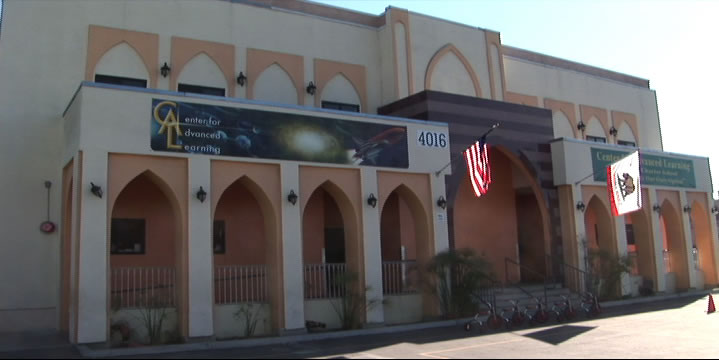
7. Masjid Bilal Islamic Center/Site of Elks Lodge
1929
4016 S. Central Ave, South Los Angeles

This mainstay of the local Muslim community since 1973 also has a deep history in the local black community. The original building was originally built in 1929 as the home of the local Elks club. But it was no ordinary Elks Club (who discriminated against black membership). It was run by the Improved and Benevolent Protective Order of Elks of the World, an African American-run organization founded in Cincinnati, Ohio in 1898 that functioned as a fraternal order for people of color. Though obviously not directly affiliated with the white Elks club, it is run with the otherwise identical customs and traditions, and with nearly half a million members worldwide, is the largest black fraternal organization in the world. A new mosque building, fronting Central Avenue, has been under construction since 2019, which features the tallest minaret in California.


8. Ralph J. Bunche House
1919
1221 E. 40th Place, South Los Angeles

The Central Avenue corridor was home to Los Angeles' black community, primarily due to the racial covenants that restricted them from owning homes elsewhere in the city. But great things can come from places of injustice. Ralph J. Bunche was a teenager arriving with his family from Detroit, by way of Ohio and New Mexico, who attended nearby Jefferson High School and went to UCLA, graduating as the valedictorian at both schools. He went on to Harvard, where he earned his Ph.D in Political Science (the first African American to receive a doctorate in PoliSci from a U.S. university), and later was one of the founders of the United Nations. In 1950, due to his diplomatic work in the negotiations that ended the 1948 Arab-Israeli War, he won the Nobel Peace Prize -- the first nonwhite person to ever win the esteemed award. And he once lived right here, just two blocks east of the CicLAvia route.

9. Site of Black Panther Headquarters

1969
41st Street and Central Avenue, South Central Los Angeles

Nooo, this isn't where Wakanda is. The northwest corner of 41st Street and Central Avenue wasn't just the Los Angeles headquarters of the 1960s-era Black Panther Party (that's some real Militants right there), but in a time where the names Mike Brown and Eric Garner have been fresh on the minds of people, it was the site of a significant event in the tumultuous history of relations between the black community and the Los Angeles Police Department. On December 8, 1969 -- 45 years before the day after CicLAvia -- police officers arrested a number of people on that corner for loitering, which eventually escalated into a four-hour armed confrontation. The LAPD used a previously untested paramilitary unit during the raid, which was called the Special Weapons And Tactics unit, or SWAT. Four LAPD officers and four Black Panther members were seriously injured during the shootout, but miraculously no one died. The building that housed the headquarters was demolished in 1970.


10. Dunbar Hotel/Club Alabam
1928
4225 S. Central Avenue, South Central Los Angeles

Built in 1928 (then known as the Hotel Somerville, the only hotel in Los Angeles at the time to welcome black people) as the primary accommodations venue for the 1928 NAACP national convention at the nearby Second Baptist Church, The Dunbar is one of the few remaining physical symbols of the Central Avenue of yesteryear, the hotspot of all that is jazz and blues. In the perspective of Los Angeles music history, Central Avenue in the 1920s-1950s was the Sunset Strip of the 1960s-1980s. And perhaps even more. A nightclub opened at the hotel just a few years after its opening, and legends such as Count Basie, Cab Calloway, Lena Horne and Billie Holliday. Next door was the Club Alabam, another one of the most popular jazz venues on Central Avenue. Known for its classy image and celebrity clientele (both black and white), legends such as Duke Ellington, Charlie Parker and Miles Davis graced the stage. Today, the Dunbar Hotel building serves as an affordable housing complex for seniors.


11. South Los Angeles Wetlands Park/Site of Los Angeles Railway South Park Shops
2012/1906
5413 S. Avalon Boulevard, South Central Los Angeles

Head west on 54th Street for just a few blocks to Avalon Boulevard to visit this relatively new park space, which opened in 2012 and was covered by The Militant on his blog right after its grand opening. Previously the site of the sprawling South Park Shops, it was a major facility for storing, maintaining and repairing transit vehicles, used from 1906 to 2008 by the Los Angeles Railway, the original Los Angeles Metropolitan Transit Authority, the Southern California Rapid Transit District and today's Metro. After the transit facility was retired, the brownfields were re-purposed as a nine-acre public open space that features native plant landscaping (yessss!), a lagoon that functions not only as a bird habitat, but as a natural stormwater cleaning facility. In addition, a LACMA satellite museum space will be opening at the park soon.


12. Los Angeles Railway U Line
1920-1947
Central and Slauson avenues to Vermont Avenue and Manchester Blvd via Downtown Los Angeles

Central Avenue hosted not one, but two Los Angeles Railway Yellow Car lines in different locations along the CicLAvia route. One of them was the U Line, which originated west of here, at two different branches on Vermont and Manchester and another at Western and 39th. They met near Exposition Park and ran through the USC campus (one of the reasons for the "U" in the line name) and northward onto Downtown Los Angeles before heading back south on Central Avenue and ending at Slauson. The line ran until 1947.


13. Augustus F. Hawkins Natural Park
2000
5790 Compton Ave, South Los Angeles

A few blocks east of the CicLAvia route along Slauson lies another one of the best-kept secrets in South Los Angeles -- Augustus F. Hawkins Natural Park, an 8.5-acre surreal green oasis in the 'hood, featuring ponds, native plants, hiking trails, picnic areas and even wildlife. This former DWP pipe yard was converted into a re-created natural park (named after the late African American congressman who represented the area for 28 years) in 2000 by the Santa Monica Mountains Conservancy, which trucked in actual dirt from Malibu mudslides to the site to form the park's terrain. The park is popular with local residents seeking refuge from urban life, and the park is also popular with members of the local Audubon Society, who frequent the park to do bird sightings and bird counts.


14. Los Angeles Central Post Office/Site of Goodyear Tire Factory
1984/1920-1979
7001 S. Central Ave, Florence-Firestone

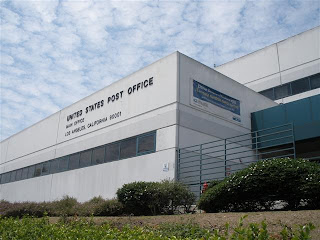
In 2008, The Militant visited this ginormous USPS facility, with the numerical designation as the very place where the western ZIP codes begin. Most of Los Angeles' mail gets processed through here, which means letters or packages mailed through here will get sent out of town faster (since they have to come through here anyway). The post office facility opened relatively recently, in 1984, as part of a redevelopment project for the massive parcel, whose previous life was that of the Goodyear Tire & Rubber Co. California factory, which existed from 1920 to 1979.
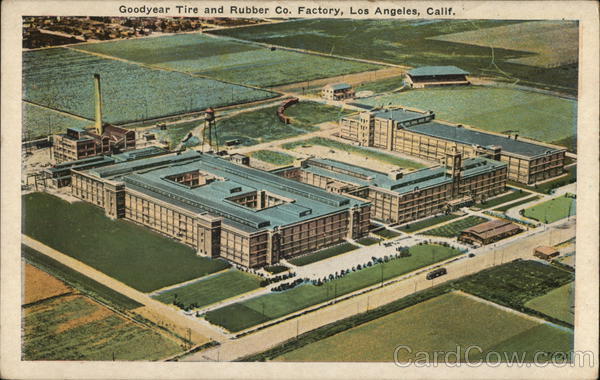

Automobile tires and other rubber products were manufactured here for nearly 60 years, and early versions of the iconic Goodyear blimp once had its own hangar at the southwestern corner of the lot. But wait -- there's even more history on this lot: nearly two decades before the tire plant opened, this was the home of Ascot Park racetrack, which opened in 1903. The ornate design of the early 20th-century hippodrome inspired the aesthetics of another So Cal racetrack - Santa Anita Racetrack in Arcadia, which opened four years later and still exists today as a place where racehorses meet their untimely death.


15. Los Angeles Railway S Line
1920-1963
Santa Monica Blvd & Western Avenue to Central Avenue & Firestone Blvd via Downtown Los Angeles

Central Avenue's other Yellow Car line was the "S" line, which ran in many different configurations through the years, but most of its life it ran from Santa Monica & Western in East Hollywood through Downtown (like nearly all Los Angeles Railway lines did) and down to Central and Firestone. The picture to the left depicts a Yellow Car in 1963 (then painted green in the old Los Angeles Metropolitan Transit Authority's colors) running by the old Goodyear Tire factory! The line was discontinued (along with many of the other surviving Yellow Car lines) on March 31, 1963 - the final day of rail transit in Los Angeles until the Metro Blue Line (now the Metro A Line) opened on July 14, 1990. BONUS: The Metro-owned parking lot with the single-story ivy-covered concrete building on the southeast corner of Central and 85th Street was once the Los Angeles Railway S Line's terminal loop!

16. Green Meadows Diagonal
1926
Central Avenue between 92nd and 95th streets, Green Meadows

As you ride on the CicLAvia route along Central Avenue, the road makes a seemingly arbitrary diagonal jog between 92nd and 95th streets. Why is that? Well, if you know your Los Angeles history, many non-grid street alignments follow the boundaries of ranchos, properties/land parcels, and legacy cities/towns that were lost to annexation. The latter was the case here, as an unincorporated farm town called Green Meadows sprung up here circa 1887. True to its name, it was a rural settlement with artesian wells, alfalfa fields and apple orchards. The northeast corner of the town featured the diagonal notch, and when the town was finally annexed into the City of Los Angeles on March 18. 1926, the boundary was incorporated into the city street grid and Central Avenue was forced to follow suit. The name Green Meadows was re-claimed in the early 2000s and given to the portion of South Los Angeles where the old town once existed. So now you know!


17. Ted Watkins Memorial Park
Dedicated 1995
1335 E. 103rd Street, Watts

Originally built in the 1930s to memorialize Western actor Will Rogers, this 28-acre Los Angeles County park was re-named in 1995 after the late Ted Watkins, a local community activist and the founder of the Watts Labor Community Action Committee, which he started in 1965, just months before the Watts Riots. The aftermath of the rebellion heightened the purpose of his nonprofit agency, which dealt with social services, community development and empowerment for the Watts area. The park also features a youth baseball field built by the Los Angeles Dodgers, a newly-built community swimming pool and gym with basketball courts.


18. Pacific Electric Watts Depot
1904
1686 E. 103rd Street, Watts

Adjacent to the Metro A Line's 103rd St/Watts Towers station is a mustard-colored building that was once the Pacific Electric's Watts depot. A popular stop along the old PE Long Beach Line, the building survived not only the PE's abandonment, but was the only wooden structure that was not set on fire during the 1965 Watts Riots. After a renovation project in the 1980s, the Watts Station has functioned since 1989 as a Los Angeles Department of Water and Power customer service center.


19. Watts Towers
1921
1727 E. 107th St, Watts

You all know the story by now: Italian immigrant Sabato "Simon" Rodia collects scrap reinforced steel bars (using the adjacent Pacific Electric Santa Ana Line tracks as a fulcrum to bend them) and other found scrap material from rocks to broken glass to bottle caps, and builds 17 structures on his property over a period of 33 years. Then in 1955, he up and left for Northern California and never came back. Now that you know the story, see them up close for yourself. You don't deserve to call yourself an Angeleno if you've never visited the Watts Towers before. Signore Rodia's creation is 101 years old now, and for the first time in years, the restoration scaffolding has been removed so you can finally see them in their full splendor.


Friday, December 5, 2014

The Militant's Epic Militant CicLAvia Tour 8.0!!!!!!!!


Interactive Map! Click on green points to view hotspots, or click on entire map for larger view.

Well well well, it's CicLAvia time again. Just when we thought we'd have to wait until Spring...BOOM! Here comes another one. Which is all right with The Militant.

Now, originally, The Militant was going to stop doing these tour guides because like only 20 people really read them. Yeah, they really, really like them, but if only 20 people will benefit from it, he might as well just send them a CC:'ed email.

But The Militant didn't want to leave South Los Angeles behind. There's a history to this place too, a very rich one, and by skipping this, many CicLAvians would be oblivious to it. Alas, he did this for the good of the community.

So for the 20 of you who really dig this, enjoy. The Militant will now get some sleep now after working on this all night.


Central Avenue Corridor


1. Tacos El Gavilan/Site of 1st McDonalds in Los Angeles
1957
1900 S. Central Ave, South Los Angeles

What is currently a taco stand at the southeast corner of Central and Washington was once the first McDonalds in the city of Los Angeles (and the 11th McDs in the entire chain) which opened in 1957. As you may or may not know, McDonalds originated in San Bernardino in 1940 by the McDonald brothers, and was later taken over by Illinois businessman Ray Kroc, who turned the unique Southern California hamburger chain into the gargantuan unhealthy corporate chain we know today. The trademark side arches were present on this building (and a single arch present on the corner sign) up until the early 2000s. But hey, tacos are more healthy for you than McDonalds junk, so eat up.

2. Lincoln Theater
1926
2300 S. Central Ave, South Los Angeles

From 1927 to the 1950s, this Moorish Revival theatre, designed by John Paxton Perrine featured the finest live entertainment by black performers, to a predominantly black audience (though notable white folks like Charlie Chaplin dug it as well). It was even nicknamed the "West Coast Apollo" during its heyday, which featured the likes of Duke Ellington, Nat King Cole and Billie Holliday gracing its stage. In 1962 the building was purchased by the First Jurisdiction of the Church of God in Christ and remains a house of worship today, this time as the the Iglesia de Cristo Ministries Juda. The Lincoln Theater building was designated as a City of Los Angeles Historic-Cultural Monument in 2003 and was added to the National Register of Historic Places in 2009.

3. Second Baptist Church
1926
2412 Griffith Avenue, South Los Angeles

Built around the same time as the Lincoln Theater is this building that has always been a church. But it's one building that's rich in African American history. It was the host venue for the NAACP's national conventions in 1928 (the first-ever on the West Coast), 1942 and 1949. In 1962, Malcolm X spoke at a meeting held at the church. And Dr. Martin Luther King Jr himself spoke here in 1964 and 1968 -- the latter appearance, just two weeks before he was martyred in Memphis. Tennessee. To top it all off, this Lombardy Romanesque Revival building was designed by none other than famed African American architect Paul R. Williams, who designed many buildings around Los Angeles, most notably this one. This building is also designated as a City of Los Angeles Historic-Cultural Monument (1978) and was likewise added to the National Register of Historic Places (2009).

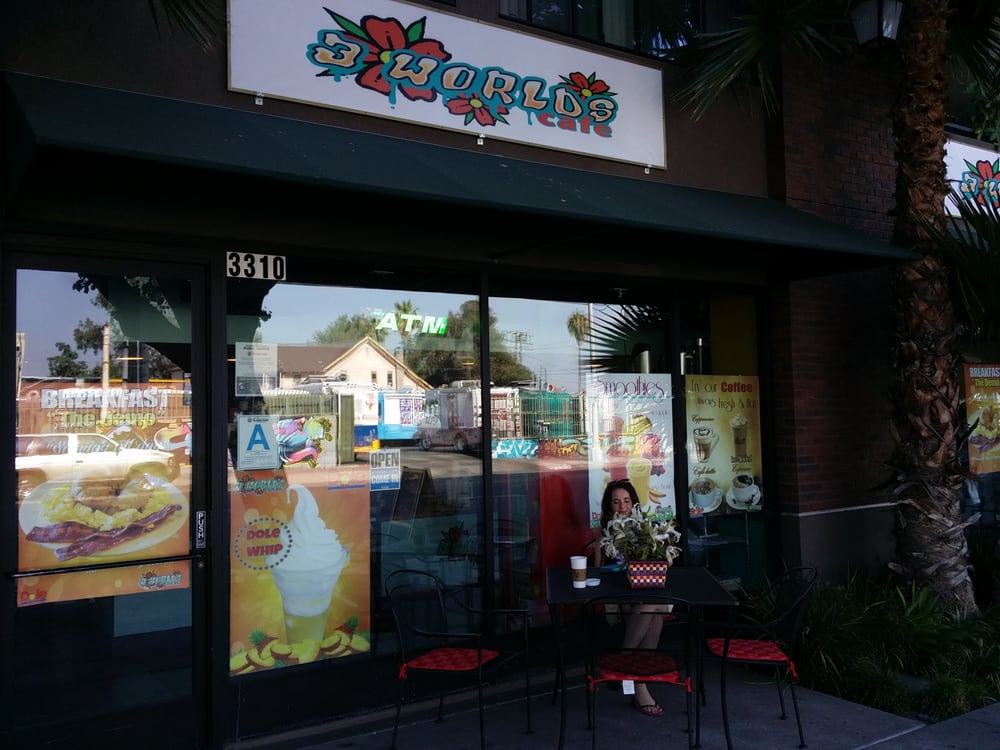
4. 3 Worlds Cafe
2013
3310 S. Central Ave, South Los Angeles

This social enterprise, created by the collaborative efforts of Los Angeles foodie magnate Roy Choi, the Coalition for Responsible Community Development, Jefferson High School and Dole Foods, trains local youth to make and serve healthy foods while learning job skills. The name refers to the Latino, Asian and African American cultures of the youth in the community. According to many folks, the food is pretty damn good, so don't sleep.

NAVIGATIONAL NOTE:
• If heading west on Martin Luther King Jr Blvd, skip to #9.


5. Masjid Bilal Islamic Center/Site of Elks Lodge
1929
4016 S. Central Ave, South Los Angeles

This mainstay of the local Muslim community since 1973 also has a deep history in the local black community. The building was originally built in 1929 as the home of the local Elks club. But it was no ordinary Elks Club (who discriminated against black membership). It was run by the Improved and Benevolent Protective Order of Elks of the World, an African American-run organization founded in Cincinnati, Ohio in 1898 that functioned as a fraternal order for people of color. Though obviously not directly affiliated with the white Elks club, it is run with the otherwise identical customs and traditions, and with nearly half a million members worldwide, is the largest black fraternal organization in the world.

6. Ralph J. Bunche House
1919
1221 E. 40th Place, South Los Angeles

The Central Avenue corridor was home to Los Angeles' black community, primarily due to the racial covenants that restricted them from owning homes elsewhere in the city. But great things can come from places of injustice. Ralph J. Bunche was a teenager arriving with his family from Detroit, by way of Ohio and New Mexico, who attended nearby Jefferson High School and went to UCLA, graduating as the valedictorian at both schools. He went on to Harvard, where he earned his Ph.D in Political Science (the first African American to receive a doctorate in PoliSci from a U.S. university), and later was one of the founders of the United Nations. In 1950, due to his diplomatic work in the negotiations that ended the 1948 Arab-Israeli War, he won the Nobel Peace Prize -- the first nonwhite person to ever win the esteemed award. And he once lived right here, just two blocks east of the CicLAvia route.


7. Black Panther Headquarters
1969
41st & Central, South Los Angeles

The corner of 41st Street and Central Avenue wasn't just the Los Angeles headquarters of the Black Panther Party (that's some real Militants right there), but in a time where the names Mike Brown and Eric Garner have been fresh on the minds of people, it was the site of a significant event in the tumultuous history of relations between the black community and the Los Angeles Police Department. On December 8, 1969 -- 45 years before the day after CicLAvia -- police officers arrested a number of people on that corner for loitering, which eventually escalated into a four-hour armed confrontation. The LAPD used a previously untested paramilitary unit during the raid, which was called the Special Weapons And Tactics unit, or SWAT. Four LAPD officers and four Black Panther members were seriously injured during the shootout, but miraculously no one died. The building that housed the headquarters was demolished in 1970.

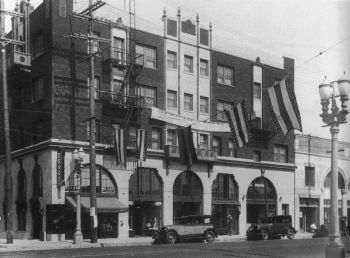
8. Dunbar Hotel/Club Alabam
1928
4225 S. Central Avenue

Built in 1928 (then known as the Hotel Somerville, the only hotel in Los Angeles at the time to welcome black people) as the primary accommodations venue for the 1928 NAACP national convention at the nearby Second Baptist Church, The Dunbar is one of the few remaining physical symbols of the Central Avenue of yesteryear, the hotspot of all that is jazz and blues. In the perspective of Los Angeles music history, Central Avenue in the 1920s-1950s was the Sunset Strip of the 1960s-1980s. And perhaps even more. A nightclub opened at the hotel just a few years after its opening, and legends such as Count Basie, Cab Calloway, Lena Horne and Billie Holliday. Next door was the Club Alabam, another one of the most popular jazz venues on Central Avenue. Known for its classy image and celebrity clientele (both black and white), legends such as Duke Ellington, Charlie Parker and Miles Davis graced the stage. Today, the Dunbar Hotel building serves as an affordable housing complex for seniors.

Martin Luther King Jr. Corridor

9. Site of Wrigley Field
1925  (demolished 1969)

Avalon Blvd & 42nd Place

Just a few blocks south of the CicLAvia route is Gilbert W. Lindsay Park, named after Los Angeles' first African American city councilman. But years ago, this was the place where home runs, strikeouts and 7th Inning Stretches took place in the City of Angels. And yes it was a city of Angels, as the Los Angeles Angels of the Pacific Coast League made the 22.000-capacity Wrigley Field (named after the chewing gum magnate, who had several stakes in Southern California, including Catalina Island) its home. And as any truly militant Angeleno knows, the ivy-and-brick Chi-town tourist trap, though 11 years older, was originally called Weeghman Park and wasn't dubbed Wrigley Field until 1927, which made Los Angeles' Wrigley Field the first Wrigley Field ever. The stadium also was popular with TV and movie shoots, such as Damn Yankees and The Twilight Zone. In 1961, it literally went Major League as the American League expansion team Los Angeles Angels of Los Angeles played its home games there before moving to Dodger Sta, er, Chavez Ravine for the next four seasons, and then finally moving down the 5 to Anaheim. Yes, there's a baseball field in the park, but it's not the same location as the original diamond.

10. Historic Southern Pacific Palm Tree
 Re-planted 1914
3939 S. Figueroa St, Exposition Park

Back in the late 1800s-early 1900s, the Southern Pacific Railroad operate out of a train station called the Arcade Station, on 5th and Alameda streets. A lone palm tree stood outside the station and functioned as a landmark for arriving passengers coming in from San Francisco or points east. In 1914 (dude, a hundred years ago) the Arcade Station was demolished (no, it wasn't consumed by a fire) to make way for a more modern station, called Central Station, and the palm tree had to go. So sentimental was the palm tree, instead of being cut down, it was moved to Exposition Park, where it has stood ever since. Like its neighbor the Space Shuttle Endeavour, it was a popular icon back in its day, and it's probably safe to assume that its transport through town was an event in itself. A little-known historic market at the base of the tree tells the whole story. So if you want to see a palm tree that was planted there 100 years ago, there you go.

11. Los Angeles Swimming Stadium
1932
Bill Robertson Drive & Park Lane, Exposition Park

The Coliseum's little brother, the Los Angeles Swimming Stadium was the 10,000-seat venue for the 1932 Olympic swimming, diving and water polo competitions, as well as the aquatic portions of the pentathlon event. Olympians such as Buster Crabbe swam in its waters. After the games, it became a public pool, and in the '50s, USC's swim team used it as their training and competing venue. After over a half century of wear, and damage from the 1994 Northridge Earthquake, the swim stadium was renovated in 2002 and operates today as the LA84 Foundation/John C. Argue Swim Stadium. Marco...Polo!

12. Community Services Unlimited Urban Garden
2003
Bill Robertson Lane and Martin Luther King Jr Blvd, Exposition Park

Did you know there's an urban garden along the CicLAvia route? Local nonprofit Community Services Unlimited (an organization that, interestingly enough, originated from the Black Panther Party's community outreach programs in the 1970s) grows their own organic fruits and vegetables in this Exposition Park urban garden that they sell and distribute in this predominantly food desert area to help local residents gain access to fresh, healthy produce. They sell this produce at a stand outside the LA84/John C. Argue Swim Stadium next door on Thursday afternoons from 3 to 6 p.m.

13. Celes King III Bail Bonds
1949
1530 Martin Luther King Jr Blvd, Vermont Square

Why is a Bail Bonds joint listed in the Militant's CicLAvia tour? WTF? Well, before 1983, this street was known as Santa Barbara Avenue. Celes King III was the person who lobbied to change the name of the street to Martin Luther King Jr (no relation) Blvd. A real estate broker, bail bondman, outspoken Republican, former Tuskeegee Airman, failed City Council candidate, co-founder of the Brotherhood Crusade and founder of the Kingdom Day Parade, he successfully lobbied the L.A. City Council in 1983 to re-name Santa Barbara Ave. after the slain civil rights leader -- albeit not without controversy. Some of his critics accused him of doing it to irritate then-Mayor Tom Bradley, one of his political enemies, and others have criticized CK3 of conflict of interest (his residence (he lived in the apartment upstairs) and his bail bonds business were located on Santa Barbara Ave after all) and even ego trippin' (the short-hand street signs say "King Bl"-- the same as his own last name). Whether this was a self-aggrandizing stunt or a genuine tribute to an American hero, we will never know: Celes King III died in 2003. But here's one interesting CicLAvia route fact: His father, Celes King, Jr was the owner of Central Avenue's Dunbar Hotel back in its heyday.

14. Worldwide Tacos
 [Year Unknown]
2419 Martin Luther King Blvd, Leimert Park

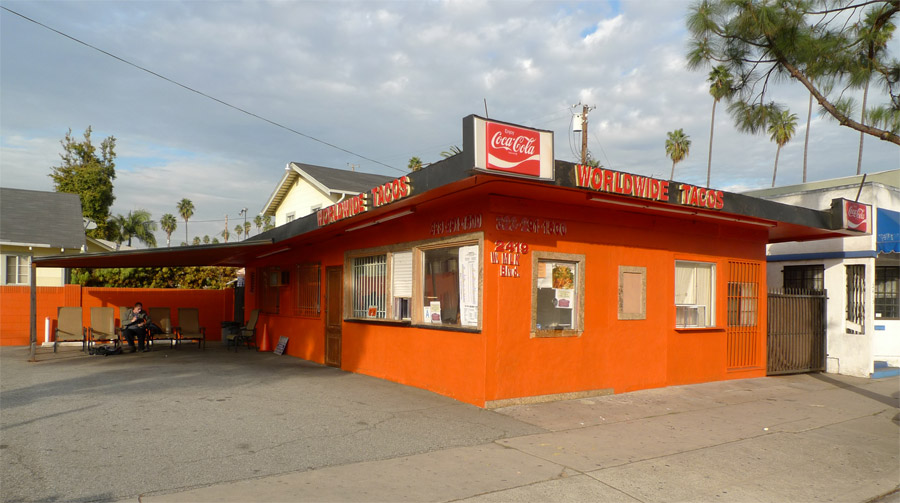
The Militant loves tacos, as you may or may know. But along the CicLAvia route is perhaps one of the most unusual taco joints around. Worldwide Tacos makes over 150 types of tacos, in chicken, beef, lamb, chicken, duck, turkey, pastrami, shrimp, fish and vegetarian varieties, all freshly-made and cooked to order. Prices range from $2.50 to $8.50 each. But that's not the catch. The catch is that the wait time ranges from 15 minutes to two hours. The Militant has not tried Worldwide Tacos (nor has he waited for one), but his operatives who have (and endured the long wait, though you can just leave them your cellphone number and they'll call you when they're ready) say they're pretty bomb-diggity. Hmmm...

15. Yellow Car Right Of Way
1902
Leimert Blvd between Martin Luther King Jr Blvd and Vernon Avenue

See that nice, wide, landscaped median to theleft of you through Leimert Park? Could you ever guess what it used to be? Yup, it was the right-of-way for the Yellow Car trolleys of the Los Angeles Railway, part of  The 5 Line, which ran from Eagle Rock (ya rly) to Hawthorne. Actually The CicLAvia route from the 110 Freeway to Vernon Avenue was part of the 5 Line, and because of that Leimert Park was originally planned as a transit-oriented community (it was also originally planned as a whites-only community, but so much for that, eh?) Incidentally, part of this historic Yellow Car Line, along Florence Avenue, will soon be re-used for rail transit as part of Metro's under-construction Crenshaw Line.

16. Leimert Theatre/Vision Theatre
1932
3341 W. 43rd Pl, Leimert Park

This Stiles O. Clements (who also architect'd the El Capitan and The Wiltern)-designed art deco movie theatre was designed  to serve the planned, Euro-inspired Leimert Park community as a stylish home of cinema. It was to be run by a venture co-owned by Howard Hughes, of all people. But the movie theatre business during the Great Depression wasn't that hot, so they soon sold it to the Westland Theatres chain, and later the movie house was owned by Fox West Coast theatres, who screened the last film there, 1968's Bonnie and Clyde. In 1977, the building was re-named "The Watchtower" and became a Jehova's Witness church. Actress Marla Gibd of "227" fame purchased the theatre in 1990 for African American arts events, but the after-efffects of the Los Angeles Riots were too strong. Finally, the City of Los Angeles bought it for arts usage, renamed it the Vision Theatre and...well, it's not quite done yet, but almost. Maybe. Cross your fingers. Neato trivia: The building's foundation was designed for a 13-story tower addition that was never built. Impress others with that fact as you pass by.

17. The World Stage
1989
4344 Degnan Blvd, Leimert Park

How interesting that things come full circle sometimes. Back towards the starting end of the route was a street that was made famous by its jazz music heritage. Now the route ends by a place that is preserving that heritage six miles across town. Founded by jazz drummer, the late Billy Higgins and poet Kamau Daaooud, there is no booze or food served here, just the arts. strictly the arts. And mostly music. Shortly after opening, the World Stage helped to inspire other jazz venues nearby, such as 5th Street Dick's Coffeehouse. Sure Degnan wasn't as jumpin' as Central back in the day, but at least the jazz was alive. Can you dig? Here's hoping you'll hear some great jazz here on Sunday.

Enjoy CicLAvia again and STAY MILITANT!

Wednesday, November 6, 2013

Party Like It's 1913: Happy 100th to an Aqueduct, a Museum, a Park!


You may or may not have known already that this has been an historic week in Los Angeles history. On Tuesday, the Los Angeles Aqueduct celebrated its 100th anniversary, noting the completion of the 238-mile long water transit system from the Eastern Sierras (which The Militant hopes to visit one day soon!) and enabled Los Angeles to grow over 10 times its size in the next century.

Today, the Natural History Museum of Los Angeles County (originally called the Los Angeles County Museum of History, Science and Art) and its adjoining Exposition Park (formerly known as Agricultural Park) celebrates their 100th anniversary too, having opened on November 6, 1913. 


Its opening date right after the Los Angeles Aqueduct was not coincidental at all -- in fact, people who attended the Aqueduct's opening celebration and saw the water arrive were encouraged to visit the museum's opening the next day, and watch the final arrival of the water as it reached the City's water system and created the fountain at the center of the central sunken garden (now today's Rose Garden).

What you may or may not have known was that there was an even grander plan to have a neo-Romanesque 100-foot-tall Los Angeles Aqueduct Memorial placed in Exposition Park (pictured left) in 1913, but the plan was too costly, so they settled for a simple fountain.

Today, there is also an exhibit on the Aqueduct: Just Add Water, a series of Aqueduct-themed art in watercolor by artist Rob Reynolds, began this week and runs until August 3 of next year. 

The park was conceived as part of the "City Beautiful Movement" sweeping cities across the U.S. in the early 1900s, where monumental buildings and cultural institutions were established to further promote 20th century urbanism at the time. Many cities like San Francisco and San Diego hosted expositions, and Expo Park, although never having hosted a World's Fair or formal exposition, was part of that trend. Exposition, like today's Grand Park, was re-modeled and re-branded from the old Agricultural Park and opened with the museum, as well as a National Guard Armory and an Exposition Building (which became the California Museum of Science an Industry, now California ScienCenter).

The museum has changed and grown over the years; the art component spun-off into its own museum in the early 1960s as LACMA on the county-owned Rancho La Brea property, and the adjacent George C. Page Museum in the 1970s.

Today, the Museum still has totally awesome exhibits like Becoming Los Angeles, the Nature Lab and of course the dinos. And Exposition Park is the only park in the country with a stadium that has hosted two Olympics and is home to a freaking Space Shuttle in it!

Happy 100th to our Aqueduct, our Natural History Museum and our Exposition Park! 


Thursday, July 25, 2013

The Militant Takes On The Natural History Museum's 'Becoming Los Angeles' Exhibit!


Though The Militant Angeleno blog is not a history blog per se, it was intended at its founding six years ago to educate what The Militant found back then to be a largely lost and clueless blogosphere in terms of basic knowledge and appreciation of life in Los Angeles. Back then, many transplants and natives alike still clung on to inaccurate pejorative generalized assumptions of Los Angeles, which were designed on purpose to deflate the pride and morale of this city's populace in the name of self-degradation. One of them was, "L.A. [sic] Has No History."

Really now. Even a settlement founded five minutes ago has a history. There is a backstory behind the hows and whys of the existence of that settlement, and the people who founded it. Not to mention that the settlement is now no longer five minutes old, but seven minutes old.

Despite that explanation, there are still some suckas who still insist that "L.A. [sic] Has No History." So instead of inflicting bodily harm on various people, The Militant decided to assume an identity and start a blog. The rest is history. Pun may or may not be intended.


The Natural History Museum is one of Los Angeles' first major civic institutions aimed at a populace that was inevitably bound to be more than just a sleepy agrarian town. A direct product of the "City Beautiful Movement" that swept the United States around the turn of the 20th Century, the museum opened 100 years ago on November 6, 1913. Along with the Los Angeles Aqueduct, which opened the day before, these were civic benchmarks of a place that was undergoing a metamorphosis, as citrus groves and avocado orchards bordered by dirt roads were being transformed into commercial districts and neighborhoods bordered by paved streets.

More than just an old-ass building with dinosaur bones that occasionally becomes a hip venue for KCRW DJs, attaining centenarian status also meant re-asserting itself as an important and vibrant  institution of learning and discovery to a city that's undergoing a new kind of metamorphosis in the 21st Century. With that, they unveiled the new "Becoming Los Angeles" permanent exhibit earlier this month. The Militant was faithfully there on Thursday to Check. It. Out.


"Becoming Los Angeles" basically explains the transformation of Los Angeles in ecological and sociopolitical aspects from Tongva nation to Spanish pueblo to Mexican rancho to Californian town to American city. The Militant realizes that it's a herculean task to condense 232 years of written history (and the few thousand years of unwritten history that precedes it)  into 14,000 square feet of museum space. Though it's not perfect, it most definitely succeeds at explaining (to newbies and hardcore militant history buffs alike, and everyone in between) the hows and whys of the origins of this grand city that we live in.

The Militant will not attempt to give you a play-by-play rundown of the entire exhibit. He doesn't intend to not only because he thinks it's important that you visit this exhibit yourself and come away with your own experience of learning our city's history, but because he doesn't want to end up writing another overtly long-ass blog post that takes him into the wee-hours of the night and causes him wake up in the early afternoon, only to discover that maybe 30 people have bothered to read his volunteer dissertation (now you know why The Militant doesn't blog as much these days).

He will say that it's a largely aesthetically-pleasing , U-shaped exhibit, which is information-packed but not uncomfortably overwhelming. He will also say that even a militant Los Angeles history buff like The Militant learned a thing or two he either didn't know before, or was explained in much more coherent terms, like how cow poop was instrumental in changing the Los Angeles landscape (The Militant won't spoil it for you, if you didn't know already, then wait for the exhibit to break it down for ya). Incidentally, "poop" is the Museum's preferred synonym for feces/excrement/droppings/doo-doo/caca/shit, as its use is consistently used in the other exhibits (Dino poop, anyone?). He will also additionally say that some of the historical artifacts included here were mind-blowing in their inclusion, such as the actual table where The Freaking Treaty of Cahuenga was signed (to think that THE John C. Fremont and THE Andres Pico actually sat there...[mind blown]).  He will even more also additionally say that your Los Angeles History Geekdom can accurately be  measured by the amount of time in minutes (or hours) that you gaze at the Downtown Los Angeles Circa 1940 scale model and view it from various angles (and take photos of it). Mark The Militant's Word!


The Militant also stepped back and looked not just at the displays themselves, but at the people perusing them, with curiosity, delight and even various levels of expertise. It was quite a sight to see 21st Century Latinos make connections with their 19th Century counterparts, a number of which we get to be acquainted with by face and name via biography.  One of the visitors commented on the picture of Eutalia Perez de Guillen Marine, who lived to the age 112(!) and said she reminded her of her own great-grandmother, and how Señora Eutalia's eyes can "look into your soul." Others were equally fascinated by the 103 year-old Rogerio Rocha (Man, what were these people eating back then, that's what The Militant wants to know!), a blacksmith of Fernandeño Indian heritage who owned his own property in the SFV but lost it to Teh White Man when American property laws went into effect in the 1850s.

And for those who know your historical figures, people like Abel Stearns, Biddy Mason and Harris Newmark, among many others, get their due props here.

As The Militant mentioned earlier, "Becoming Los Angeles" isn't perfect. Though not adversely impacting the exhibit in any major way, he feels it could be much better if the following can somehow be addressed:

- The Native American section (described specifically as "Tongva-Gabrieleño" as various tribal factions have their own variations on the name) seems kind of nominal. Maybe it's because The Militant dedicated an entire month of posts on the original native Angelenos,  but you figured the people who have been here milennia longer than the Spanish, Mexicans and Americans combined should get a little more display love. We see some nice stone artifacts, but little in the way of what they looked like and what their environment was like. It would also have been awesome to see a map of Tongva villages overlaid on a modern Los Angeles like what The Militant did.

- The Pobladores display, though featuring a neato scale diorama and a full roster of the 44 founders of El Pueblo de Nuestra Señora la Reina de los Angeles del Rio Porciuncula on September 4, 1781 by name, age and gender, still seems to be missing something. Maybe it's the (lack of) adequate lighting (these are the founders, c'mon!), maybe it's the awkward positioning in the exhibit (it's placed in a corridor, painted black, possibly easy to overlook), maybe it's way the description was written, which doesn't seem to make it plainly obvious why the Pobladores were dispatched from Mission San Gabriel and why they stopped where they stopped.

- On a similar note, the Pacific Electric display, though containing some nice mementos of our former rail transit system, doesn't seem to relay to the passing eye that it's presenting the history of a transportation system -- i.e. no pictures or models of streetcars.

- More interactive displays. The interactive video presentation of the Los Angeles Aqueduct was well done, The Militant expected a little more of that with the technology we have today. Maybe a display of how the freeway system grew over the years (many Los Angeles n00bs just assume it was built all at once when it, like today's Metro Rail system, was actually planned, funded, built and opened in phases).

- While the exhibit rightfully covers the impact of the motion picture industry, including some early artifacts, though it references the film industry's east coast origins, it doesn't explain why it ended up here (supposedly to escape possible lawsuits stemming from Thomas Edison's exclusive patent of the motion picture camera, and Hollywood, once located along a railroad line, was close enough to the Mexican border where scofflaw filmmakers could escape the country in a jiffy).

- The photo gallery along the walls towards the end of the exhibit have no captions/credits. Dunno if it's not finished yet, but it would help to have explanations for the pictures (The WWII photo display of multiethnic Angelenos involved in the war, flanking a photo of San Gabriel native Gen. George S. Patton looked nice though).

- The Internet! Dude, no mention whatsoever of The Internet's 1969 birth in a UCLA computer lab?! Whatup with that?

The exhibit ends with a photo montage projection of historic events from the 1940s to the 2010s and a video of the Los Angeles cityscape framed by questions that lead the visitor to ponder the city's future.
Because we are also a living part of Los Angeles history.


Do The Militant a favor and visit this exhibit. Give yourself about one and a half to two hours to enjoy the whole thing. Don't rush it (The Militant sorta did towards the end but it worked out in his favor since there was a power outage at the museum on Thursday afternoon). And after you do visit it, encourage your friends and family to visit it. And especially tell your friends/relatives transplanting themselves from Out East, Flyover Country and Up North to visit it, especially within their first month in town.

Los Angeles never lacked a history. But for the longest time we lacked a common mechanism in which to learn it. It's not something the LAUSD teaches its kids (nor is it something the LAUSD wants its kids to learn, especially in this era of standardized testing and their overall systematic decimation of learning). It wasn't until websites, blogs and social media made it easier to learn the hows and whys of this grand city, and glimpse into the way our familiar streets looked like to previous generations.

Visiting the "Becoming Los Angeles" exhibit is probably one of the most important things you should be doing as an Angeleno. Though obviously not hyper-comprehensive, it's complete enough that it gives a baseline history that should form the basis of our common understanding of local history. And it stimulates our curiosities enough that if we want to learn more, we can. Militant-Approved!

Too bad it had to take 100 years to make all this happen.