Interactive Map! Click on green points to view hotspots, or click on entire map for larger view.
Well well well, it's CicLAvia time again. Just when we thought we'd have to wait until Spring...BOOM! Here comes another one. Which is all right with The Militant.
Now, originally, The Militant was going to stop doing these tour guides because like only 20 people really read them. Yeah, they really, really like them, but if only 20 people will benefit from it, he might as well just send them a CC:'ed email.
But The Militant didn't want to leave South Los Angeles behind. There's a history to this place too, a very rich one, and by skipping this, many CicLAvians would be oblivious to it. Alas, he did this for the good of the community.
So for the 20 of you who really dig this, enjoy. The Militant will now get some sleep now after working on this all night.
Central Avenue Corridor

1. Tacos El Gavilan/Site of 1st McDonalds in Los Angeles
1957
1900 S. Central Ave, South Los Angeles
1957
1900 S. Central Ave, South Los Angeles
What is currently a taco stand at the southeast corner of Central and Washington was once the first McDonalds in the city of Los Angeles (and the 11th McDs in the entire chain) which opened in 1957. As you may or may not know, McDonalds originated in San Bernardino in 1940 by the McDonald brothers, and was later taken over by Illinois businessman Ray Kroc, who turned the unique Southern California hamburger chain into the gargantuan unhealthy corporate chain we know today. The trademark side arches were present on this building (and a single arch present on the corner sign) up until the early 2000s. But hey, tacos are more healthy for you than McDonalds junk, so eat up.

2. Lincoln Theater
1926
2300 S. Central Ave, South Los Angeles
1926
2300 S. Central Ave, South Los Angeles
From 1927 to the 1950s, this Moorish Revival theatre, designed by John Paxton Perrine featured the finest live entertainment by black performers, to a predominantly black audience (though notable white folks like Charlie Chaplin dug it as well). It was even nicknamed the "West Coast Apollo" during its heyday, which featured the likes of Duke Ellington, Nat King Cole and Billie Holliday gracing its stage. In 1962 the building was purchased by the First Jurisdiction of the Church of God in Christ and remains a house of worship today, this time as the the Iglesia de Cristo Ministries Juda. The Lincoln Theater building was designated as a City of Los Angeles Historic-Cultural Monument in 2003 and was added to the National Register of Historic Places in 2009.
.jpg)
1926
2412 Griffith Avenue, South Los Angeles
Built around the same time as the Lincoln Theater is this building that has always been a church. But it's one building that's rich in African American history. It was the host venue for the NAACP's national conventions in 1928 (the first-ever on the West Coast), 1942 and 1949. In 1962, Malcolm X spoke at a meeting held at the church. And Dr. Martin Luther King Jr himself spoke here in 1964 and 1968 -- the latter appearance, just two weeks before he was martyred in Memphis. Tennessee. To top it all off, this Lombardy Romanesque Revival building was designed by none other than famed African American architect Paul R. Williams, who designed many buildings around Los Angeles, most notably this one. This building is also designated as a City of Los Angeles Historic-Cultural Monument (1978)
and was likewise added to the National Register of Historic Places (2009).
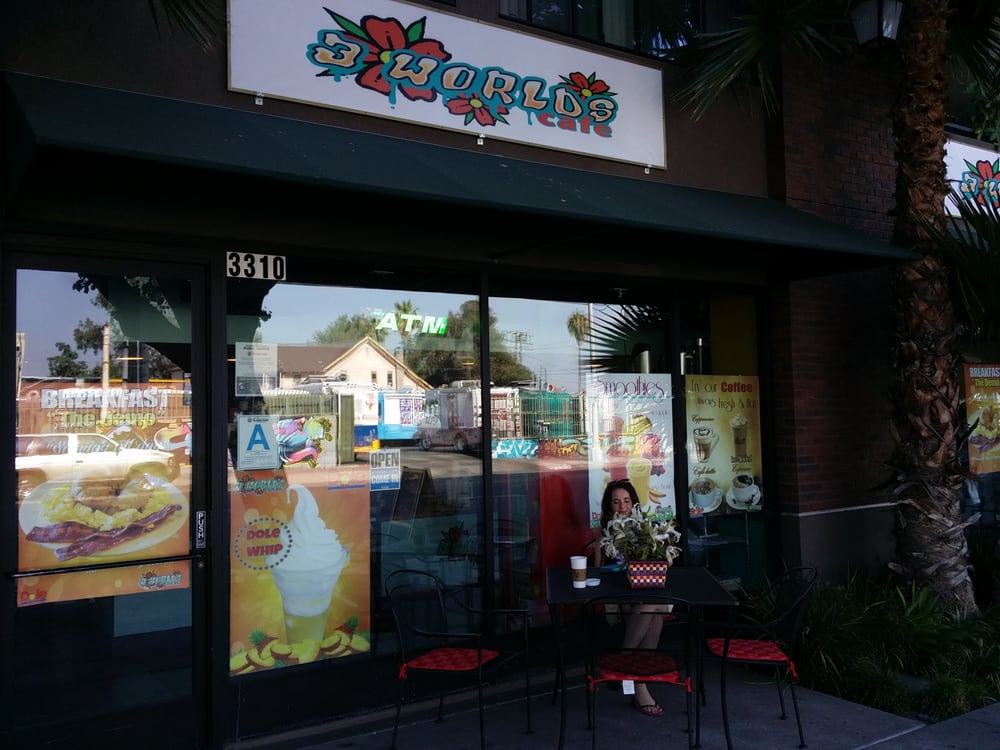 4. 3 Worlds Cafe
2013
3310 S. Central Ave, South Los Angeles
This social enterprise, created by the collaborative efforts of Los Angeles foodie magnate Roy Choi, the Coalition for Responsible Community Development, Jefferson High School and Dole Foods, trains local youth to make and serve healthy foods while learning job skills. The name refers to the Latino, Asian and African American cultures of the youth in the community. According to many folks, the food is pretty damn good, so don't sleep.
NAVIGATIONAL NOTE:
• If heading west on Martin Luther King Jr Blvd, skip to #9.
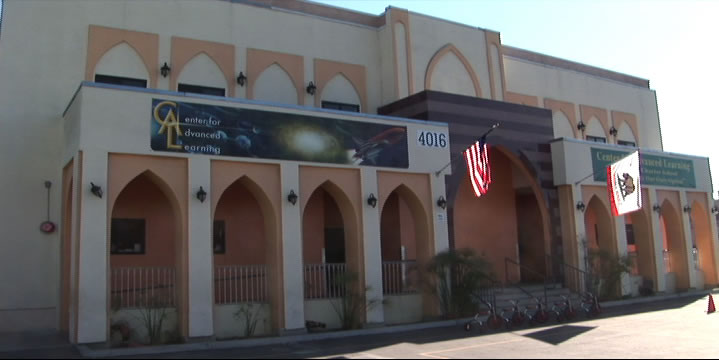 5. Masjid Bilal Islamic Center/Site of Elks Lodge
1929
4016 S. Central Ave, South Los Angeles
This mainstay of the local Muslim community since 1973 also has a deep history in the local black community. The building was originally built in 1929 as the home of the local Elks club. But it was no ordinary Elks Club (who discriminated against black membership). It was run by the Improved and Benevolent Protective Order of Elks of the World, an African American-run organization founded in Cincinnati, Ohio in 1898 that functioned as a fraternal order for people of color. Though obviously not directly affiliated with the white Elks club, it is run with the otherwise identical customs and traditions, and with nearly half a million members worldwide, is the largest black fraternal organization in the world.
2013
3310 S. Central Ave, South Los Angeles
This social enterprise, created by the collaborative efforts of Los Angeles foodie magnate Roy Choi, the Coalition for Responsible Community Development, Jefferson High School and Dole Foods, trains local youth to make and serve healthy foods while learning job skills. The name refers to the Latino, Asian and African American cultures of the youth in the community. According to many folks, the food is pretty damn good, so don't sleep.
NAVIGATIONAL NOTE:
• If heading west on Martin Luther King Jr Blvd, skip to #9.
1929
4016 S. Central Ave, South Los Angeles
This mainstay of the local Muslim community since 1973 also has a deep history in the local black community. The building was originally built in 1929 as the home of the local Elks club. But it was no ordinary Elks Club (who discriminated against black membership). It was run by the Improved and Benevolent Protective Order of Elks of the World, an African American-run organization founded in Cincinnati, Ohio in 1898 that functioned as a fraternal order for people of color. Though obviously not directly affiliated with the white Elks club, it is run with the otherwise identical customs and traditions, and with nearly half a million members worldwide, is the largest black fraternal organization in the world.

1919
1221 E. 40th Place, South Los Angeles
The Central Avenue corridor was home to Los Angeles' black community, primarily due to the racial covenants that restricted them from owning homes elsewhere in the city. But great things can come from places of injustice. Ralph J. Bunche was a teenager arriving with his family from Detroit, by way of Ohio and New Mexico, who attended nearby Jefferson High School and went to UCLA, graduating as the valedictorian at both schools. He went on to Harvard, where he earned his Ph.D in Political Science (the first African American to receive a doctorate in PoliSci from a U.S. university), and later was one of the founders of the United Nations. In 1950, due to his diplomatic work in the negotiations that ended the 1948 Arab-Israeli War, he won the Nobel Peace Prize -- the first nonwhite person to ever win the esteemed award. And he once lived right here, just two blocks east of the CicLAvia route.
7. Black Panther Headquarters
1969
41st & Central, South Los Angeles
The corner of 41st Street and Central Avenue wasn't just the Los Angeles headquarters of the Black Panther Party (that's some real Militants right there), but in a time where the names Mike Brown and Eric Garner have been fresh on the minds of people, it was the site of a significant event in the tumultuous history of relations between the black community and the Los Angeles Police Department. On December 8, 1969 -- 45 years before the day after CicLAvia -- police officers arrested a number of people on that corner for loitering, which eventually escalated into a four-hour armed confrontation. The LAPD used a previously untested paramilitary unit during the raid, which was called the Special Weapons And Tactics unit, or SWAT. Four LAPD officers and four Black Panther members were seriously injured during the shootout, but miraculously no one died. The building that housed the headquarters was demolished in 1970.
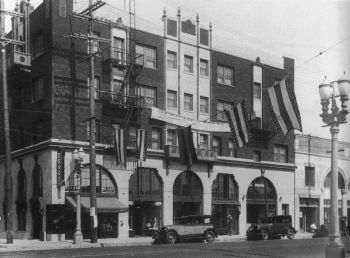
1928
4225 S. Central Avenue
Built in 1928 (then known as the Hotel Somerville, the only hotel in Los Angeles at the time to welcome black people) as the primary accommodations venue for the 1928 NAACP national convention at the nearby Second Baptist Church, The Dunbar is one of the few remaining physical symbols of the Central Avenue of yesteryear, the hotspot of all that is jazz and blues. In the perspective of Los Angeles music history, Central Avenue in the 1920s-1950s was the Sunset Strip of the 1960s-1980s. And perhaps even more. A nightclub opened at the hotel just a few years after its opening, and legends such as Count Basie, Cab Calloway, Lena Horne and Billie Holliday. Next door was the Club Alabam, another one of the most popular jazz venues on Central Avenue. Known for its classy image and celebrity clientele (both black and white), legends such as Duke Ellington, Charlie Parker and Miles Davis graced the stage. Today, the Dunbar Hotel building serves as an affordable housing complex for seniors.
Martin Luther King Jr. Corridor

1925 (demolished 1969)
Avalon Blvd & 42nd Place
Just a few blocks south of the CicLAvia route is Gilbert W. Lindsay Park, named after Los Angeles' first African American city councilman. But years ago, this was the place where home runs, strikeouts and 7th Inning Stretches took place in the City of Angels. And yes it was a city of Angels, as the Los Angeles Angels of the Pacific Coast League made the 22.000-capacity Wrigley Field (named after the chewing gum magnate, who had several stakes in Southern California, including Catalina Island) its home. And as any truly militant Angeleno knows, the ivy-and-brick Chi-town tourist trap, though 11 years older, was originally called Weeghman Park and wasn't dubbed Wrigley Field until 1927, which made Los Angeles' Wrigley Field the first Wrigley Field ever. The stadium also was popular with TV and movie shoots, such as Damn Yankees and The Twilight Zone. In 1961, it literally went Major League as the American League expansion team Los Angeles Angels of Los Angeles played its home games there before moving to Dodger Sta, er, Chavez Ravine for the next four seasons, and then finally moving down the 5 to Anaheim. Yes, there's a baseball field in the park, but it's not the same location as the original diamond.

Re-planted 1914
3939 S. Figueroa St, Exposition Park
Back in the late 1800s-early 1900s, the Southern Pacific Railroad operate out of a train station called the Arcade Station, on 5th and Alameda streets. A lone palm tree stood outside the station and functioned as a landmark for arriving passengers coming in from San Francisco or points east. In 1914 (dude, a hundred years ago) the Arcade Station was demolished (no, it wasn't consumed by a fire) to make way for a more modern station, called Central Station, and the palm tree had to go. So sentimental was the palm tree, instead of being cut down, it was moved to Exposition Park, where it has stood ever since. Like its neighbor the Space Shuttle Endeavour, it was a popular icon back in its day, and it's probably safe to assume that its transport through town was an event in itself. A little-known historic market at the base of the tree tells the whole story. So if you want to see a palm tree that was planted there 100 years ago, there you go.

1932
Bill Robertson Drive & Park Lane, Exposition Park
The Coliseum's little brother, the Los Angeles Swimming Stadium was the 10,000-seat venue for the 1932 Olympic swimming, diving and water polo competitions, as well as the aquatic portions of the pentathlon event. Olympians such as Buster Crabbe swam in its waters. After the games, it became a public pool, and in the '50s, USC's swim team used it as their training and competing venue. After over a half century of wear, and damage from the 1994 Northridge Earthquake, the swim stadium was renovated in 2002 and operates today as the LA84 Foundation/John C. Argue Swim Stadium. Marco...Polo!
Bill Robertson Drive & Park Lane, Exposition Park
The Coliseum's little brother, the Los Angeles Swimming Stadium was the 10,000-seat venue for the 1932 Olympic swimming, diving and water polo competitions, as well as the aquatic portions of the pentathlon event. Olympians such as Buster Crabbe swam in its waters. After the games, it became a public pool, and in the '50s, USC's swim team used it as their training and competing venue. After over a half century of wear, and damage from the 1994 Northridge Earthquake, the swim stadium was renovated in 2002 and operates today as the LA84 Foundation/John C. Argue Swim Stadium. Marco...Polo!
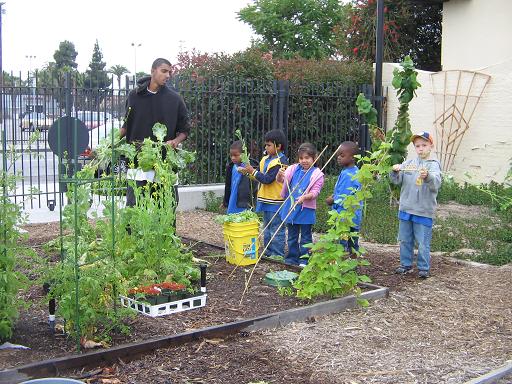
2003
Bill Robertson Lane and Martin Luther King Jr Blvd, Exposition Park
Did you know there's an urban garden along the CicLAvia route? Local nonprofit Community Services Unlimited (an organization that, interestingly enough, originated from the Black Panther Party's community outreach programs in the 1970s) grows their own organic fruits and vegetables in this Exposition Park urban garden that they sell and distribute in this predominantly food desert area to help local residents gain access to fresh, healthy produce. They sell this produce at a stand outside the LA84/John C. Argue Swim Stadium next door on Thursday afternoons from 3 to 6 p.m.
Bill Robertson Lane and Martin Luther King Jr Blvd, Exposition Park
Did you know there's an urban garden along the CicLAvia route? Local nonprofit Community Services Unlimited (an organization that, interestingly enough, originated from the Black Panther Party's community outreach programs in the 1970s) grows their own organic fruits and vegetables in this Exposition Park urban garden that they sell and distribute in this predominantly food desert area to help local residents gain access to fresh, healthy produce. They sell this produce at a stand outside the LA84/John C. Argue Swim Stadium next door on Thursday afternoons from 3 to 6 p.m.
13. Celes King III Bail Bonds
1949
1530 Martin Luther King Jr Blvd, Vermont Square
Why is a Bail Bonds joint listed in the Militant's CicLAvia tour? WTF? Well, before 1983, this street was known as Santa Barbara Avenue. Celes King III was the person who lobbied to change the name of the street to Martin Luther King Jr (no relation) Blvd. A real estate broker, bail bondman, outspoken Republican, former Tuskeegee Airman, failed City Council candidate, co-founder of the Brotherhood Crusade and founder of the Kingdom Day Parade, he successfully lobbied the L.A. City Council in 1983 to re-name Santa Barbara Ave. after the slain civil rights leader -- albeit not without controversy. Some of his critics accused him of doing it to irritate then-Mayor Tom Bradley, one of his political enemies, and others have criticized CK3 of conflict of interest (his residence (he lived in the apartment upstairs) and his bail bonds business were located on Santa Barbara Ave after all) and even ego trippin' (the short-hand street signs say "King Bl"-- the same as his own last name). Whether this was a self-aggrandizing stunt or a genuine tribute to an American hero, we will never know: Celes King III died in 2003. But here's one interesting CicLAvia route fact: His father, Celes King, Jr was the owner of Central Avenue's Dunbar Hotel back in its heyday.
1949
1530 Martin Luther King Jr Blvd, Vermont Square
Why is a Bail Bonds joint listed in the Militant's CicLAvia tour? WTF? Well, before 1983, this street was known as Santa Barbara Avenue. Celes King III was the person who lobbied to change the name of the street to Martin Luther King Jr (no relation) Blvd. A real estate broker, bail bondman, outspoken Republican, former Tuskeegee Airman, failed City Council candidate, co-founder of the Brotherhood Crusade and founder of the Kingdom Day Parade, he successfully lobbied the L.A. City Council in 1983 to re-name Santa Barbara Ave. after the slain civil rights leader -- albeit not without controversy. Some of his critics accused him of doing it to irritate then-Mayor Tom Bradley, one of his political enemies, and others have criticized CK3 of conflict of interest (his residence (he lived in the apartment upstairs) and his bail bonds business were located on Santa Barbara Ave after all) and even ego trippin' (the short-hand street signs say "King Bl"-- the same as his own last name). Whether this was a self-aggrandizing stunt or a genuine tribute to an American hero, we will never know: Celes King III died in 2003. But here's one interesting CicLAvia route fact: His father, Celes King, Jr was the owner of Central Avenue's Dunbar Hotel back in its heyday.
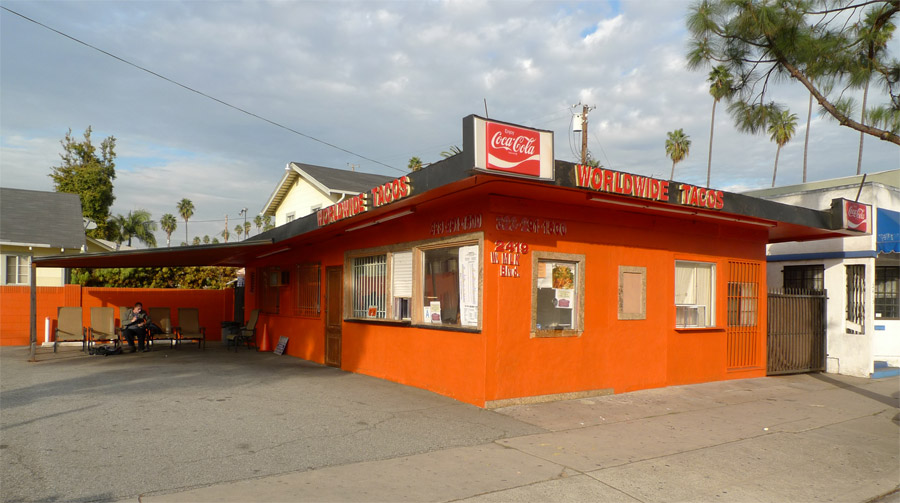
[Year Unknown]
2419 Martin Luther King Blvd, Leimert Park
The Militant loves tacos, as you may or may know. But along the CicLAvia route is perhaps one of the most unusual taco joints around. Worldwide Tacos makes over 150 types of tacos, in chicken, beef, lamb, chicken, duck, turkey, pastrami, shrimp, fish and vegetarian varieties, all freshly-made and cooked to order. Prices range from $2.50 to $8.50 each. But that's not the catch. The catch is that the wait time ranges from 15 minutes to two hours. The Militant has not tried Worldwide Tacos (nor has he waited for one), but his operatives who have (and endured the long wait, though you can just leave them your cellphone number and they'll call you when they're ready) say they're pretty bomb-diggity. Hmmm...
 15. Yellow Car Right Of Way
1902
Leimert Blvd between Martin Luther King Jr Blvd and Vernon Avenue
See that nice, wide, landscaped median to theleft of you through Leimert Park? Could you ever guess what it used to be? Yup, it was the right-of-way for the Yellow Car trolleys of the Los Angeles Railway, part of The 5 Line, which ran from Eagle Rock (ya rly) to Hawthorne. Actually The CicLAvia route from the 110 Freeway to Vernon Avenue was part of the 5 Line, and because of that Leimert Park was originally planned as a transit-oriented community (it was also originally planned as a whites-only community, but so much for that, eh?) Incidentally, part of this historic Yellow Car Line, along Florence Avenue, will soon be re-used for rail transit as part of Metro's under-construction Crenshaw Line.
 16. Leimert Theatre/Vision Theatre
The Militant loves tacos, as you may or may know. But along the CicLAvia route is perhaps one of the most unusual taco joints around. Worldwide Tacos makes over 150 types of tacos, in chicken, beef, lamb, chicken, duck, turkey, pastrami, shrimp, fish and vegetarian varieties, all freshly-made and cooked to order. Prices range from $2.50 to $8.50 each. But that's not the catch. The catch is that the wait time ranges from 15 minutes to two hours. The Militant has not tried Worldwide Tacos (nor has he waited for one), but his operatives who have (and endured the long wait, though you can just leave them your cellphone number and they'll call you when they're ready) say they're pretty bomb-diggity. Hmmm...
1902
Leimert Blvd between Martin Luther King Jr Blvd and Vernon Avenue
See that nice, wide, landscaped median to theleft of you through Leimert Park? Could you ever guess what it used to be? Yup, it was the right-of-way for the Yellow Car trolleys of the Los Angeles Railway, part of The 5 Line, which ran from Eagle Rock (ya rly) to Hawthorne. Actually The CicLAvia route from the 110 Freeway to Vernon Avenue was part of the 5 Line, and because of that Leimert Park was originally planned as a transit-oriented community (it was also originally planned as a whites-only community, but so much for that, eh?) Incidentally, part of this historic Yellow Car Line, along Florence Avenue, will soon be re-used for rail transit as part of Metro's under-construction Crenshaw Line.
1932
3341 W. 43rd Pl, Leimert Park
This Stiles O. Clements (who also architect'd the El Capitan and The Wiltern)-designed art deco movie theatre was designed to serve the planned, Euro-inspired Leimert Park community as a stylish home of cinema. It was to be run by a venture co-owned by Howard Hughes, of all people. But the movie theatre business during the Great Depression wasn't that hot, so they soon sold it to the Westland Theatres chain, and later the movie house was owned by Fox West Coast theatres, who screened the last film there, 1968's Bonnie and Clyde. In 1977, the building was re-named "The Watchtower" and became a Jehova's Witness church. Actress Marla Gibd of "227" fame purchased the theatre in 1990 for African American arts events, but the after-efffects of the Los Angeles Riots were too strong. Finally, the City of Los Angeles bought it for arts usage, renamed it the Vision Theatre and...well, it's not quite done yet, but almost. Maybe. Cross your fingers. Neato trivia: The building's foundation was designed for a 13-story tower addition that was never built. Impress others with that fact as you pass by.
17. The World Stage
1989
4344 Degnan Blvd, Leimert Park
How interesting that things come full circle sometimes. Back towards the starting end of the route was a street that was made famous by its jazz music heritage. Now the route ends by a place that is preserving that heritage six miles across town. Founded by jazz drummer, the late Billy Higgins and poet Kamau Daaooud, there is no booze or food served here, just the arts. strictly the arts. And mostly music. Shortly after opening, the World Stage helped to inspire other jazz venues nearby, such as 5th Street Dick's Coffeehouse. Sure Degnan wasn't as jumpin' as Central back in the day, but at least the jazz was alive. Can you dig? Here's hoping you'll hear some great jazz here on Sunday.
Enjoy CicLAvia again and STAY MILITANT!
This Stiles O. Clements (who also architect'd the El Capitan and The Wiltern)-designed art deco movie theatre was designed to serve the planned, Euro-inspired Leimert Park community as a stylish home of cinema. It was to be run by a venture co-owned by Howard Hughes, of all people. But the movie theatre business during the Great Depression wasn't that hot, so they soon sold it to the Westland Theatres chain, and later the movie house was owned by Fox West Coast theatres, who screened the last film there, 1968's Bonnie and Clyde. In 1977, the building was re-named "The Watchtower" and became a Jehova's Witness church. Actress Marla Gibd of "227" fame purchased the theatre in 1990 for African American arts events, but the after-efffects of the Los Angeles Riots were too strong. Finally, the City of Los Angeles bought it for arts usage, renamed it the Vision Theatre and...well, it's not quite done yet, but almost. Maybe. Cross your fingers. Neato trivia: The building's foundation was designed for a 13-story tower addition that was never built. Impress others with that fact as you pass by.
17. The World Stage
1989
4344 Degnan Blvd, Leimert Park
How interesting that things come full circle sometimes. Back towards the starting end of the route was a street that was made famous by its jazz music heritage. Now the route ends by a place that is preserving that heritage six miles across town. Founded by jazz drummer, the late Billy Higgins and poet Kamau Daaooud, there is no booze or food served here, just the arts. strictly the arts. And mostly music. Shortly after opening, the World Stage helped to inspire other jazz venues nearby, such as 5th Street Dick's Coffeehouse. Sure Degnan wasn't as jumpin' as Central back in the day, but at least the jazz was alive. Can you dig? Here's hoping you'll hear some great jazz here on Sunday.
Enjoy CicLAvia again and STAY MILITANT!