Showing posts with label Marina Del Rey. Show all posts

Saturday, August 15, 2015

Ask The Militant: Alsace and Alla That

Whatup, readers! The Militant is proud to debut what may or may not be the first installment of a new feature of The Militant Angeleno blog called, "Ask The Militant," an interactive post where interested readers query The Militant himself on their questions about Los Angeles.

First off, The Militant thought he first did this a long time ago, but after searching the blog archives, he probably didn't after all. See, people ask him questions all the time and he keeps promising to reply to them via a blog post. Guess it never happened after all.

Anyways, no time like the present, right? This particular question was originally asked back in 2012, but it wasn't until doing research on an upcoming epic Pacific Electric project recently that this email popped back into The Militant's consciousness and he finally had a definitive answer. So without much ado, [drum roll] Tun-ta-ru-run! At long last, heere is "Ask The Militant!"

Hello Militant Angeleno,

Relatively short time reader of your blog - only been following for the past [couple years] or so. I know you're interested in finding hidden/lost things in Los Angeles, and there are a few little L.A. mysteries in my area myself that I've been trying to figure out, but without much success. I thought you might enjoy trying to figure them out since you seem to be pretty good at it.

The first are mystery towns of "Alla" and "Alsace" that appear on Google Maps:


These also have corresponding entries in Wikipeadia, but with no information:
Alsace: http://en.wikipedia.org/wiki/Alsace,_California
Alla: http://en.wikipedia.org/wiki/Alla,_California

Pretty boring, but then you get into abandoned rails in LA and you start seeing these names as stations on routes.


Here is mention of Alla and Alasce on the Inglewood Line: http://www.erha.org/pewil.htm
Here is mention of Alla on the Culver to Alla line: http://www.abandonedrails.com/Culver_Junction_to_Alla
And here they are both mentioned again on the inglewood line: http://www.abandonedrails.com/Inglewood_Branch

Additionally, there is a park called Glen Alla Park right in the area: http://www.laparks.org/dos/parks/facility/glenAllaPk.htm

So the questions are, were these simply just stations? Were they small towns that didn't end up making it that were annexed by LA or other cities? Who was Glen Alla and why are there things named after him? And where does the name Alasce come from?

Anyways, I hope you find this interesting enough to look into, and even more hopefully you can find out some information about it. I think it would be a great post for your blog.

Cheers,
Joe Nascenzi
Playa Vista

Whatup Joe!

Thanks for emailing The Militant. First off, he apologizes for taking so long to respond. But hey, it's new to the readers of this blog!

The reason why you find these obscure names in Google Maps is because Google initially populated the maps using multiple map data sources, including historical and old railroad survey maps. As Google Maps became more commonly used, certain places got updated due to user feedback. So for "Alla" and "Alsace," they likely used this historical data to put in names of areas, that have been unknowingly long been out of use.

Anyways, "Alla," as you may or may not have found out already, is short for "Glen Alla." The name "Glen Alla" is not of a person, but a valley in County Donegal, in north Ireland.

Back then, that part of the Westside was basically nothing but marshes and wetlands (the Marina didn't even exist until the 1950s), but if there was something, like the few scattered houses and farms, there was a need to give the surrounding vicinity a name. Naming places after where the property owner came from was popular, like Los Angeles Harbor founder Phineas Banning naming Wilmington after his Delaware hometown. Don't know who exactly named it "Glen Alla," but it most likely was an Irishman (nope, not William Mulholland; he was an Eastside vato) who owned some land out there.

Alla Road street sign (Hey look, it's a 1985 Trapezoid Style!) in Del Rey.

The Pacific Electric Railway made an "Alla" a passenger stop and a junction, right where their Inglewood and Redondo-Del Rey lines met, approximately where Alla Road and Culver Boulevard intersect today. When the old PE right-of-way in the middle of Culver Boulevard was converted into a bicycle path in the late 1990s, the old rail property, which was sold by the Southern Pacific Railroad to the Los Angeles County Transportation Commission (now part of Metro), was referred to as the PE "Alla Branch."

Glen Alla Park, with the Del Rey Farmers' Market on Friday afternoons.
Today, "Alla" is now considered part of the Los Angeles city neighborhood of Del Rey, home of Glen Alla Park and its Del Rey Certified Farmers' Market on Friday afternoons from 2 to 7 p.m.

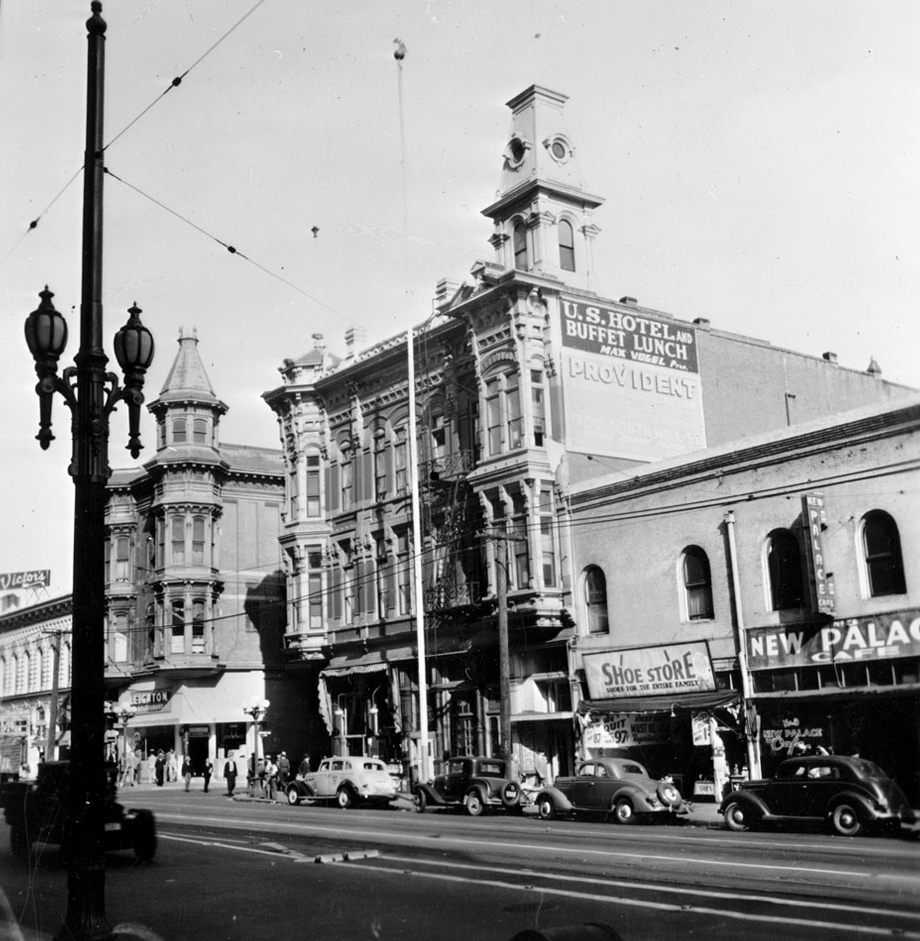
"Alsace" is also a European location, named after a region in northeastern France. Louis Mesmer (1829-1900), an early American-era Los Angeles land pioneer was a man who came from the Alsace region of France and first worked here as a baker, later making money in real estate, most notably owning the old U. S. Hotel which once stood on 170 N. Main Street in Downtown Los Angeles (It's now the area between City Hall East and the old Parker Center), and playing a key role in the construction of the St. Vibiana Cathedral (now the Vibiana event center). He also bought land in what is now around the West Los Angeles/Culver City/Del Rey area. He was one of the people who first envisioned building a port near the Playa Del Rey/Ballona delta area, which eventually became realized as Marina Del Rey, nearly a century later.

Mesmer City, the town that never was.

In the 1920s, a developer had large plans for a failed project called "Mesmer City" in that area, and a street named "Mesmer Avenue" remains there, west of the 405.

The area you found as "Alsace" is directly adjacent (west) of this "Mesmer City" development. In fact, on the Pacific Electric's Inglewood Line, heading east, it was the stop after Alla and before Mesmer. So it's safe to assume "Alsace" was named by Louis Mesmer, perhaps because the broad plain surrounding Ballona Creek might have resembled the Rhine River plain of his homeland.
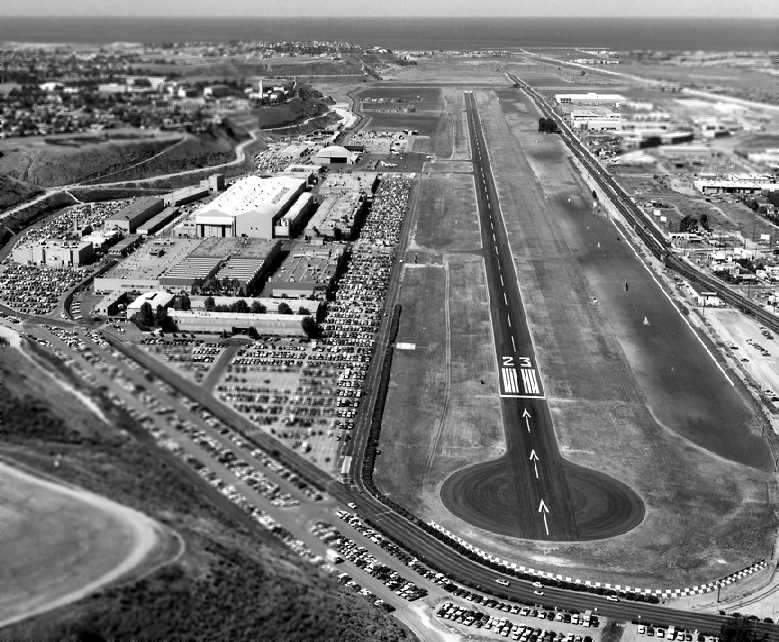
Alsace in 1972, when Hughes Airport stood there.

In 1940, 20th century tycoon Howard Hughes purchased 380 acres of the wetland area known as Alsace to build the privately-owned Hughes Airport for his Hughes Aircraft company. Famous former Long Beach resident, the Spruce Goose airplane, was built on those grounds.


Alsace in 2015 (Jefferson Blvd, looking east). Louis Mesmer would like totally trip.

Today. historic Alsace is now Playa Vista (where you live now!), the planned residential and commercial community that was developed in 2002 along the westernmost stretch of Jefferson Boulevard.

So now you know! You can now say that you're a proud resident of Alsace!

Stay Militant!
MA

If you have a historical, cultural, current curiosity or any sort of question regarding Los Angeles people, places or things, shoot The Militant Angeleno an email at militantangeleno [at] gmail [dot] com (make sure you put "Ask The Militant" in the Subject: line) and he may or may not answer you!

Saturday, October 30, 2010

Massively Critical: The October Critical Mass Ride

The Militant hasn't done a group bicycle ride in a looong-ass time, so he figured he'd check out this month's last-Friday-of-the-month Los Angeles Critical Mass ride on Friday night, having heard it's quite the shiznit these days, with upwards of over 1800 cyclists, and a police escort which followed this unfortunate incident last year.

This was the Militant's first CM ride in over three years. When he first rode in Spring 2007, about 60 riders started at Wilshire and Western, snaked through Koreatown, Hollywood, Silver Lake, Historic Filipinotown and finally ended unceremoniously in Downtown Los Angeles...with about six riders. The Militant thought it was teh lame and has avoided it since, in favor of these rides and this (now defunct) ride.

But now that CM has grown to the size and scope of its originator up north, the Militant wanted to check it out.

He rode over from the Militant Compound to Wilshire/Western, where some 1300 cyclists gathered (pictured right). And just at the ready, LAPD motorcycles were lined up around the corner, with a number of bike cops waiting at the base of the Solair Wilshire building.

The most interesting observation coming back from the Militant's two-year absence from group rides? The change in the group ride demographic. The majority of riders no longer comprises of white hipsters on fixies, but Latino teenagers...on fixies.

The 30-mile ride got underway at around 7:45 p.m., headed north on Western, west on 6th Street, north on Highland, west on Melrose, south on La Cienega...

...and then, well it sorta got iffy after that. The pack thinned out greatly. In fact, though the po-po were escorting us, they were also ticketing cyclists at every other lighted intersection for running red lights. It was sort of bizarre. One female cyclist openly wept as she tried to reason with the officer.

As we headed down La Cienega, there was some confusion as to where to go. Apparently, the pack turned west on Pico, but we continued south on La Brea and turned west on Venice Blvd. towards Culver City.

But Venice Blvd already has a bike lane, and the Militant was increasingly feeling the uselessness of this ride using a pre-existing bike lane when for the past five miles or so we took over the streets (which is the point of Critical Mass in the first place, no?).

At one point, after Mar Vista and into eastern Venice, the Militant was riding all alone. Hmm, this evening started out as Critical Mass and ended like...well, any other night the Militant rides his bike alone. He overheard people heading south on Lincoln, so he dismounted and hung out on Lincoln and Venice. There were other cyclists on each corner, either hanging out or waiting for others. He even saw some head north on Lincoln. At this point, he thought, "Critical Mass the Militant's Ass!" And contemplated either riding the 33 Metro Local bus or his bike back to his compound.

Suddenly, at around 9:25 p.m., a huge gaggle of riders came up to the street and stopped at the light (Pictured left). Here they are! They probably did go down Pico after all. Los Angeles, you never fail the Militant!

Now joining what now looks like a couple hundred riders, we descended south on Lincoln towards Marina Del Rey and Playa Vista, where we got ready to turn left on Jefferson. But since we were all bicycles and there were no cars stopped on top of the road sensors circles, the left turn green light never came. After over 5 minutes waiting at the left turn lane, two motorcycle officers went ahead on a red light and we all followed them.

There were whoops and hollers as we bolted east on Jefferson back towards Culver City. But then again, at every lighted intersection, cyclists were getting red light tickets. So basically, never bolt past a red light (when the police are present, unless they actually allow you to...).

We headed left on Sepulveda and hit Venice Blvd. Being All Hallow's Eve Eve Eve, a number of cyclists wore costumes, everything from the standard zombie and skeleton to some of the more creative ones - including an iPod and Elliot (a dude wearing a red-hooded sweatshirt with an E.T. doll in his bike's front basket - clever).

There were also some pretty tricked-out bikes, including one pulling a long trailer, and one extremely illuminated cycle owned by Dego from Downtown Los Angeles, who had built his over the past couple years and powers all his lights with a 38-volt battery mounted behind his saddle.

We headed east on Venice, using the bike lane again, and didn't turn north again until Western, where the Militant returned back to the Metro station at Wilshire, where he met up with an operative. What started out as roughly 1300 turned into...13.

In all it was a fun night, though the police presence was confusing. June's much-lauded Critical Mass was called a "love fest" between cyclists and LAPD, but the Militant overheard incidents of officers being unnecessarily rude to CM participants. There were riders who had great conversations with the police, mainly the younger officers on bikes (a number of them did look like they were having fun - they normally don't get to ride that far). Officers do have to uphold the law as they are sworn to do, but as the pack thins out dramatically, the purpose of Critical Mass is all for naught. It looked like there were enough tickets handed out to balance the City's budget woes. So thank a cyclist if that happens.

In the meantime, the Militant will look out for the other group rides. Or...he may or may not organize one of his own. Who's down for that?!

Sunday, September 27, 2009

The Militant's Refuge By The Sea

Many years ago, in the early 1990s, The Militant (though not yet realizing he was the Militant, but the same person nonetheless) went through a string of transitions. He had just gotten his driver's license, now freely exploring the same streets of which he studied the Thomas Guide for, yet at the same time he had just broken up with his girlfriend at the time.

The breakup was initiated by her, so the Militant spent many an emo night in despair and introspection. He recalls one fine night driving out to Marina Del Rey to some place by a breakwater, just to shed a tear, concealed under the veil of the night sky.

It's been years since that time and many things have changed in the Militant's life, but the exact location of his emotional refuge had been forgotten over the years.

On Saturday night, while being in the area, he decided to find this place from his past.

He had to play it by ear, by process of elimination. It wasn't near Playa Del Rey, as he hadn't yet discovered that part of town until he started his summer bike rides there a few years later. It wasn't Burton Chace Park, which was in the Marina, but quite a ways in from the sea.

The only place left was the little peninsula where southern Venice Beach meets the northern shore of the Marina Del Rey inlet.

So he continued driving through Admiralty Way and Via Marina, crossing all of the streets named after islands in Asia and the Pacific that served as key theaters of battle during World War II: Palawan, Panay, Marquesas, Tahiti, Bora Bora.

Then came a lighted, empty parking lot at the end of Via Marina, sporting a waterfront walking path that led to the sea.

Eureka. He found it.

One problem, though - parking there is verboten between 10 p.m. and 6 a.m.

It was 11 p.m. And lo and behold, as if on cue, there was the white Parking Enforcement car, making its vigilant rounds (Which also told the Militant he was in the City of Los Angeles (Venice) and no longer in MDR (unincorporated Los Angeles County land)).

How unfortunate, since the warm night air, coupled with the unmistakable aroma of the sea, was so inviting.

There are many beautiful sights in and around this City, that are especially beautiful after dark, at least in the Militant's eyes -- parks, beaches, mountain roads -- all of which are are officially made unwelcome by ordinance after 10 p.m. The Militant is aware these restrictions were meant to discourage any criminal element from spoiling these places, but must we always live our lives with them in mind? Are there no public places which we can enjoy in a more tranquil, nocturnal state? How sad and unfortunate.

But nothing's gonna stop this Militant. So he drove around for a legit parking space. He eventually found one just a block away, on a sidestreet called Via Donte. No preferential parking restrictions? The Militant is set.

Just a few steps away was the serene southern end of the Venice Grand Canal, also known at this location as the Marina Lagoon. Pitch black, save for house lights and bright illumination emanating in the distance, the Militant heard the calm waters of this lagoon, intermittently troubled by fish or birds somewhere there in the dark. A temporary feeling of envy overcame the Militant
as he wished - for a fleeting moment - that his compound could be located right here (actually not a bad place at all for amphibious combat training...).

He then crossed the street and walked the long jetty leading to the sea, with people engaging in nocturnal fishing activities in the rocks below.
It was an awe-inspiring sight, with the lights of civilization glowing behind and lateral to him (the lights of the Santa Monica Pier and the Hyperion Water Treatment Plant could easily be seen to the north and south, respectively), while at the same time the curious darkness of the ocean horizon lay before him.

Aside from the visual paradox, it was a beautifully chaotic clash of aural stimuli: The calming white-noise ocean waves from Venice Beach to the right, the even calmer ripple of the Marina inlet to the left, the incessant beeping of the maritime navigational beacon at the end of the jetty ahead, the roar of airliners taking off from LAX from the south and rap music blasting out of the Marina party boat.

Though relatively desolate, the Militant was not alone out there - a mix of strolling couples, people fishing by the beacon (almost invisible under the veil of night save for their glow-in-the-dark bait and the sound of overlapping conversations in Spanish). There was also a group of youths who pulled up on bicycles, and a musician quietly plucking on his guitar, likely also inspired by the locale, who recorded his newfound compositions into his Blackberry.

The Militant took it all in, enjoying this place, the boundary between darkness and light, between calm and noise. It was the perfect place to reflect on life. It was almost as if he was called to return here tonight.

Which also brought up another paradox: Might this public space be as peacefully inviting if those parking restrictions weren't in place and hundreds of people were here at the very same moment? Certainly this would be a very different place, and not as personal and secluded to the dozens who came here on Saturday night (Of course the upscale property owners of southern Venice beach would cry foul if it were any other way).

But reality being what it is, this space remains personal to the Militant, who will no doubt return to this special places of refuge and solitude, whether feeling the highs of awe, or the lows of heartbreak. It's a secret he shares with you. So what do you consider your place of refuge?

Friday, June 29, 2007

The Bike Path To Summer

Although Memorial Day weekend was over a month ago, and the Summer Solstice came and went last week, for this Militant, it's not Summer until I visit the beach. Having some work responsibilities wrapped up by early afternoon, I found a unique window of opportunity to hit the coast on Thursday.

Since 1993, I've inaugurated the arrival of Summer with a ride down the 22-mile South Bay Bike Path.

Despite the beach being outside my driving ban territory, I still decided to save some gas anyway by taking advantage of Metro's new Rapid Line 704, which supposedly gets me to Santa Monica in an hour. To my dismay, the bus wasn't on time (or maybe I missed the last one?) and it wasn't a fancy red-colored bus, but rather a regular poppy-orange Metro Local with a "704 Santa Monica" headsign. Nevertheless, the bike went on the front rack, the iPod went in my ears, and I was on my way.

It did take about an hour to reach the beach, not bad. I disembarked at Colorado and started pedaling, passing the throngs of digital camera-snapping summer tourists outside iconic Santa Monica Pier sign, crossing the curiously-named Moomat Ahiko Way -- which is native American Chumash for "Breath of the Ocean" and not after some Arab-Japanese fellow as I had previously thought. Within a few minutes, I was finally on The Path.

My destination, the end of the path at Torrance County Beach was a virtually-unseen point in the distance, past the slight haze created by coastal moisture. Riding on the path during the summer is a unique experience; the sum beats down on your back and arms yet your face is cooled by the moist sea air, rewarded frequently by the delicate coastal breezes. The experience is just not the same during the winter, where it's considerably colder, and the flat, spanning aesthetic of the beach is dramatically altered by storm berms bulldozed in the sand. Yes, I can always come here in the winter, but I don't like to.

Having breezed past the Venice Boardwalk on my summer bike rides on The Path, I decided to play "tourist" and simply walk my bike along the Boardwalk (a misnomer since it's simply pavement). It was my first time on the actual Boardwalk since helping a friend visiting from Philadelphia realize her dream of rollerblading in Venice Beach a decade ago (for my newbie rollerblading ass though, it was a muscle-aching nightmare). Sometimes I wonder what it's like to be a tourist. If all I saw of Angelenos were stoned-out smelly dudes strumming guitars while selling ersatz paintings or hawking henna designs, I might not like this town all that much. Although I must report that I spotted the Silver Lake Walking Dude of all people, in all his sunburned glory, here on the Venice Boardwalk, well outside his home environs.

After Venice Beach, I got back on the bike and rode through the "street" segment of The Path, crossing one of Abbot Kinney's few surviving canals and navigating the perimeter of Marina Del Rey, finally reaching a dedicated bike path again where it junctions with the Ballona Creek Path. I think I'll shut up for now and let the pictures speak for themselves:

Gigantic crane birds (center) hang out in the Ballona Wetlands --
the last piece of land untouched since the native Tongva tribe roamed the area.

The Del Rey Lagoon, just south of Ballona Creek,
is the last vestige of a large span of marshland
that would eventually be dredged to create The Marina.

Looking back north, The El Segundo Power Plant hums and churns
while surfers ride the waves just yards away.

The surfer's monument at Hermosa Beach Pier.

The path ends here, next to the fortress-like cliffs of the Palos Verdes Peninsula.

Looking back, to think I came all this way.
Santa Monica can hardly be seen in the distance.


The sand, the surf, the foam, the kelp, the easy feeling of a
summer evening in Southern California.

When the sun sets over the Pacific...

My Summer initiation ritual is not complete without baptizing myself in the waters of the Pacific (okay, just a knee-deep wade would suffice this time), reminding me that I've completed my journey, and forming a connection to my ancestors who have similarly waded the other side. As the sun set, some music provided by the iPod orchestra completed the mood, of a day finishing off its business in this part of the world.

Now time for the journey back.

With night approaching, the environment suddenly changes, and it's not necessarily for the worse. The moist sea air embraced me like an invisible blanket, keeping me relatively warm as I speed through the cold of night. Pier lights served as decorative strings jutting out into the dark, unknown expanse of the ocean. As I raced back towards Santa Monica and the receding layer of remaining post-dusk sunlight fades into bands of orange and purple, the bonfires of Doheny State Beach formed seemed to form their own runway perpendicular to the paths of jet planes roaring above.

Come 9 p.m., in the dark, unlit expanses of Playa Del Rey, I felt like a western Pioneer navigating towards unknown territory, with only a small bike light guiding my way. Daunting, yes, but really very exciting. The full moon also provided quite a sight with its light reflecting on the waters of Ballona Creek (photo right).

But once I reached Santa Monica, the quiet solace of the beach at night ended suddenly, with the lights of the Pacific Park blaring on the Pier and throngs of people walking around both on the Path and on the sand. The energy of this beach continued as if the sun had never set. A free valet service was set up to accommodate people's bikes next to the path, and the lot was mostly full.

Navigating the Santa Monica streets by the 3rd Street Promenade, I had long left the dark, silent solitude of the beach at night and was back in the city again, waiting for the 4 bus to take my bike and my tired Militant self back home.

Yes. Summer is finally here.

When Ya Gotta Go, Go Metro!

Looks like the automatic pay toilets have hit my hood. A brand new Metro Latrine is being installed at the Metro Rail Vermont/Santa Monica station. About time, I say. Maybe the Metro Bus stop across the street won't reek of urine anymore. A week ago, the news racks were removed from the site, a rectangular hole dug out of the pavement and a large concrete base installed. When a water main was spotted protruding from the base, I knew it was Potty Time. The toilet, an off-the-shelf model by international street advertising company JCDecaux is identical to ones seen in Downtown, as well as in Frisco, Chicago and Paris.
A closer look at the pay toilet gave way to a definite nod to Los Angeles' rich diversity. Instructions on how to use the toilets are also given in German and French (pictured left), because, we all know that Los Angeles is famous for its large Deutsch- and Français- speaking immigrant communities. Oh well, it doesn't matter what race, ethnicity or nationality you are. You might be an American outside the toilet, but inside... You're-A-Peein.'