Showing posts with label Chinatown. Show all posts

Saturday, October 8, 2022

The Militant's Epic Militant CicLAvia Tour XLI!!!


Interactive Map! Click here for larger version.


It's October, which means we celebrate the 12th anniversary of CicLAvia with the classic Downtown-centric, "Heart of L.A." route. The 41st iteration of Los Angeles' Really Big Open Streets Thang (and third of four CicLAvias in 2022) takes us back to the "Heart of L.A." variant used in October 2014 and October 2017 which skipped Mac Arthur Park and went as west as Echo Park instead. But this time, there's a twist -- Instead of traversing the 4th Street Viaduct as usual to glance at an under-construction 6th Street Viaduct 2.0 in between your Downtown Skyline Selfies, the eastern leg of the route has been altered so you can do your CicLAvia thang on the 6th Street Bridge 2.0! Whuuuut? Instagram's servers are probably going to have serious data overload on Sunday...

If you've read those previous Epic CicLAvia Tour guides, you'll see some familiar sights, but The Militant, knowing a simple Cut-And-Paste job won't cut it, got to update the guide with new entries for 2022. Yes, many things have changed in the past five years.

 The Militant has been serving the CicLAvia-loving public with these handy Epic CicLAvia Tour guides since the 2nd CicLAvia in 2011! But these take a LOT of time to work on, even this updated version. It's almost like a job, except...he doesn't make a salary from it [nervous laughter].

So if you dig this guide and learned something new from it, or it helped you appreciate a place or a part of town you didn't appreciate before, show your own appreciation for The Militant's work by showing some love via PayPal! Thanks in advance! [More nervous laughter...he's still new at this fund-thingy]

Thanks to the following for their Militant Support over the last month:

Salomon G. Davila, Jr
Jimmy Recinos
Erika Isiordia-Alvarado
Margaret Wehbi
Daniel Pouliot
Jane Malich

So there it is folks, take it:


1. Simon Gless Farmhouse
1887
131 S. Boyle Ave., Boyle Heights

Back in the totally radical '80s...That's the 1880s, Boyle Heights was an open, rural area and French Basque immigrant Simon Francois Gless built a Queen Anne style house on his sheepherding farm at this location. Today, the house is a City Historic Cultural Monument and is a home that's rented out to -- Mariachi musicians! Just a few blocks west of here is Gless Street, and you might have heard of Simon's great-granddaughter -- actress Sharon Gless, who starred in the series Cagney and Lacey, which aired a century after her arrière-grand-père first settled in Boyle Heights.


2. Boyle Hotel (Cummings Block)
1889
103 N. Boyle Ave, Boyle Heights

This brick Queen Anne-style building, built in 1889 and designed by architect W.R. Norton was one of the first commercial buildings in Boyle Heights, and is one of the longest-standing commercial buildings in all of Los Angeles. The hotel was an important social and political center in the late 19th and early 20th centuries, and in the 1960s, started to become a popular lodging spot for Mariachi musicians. It recently underwent a major renovation which created 51 low-income housing units and three street-level retail units, one of which is home of the Libros Schmibros bookstore/lending library.


3. Mariachi Plaza

1889
1st St and Boyle Ave, Boyle Heights

This is the new town square for Boyle Heights, where Mariachi musicians have been hanging out to get picked up for since the 1930s. The Kiosko, or bandstand, that sits in the plaza is actually not that historic. It was given as a gift from the Mexican state of Jalisco, who literally shipped it over in 1998 where it was assembled in place. But it only gets used once a year for the Santa Cecilia Festival around every November 21. The plaza is also home of the Metro L Line station of the same name, which opened in 2009. This place could warrant a Militant blog post in itself -- no, an entire week of posts! Don't miss the Farmers Market events there every Friday and Sunday!


4. Eastside Luv
2006 (Built 1940)
1835 E. 1st St, Boyle Heights

One of The Militant's favorite hangouts in the Eastside, this bar, started by a bunch of friends who grew up in nearby City Terrace, took over the former Metropolitan bar eight years ago and updated it to a more contemporary Eastside-style flavor. Don't call it gentrification, call it gente-fication. In the decade and a half of the establishment's existence, it has already established its own traditions, namely the Thursday night themed karaoke nights, paying tribute to artists such as Latin superstars Juan Gabriel, Selena and Esteban Morrissey.


5. Hollenbeck Park
1892
4th and St. Louis streets, Boyle Heights

John Edward Hollenbeck was a rich dude in the late 19th century who founded the First National Bank of Los Angeles (more on this later) and purchased parcels of land in Downtown, the San Gabriel Valley and the Eastside, where he made his home. Hollenbeck was also credited with the creation of what is now called Exposition Park. His sister married his friend, James George Bell, who founded...Yep, you guessed it! After Hollenbeck's death in 1885, his widow, Elizabeth, donated a 21-acre parcel of land, which was essentially their front yard, to the City. One of the Los Angeles’ oldest parks, it was established in 1892 and continues to function today.


6. Pioneer Chicken
1981
904 S. Soto St, Boyle Heights

One of the two surviving locations of the once-revered Pioneer Chicken restaurant chain that boasted 270 stores. Originating in 1961 as an off-shoot business of the Pioneer Market local supermarket chain, the fried chicken franchise outgrew the size of its mother business exponentially. Though the old chain ceased to exist in 1993, this location, operating since 1981 (the other is in Bell Gardens) lives on as an indpendently-run vestige of a tasty, crunchy past. The colorful cardboard buckets may be gone, but the fried chicken (and gizzards) tastes as good as Back In The Day. Forget Popeyes, Jollibee, KFC or any of that trendy hot Nashville stuff, this is old school fried chicken right here, just a few blocks from the CicLAvia route!


7. 6th Street Viaduct (2.0)

2022
6th Street over the Los Angeles River, Downtown Los Angeles & Boyle Heights

The 6th Street Viaduct is really a tale of two bridges: The first, built in 1932, crossing over the Los Angeles River and several railroad tracks, lived a decent life serving as a 24-hour mediator between Downtown Los Angeles and Boyle Heights, occasionally doing extra work in movies, television shows and music videos. But in the mid-2010s, it was diagnosed with Alkali-Silica Reaction, a very lethal disease it had since birth, where high alkaline content in the concrete would cause it to become brittle and collapse in an earthquake. So it had a farewell celebration in October 2015 and it was euthanized in February 2016.

But, after a 6-year re-animation process in July 2022, the 6th Street Viaduct 2.0 was reincarnated into a slick, cybernetic form. It had large curving arches (that people could easily climb on), bright, programmable LED floodlights (that made it Instagram-friendly) and a wider road where people could do donuts and...things got out of hand. The bridge was closed for a time, because of the behavior of 21st century people and their reactions with 6th Street Viaduct 2.0.

But things have calmed down and today you can ride, walk, jog, scoot or just chill on 6th Street Viaduct 2.0. It is the droid you are looking for.

8. Site of Southern Pacific Arcade Station
1888-1914
4th and Alameda streets, Downtown Los Angeles

Before there was a Union Station, there were various rail passenger terminals in Los Angeles, many of them just a short distance from the Los Angeles River. On what currently stands as a large shopping mall, this was the original site of the Southern Pacific Railroad’s Arcade Station which served passengers up until 100 years ago. A popular landmark of this station was a young palm tree, which was moved a century ago to Exposition Park where it stands today, much taller, in front of the Los Angeles Memorial Coliseum. Unfortunately for indie rock fans, the Arcade Station was not devastated by a Fire, but was dismantled and replaced by a new station, the Central Station, located one block south.

9. Astronaut Ellison S. Onizuka Space Shuttle Memorial
1990
Astronaut Ellison S Onizuka and San Pedro streets, Little Tokyo

Nestled in Little Tokyo’s Weller Court shopping center, just behind Shinkichi Tajiri’s Friendship Knot sculpture, is a seemingly random model of a launch-position space shuttle and its booster rockets. But upon closer inspection it’s a memorial to Ellison S. Onizuka, the  Hawaii-born NASA astronaut who in 1985 became the first Japanese American in space. Later that year, he was the Grand Marshal of Little Tokyo’s Nisei Week Parade. But on January 28, 1986, Onizuka and six other astronauts were on that fateful final mission of the space shuttle Challenger, which exploded following its launch. The local Japanese American community created a memorial organization in Onizuka’s name that awards science scholarships to Japanese American youth, and in 1990, this 1/10th-size scale model of the shuttle, built by Isao Hirai of Hawthorne, was dedicated as a memorial monument to the astronaut.


10. Terasaki Budokan
2020
249 S. Los Angeles Street, Little Tokyo

Known as "The Big Gym in Little Tokyo," this venue was a long-standing dream for the Japanese American community, going back over 40 years. This  budokan (Japanese for "martial arts hall") opened in 2020 and was officially dedicated in March 2022. The facility was named after the late Dr. Paul Terasaki, whose foundation kicked in $3.5 million of the project's cost. A percentage of the funding was also contributed by the LA84 Foundation, which came from the profit surplus from the 1984 Olympics. It's being used for community sports and athletic activities, as well as special events.

11. Site of Historic Broadway Station
2023
2nd and Spring streets, Downtown Los Angeles

The CicLAvia route also follows part of the Metro Regional Connector route, with the second of the three new stops being here on Broadway and 2nd Street, which will serve the historic theater district, Gallery Row and parts of the Civic Center.

NAVIGATIONAL NOTE:

• If heading north to Chinatown, skip to #21.
If heading south to the Theatre District, skip to #16.


12. Pacific Electric Tunnel
1925
Toluca Street south of 2nd Street, Downtown

For 30 years, Los Angeles' first subway tunnel allowed the Pacific Electric's Red Cars to bypass the traffic of Downtown's surface streets and sped up the travel times to places like Burbank, Santa Monica or the San Fernando Valley before it was abandoned in 1955. Soon after, the area surrounding the tunnel portal and adjacent electric power substation became blighted and a haven for the homeless and graffiti artists, while the tunnel itself became part garbage dump, part urban spelunking adventure (The Militant has been in the tunnel before). In 2007, a large apartment building designed for upscale, gentrifying types was built on the site of the Red Car yard, thus blocking the tunnel and dashing any hopes of it being revived as part of our modern rail system (it's been holding up well structurally for nearly 60 years without any maintenance whatsoever). But if you look at the back of the property, you can see the boarded-up tunnel with an artistic homage to its former purpose (and do browse the apartment building's lobby for some PE photos and diagrams).
13. Vista Hermosa Natural Park
2008
100 N. Toluca Street, Echo Park

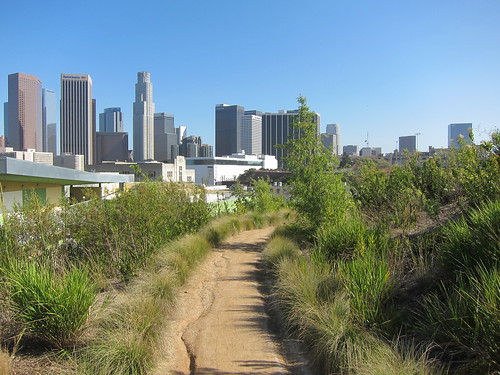
The Militant loves to poke fun at the failures of the Los Angeles Unified School District, but once in a while, those failures turn out to be wonderful things. Take for instance the Belmont Learning Center, at one time the LAUSD’s costliest boondoggle, which was stalled and scaled back due to environmental concerns (there used to be oil wells around here). The school district gave up a portion of its land to the Santa Monica Mountains Conservancy, who in turn built a really beautiful oasis of California native plants and a killer view of the DTLA skyline. The Militant covered its opening back in 2008. It’s more than worth visiting during CicLAvia, or at any other time.


14. Historic Filipinotown Gateway
2022
Beverly Boulevard between Belmont Avenue and Glendale Boulevard

October is recognized as "Filipino American History Month," so appropriately, the Filipino community, comprising of roughly half a million in the Los Angeles metropolitan area, is the largest Asian group in the City of Los Angeles. People of Philippine ancestry have been living in Los Angeles since the early 1900s, originally concentrated in an area once called "Little Manila," where Little Tokyo is today. The community migrated westward along the Temple corridor as it grew, and later spread into other communities like Eagle Rock, East Hollywood and parts of the San Fernando Valley (particularly Panorama City), especially after larger waves of immigration came starting in the mid-1960s. The Historic Filipinotown neighborhood still contains major institutions in the community such as businesses, nonprofit organizations and churches, which prompted its formal designation by the City in 2002. Twenty years later, a large $750,000 gateway arch over Beverly Boulevard, designed by artist Eliso Silva with Philippine cultural elements was dedicated in May 2022, and it looks even nicer when lit up at night.


15. Echo Park Recreation Center
c. Early 1900s
Glendale Boulevard at Temple Street

You might pass this tennis court and nearby swimming pool every day and wonder, "Who the hell would put a tennis court/swimming pool right next to a freeway?" Well, no one put them next to a freeway, but they put the freeway next to them. Before 1948, Echo Park wasn't just a pretty little lake with lotus flowers and paddle boats, but it was a park park, with recreation facilities and everything. It stretched as south as Temple Street. But it stood in the path of the almighty Cahuenga Parkway (now the Hollywood Freeway, or "The 101"), which cut the park in two. Hmm. That sounds familiar...Pictured is the park (with Temple Street in the foreground - notice the trolley and horses and buggies(!) in 1909.


• South Spur to Broadway Theatre District:


16. Bradbury Building
1893
304 S. Broadway, Downtown

A building that's famously meh on the outside, but OMG from the inside, this building has been featured in movies from Chinatown to Blade Runner to 500 Days of Summer. Designed by Sumner Hunt and modified by George Wyman, this 5-story structure was designed to look like the 21st century from 19th century eyes. Despite the ahead-of-its-time design, this building has nothing to do with sci-fi author Ray Bradbury, but was named after developer and 1800s rich dude Lewis Bradbury.


17. Grand Central Market
1917
317 S. Broadway, Downtown

Everyone knows this is Los Angeles' premier public marketplace, and the Militant probably doesn't need to include this since you may or may nor already be getting your Eggslut on (The Militant, on the other hand, prefers tacos and tortas from Roast To Go, and will incite a riot in the event that eatery is kicked out by gentrification). Over 100 years old and still going strong!


18. Biddy Mason Park
1991
331 S. Spring St (entrance on Broadway), Downtown

Born as a slave in Georgia, Bridget "Biddy" Mason was a renaissance woman of her time. Having followed Mormon settlers west, she gained her freedom when California became a slavery-free Union state. As a nurse, she founded the first child care center in Los Angeles and later became a lucrative property owner and philanthropist, having founded the First AME Church, now a major institution in Los Angeles' African American community. She died in 1891 and was buried at Evergreen Cemetery. A century after her passing, this mini-park in DTLA, on the site of her house, was built and dedicated.


19. Broadway-Spring Arcade Building
1924
541 S. Spring St (entrance on Broadway), Downtown

This unique building is actually three, opened in 1924 on the site of Mercantile Place, a 40-foot street cut between 4th and 5th streets connecting Broadway and Spring. Mercantile Place was a popular shopping and gathering locale in the early 1900s. Having fallen into decay by the 1970s, it was recently renovated and is now famous for, some of the newest, hottest eateries in town (Guisados DTLA is located here, BTW). It also becomes an artistic venue during the DTLA ArtWalk.
20. Clifton's Cafeteria 
1935
648 S. Broadway, Downtown

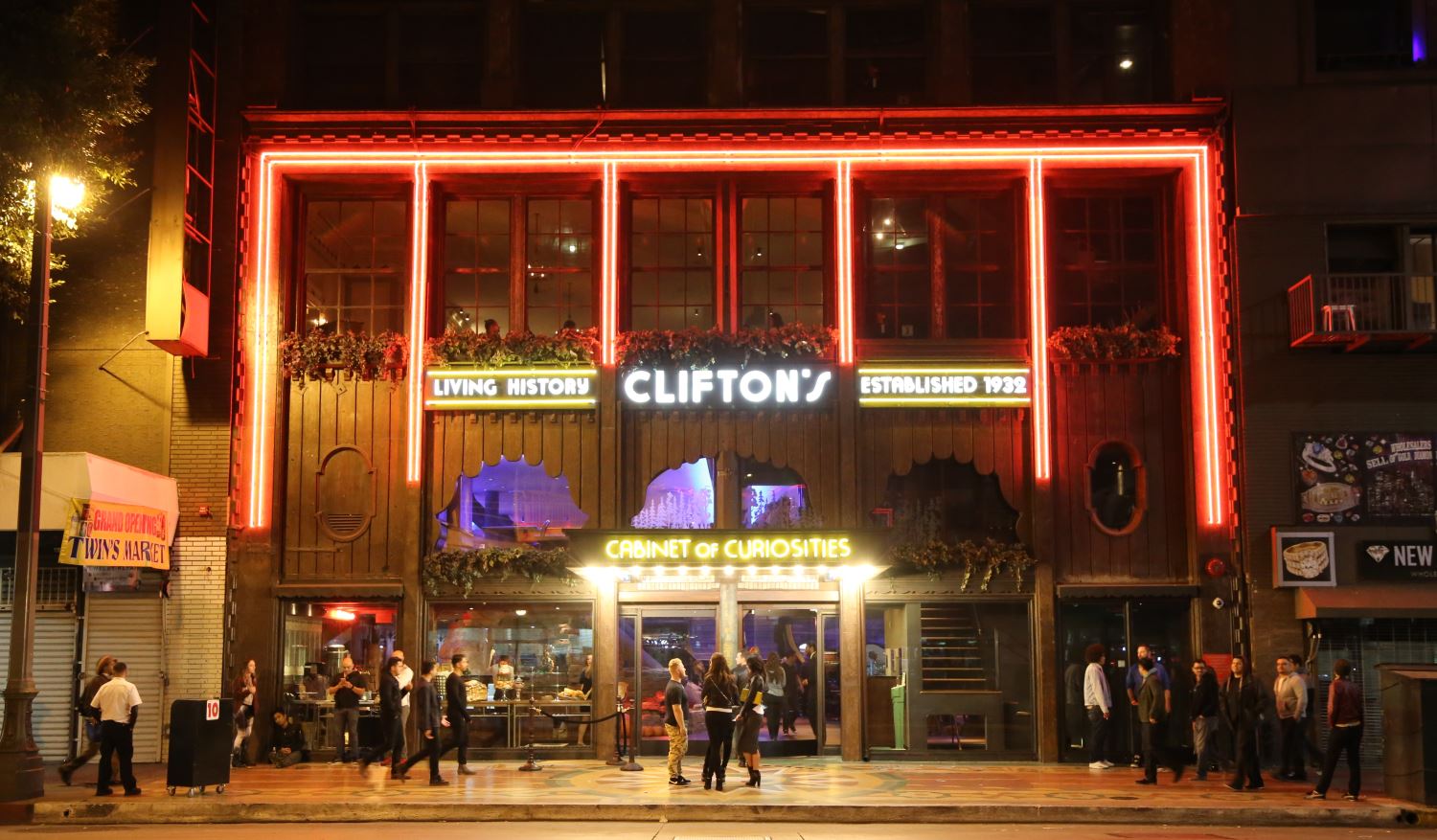
The sole survivor of 10 kitschy and theatrical themed cafeterias founded by Clifford Clinton around Southern California (and now you know what inspired the Fry's Electronics stores), this location known as Brookdale, was the second in the chain and the most iconic. The current incarnation of the restaurant opened in 2015 after half a decade of renovation by new owner Andrew Meieran, who kinda made it quasi-hipsterfied, but at least preserved the decor even though the food costs like twice as much as it used to. But do go down to the basement level, near the restrooms, just to glance at the world's oldest continuously-lit neon light.


• North Spur to Chinatown:

21. U.S. Federal Courthouse
2016
145 S. Broadway, Downtown

This big glass cube that is responsible for blocking your view of the Downtown Los Angeles skyline from Grand Park used to be a hole in the ground was once the site of the Junipero Serra State Office Building, which was damaged in the 1994 Northridge Earthquake and abandoned and demolished in 1998. This 10-story, 400-foot-tall U.S. Federal Courthouse building (don't we already have a few of those?), designed by Skidmore Owings and Merrill, opened in 2016. Do check out the embossed bald eagle situated over the main entrance on 1st Street.

22. Site of 1910 Los Angeles Times Bombing
1910
Northeast corner of Broadway and 1st Street, Downtown

This longtime empty lot, previously identified in this CicLAvia tour as the foundation of a state office building condemned after the 1971 Sylmar Earthquake has some additional history. It was recently dissevered to be the location of the 1910 bombing of the (then) Los Angeles Times building, which happened 104 years ago this week. The dynamite bombing was discovered to have been the work of Ortie McManigal and brothers John and James McNamara, all affiliated with the Iron Workers Union,  in what was meant to protest the newspaper's staunchly anti-union practices. 21 people died when the 16 sticks of dynamite exploded just outside the building at 1:07 a.m. on October 1, 1910, the explosion was exacerbated by natural gas lines which blew up a large section of the building. The Times since built a new building in its place, and later relocated across 1st Street to its current location. The lot is being readied for an expansion of Grand Park.


23. Site of Court Flight
1904 (demolished 1943)
Broadway between Temple and Hill streets, Downtown

You all know Angels Flight, but it's time to pay tribute to the city's other funicular, its cousin to the northeast, Court Flight. Built in 1904, it went up the northern end of Bunker Hill and was next to a former road called Court Street, hence its name. Even shorter than its more famous cousin at 200 feet, it ran steeper at a height of 200 feet. It was burned by a fire in 1943 and never reconstructed. The hill was eventually chipped away. The north side of the stairways going up to the Court of Flags (wonder if that was intentional there) in today's Grand Park is the precise location of ol' Courty.


24. Hall Of Justice
1926
Temple Street and Broadway, Downtown

No, you won't find Superman or any of the Super Friends here.  But this building, the oldest surviving government building in the Los Angeles Civic Center, was built in the mid-1920s as the original Los Angeles County Courthouse and Central Jail (which once housed the likes of Busy Siegel, Sirhan Sirhan and Charles Manson), as well as the headquarters for the Sheriff's Office, the District Attorney and the County Coroner. This Beaux Arts-style building was designed by Allied Architects Association, an all-star team of local architects put together to design publicly-funded buildings. The building is currently undergoing a major renovation project to modernize the facilities and repair damage from the 1994 Northridge Earthquake. It is now a LEED Gold Certified building (gotta be sustainable, y'all), following a 2015 restoration.


25. Fort Moore Pioneer Memorial
1957
451 N. Hill St, Downtown

Way, way, waaaaay back before we had tall building and freeways, Downtown Los Angeles (well Los Angeles, period back then) had a bunch of hills, Bunker Hill being the most famed one. There was also Fort Hill, the site of a Mexican-American War encampment. On July 4, 1847 the facility was called Fort Moore (and the hill Fort Moore Hill), after Captain Benjamin D. Moore of the U.S. 1st Dragoons regiment, who was killed six months earlier in a battle near San Diego. The 1st Dragoons and the Mormon Batallion established the new fort and raised the U.S. flag during the first-ever observed Independence Day in Los Angeles. This event was immortalized in a bas-relief stone monument made in the 1950s. Speaking of forts, the very street you're riding (or walking, or skating, or scootering, or stand-up-paddling, or pogo-sticking) was once called "Fort Street," which inevitably led to directional problems some six blocks south of here. The monument also includes a fountain, which was shut off in 1977...due to the drought at the time, but revived in 2018 after a massive renovation. So where's the actual hill, you ask? It was bulldozed away in the late 1940s to make room for the 101 Freeway.


26. Chinatown Gateway Monument
2001
Broadway and Cesar E. Chavez. Avenue, Chinatown

Designed to be the symbolic entrance to Los Angeles' Chinatown District, The Chinatown Gateway Monument, a.k.a. the Twin Dragon Towers Gateway, depicts two dragons grabbing at a central pearl, which symbolizes luck, prosperity, and longevity. The 25-foot-tall structure was put up in 2001 and occasionally emanates steam coming from the dragons' mouths. Unlike Anglo dragons, the creatures in Chinese folklore are the good guys, meant to scare away evil spirits.

27. Capitol Milling Company
1883
1231 N. Spring St, Chinatown

One of the last visible vestiges of Los Angeles' agricultural industry, this family-owned flour mill operated from 1831 to 1997, before moving its operation to a much larger facility in Colton. The facility that still stands today was built in 1883. The mill supplied flour to clients such as Ralphs, Foix French Bakery and La Brea Bakery. In 1999, the family-owned operation was purchased by industry giant Con-Agra Co. The historic building - the oldest commercial building in Los Angeles, built even before the railroads arrived in Los Angeles, still has a horse-tethering ring, back to the days when grain was hauled by horse carriage from farms in the San Fernando Valley. The eight-building complex, now owned by the Rivoli family (who owns the San Antonio Winery across the river), underwent a massive renovation completed in 2020 so that the 19th century facility can live on in the 21st century as office, retail and restaurant spaces.
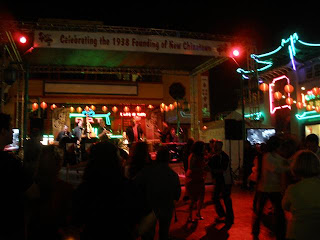
28. Old (New?) Chinatown Central Plaza
1937
Gin Ling Way between Broadway and Hill, Chintown

The northern terminus of CicLAvia is no stranger to public events; it was made for them. In the Summer it hosted three very popular Chinatown Summer Nights events. But don't let the "Old Chinatown" neon sign fool you -- This is actually Los Angeles' new Chinatown, which dates back to the 1930s. The real Old Chinatown was several blocks south, where a thriving community of Cantonese-speaking immigrants lived near the river, north of Aliso Street. Of course, they were kicked out in the early '30s to make room for Union Station. So they moved a few blocks north, in the former Little Italy, and they've been there ever since. Well, not really, since some of them moved east to the San Gabriel Valley and were supplemented with Mandarin-speaking immigrants from Taiwan and Mainland China. But you get the idea.

Happy CicLAvia, Los Angeles! Enjoy stay safe, GO DODGERS and STAY MILITANT!


Saturday, October 9, 2021

The Militant's Epic CicLAvia Tour XXXVII!!

Interactive map! Click here for larger map.


Hey, we're still alive...it's the second CicLAvia of 2021 and the 37th iteration of Los Angeles' premier open streets event, and we're celebrating one whole decade (plus one year) of these things - the very first CicLAvia was also on a Sunday, October 10 (10 a.m. on 10/10/10).

It's October, which means the DTLA-centric 6-mile "Heart of L.A." route. Just like the last one in Wilmington, this Sunday's CicLAvia is a re-run of a previous route, this time it's the October 2019 and October 2016 alignments. So you may or may not have seen this Epic CicLAvia Tour guide before. But here it is, for consistency's sake.

It's Autumn which means you get to see Los Angeles' fall colors: Blue, purple, gold, etc...The defending World Champion Dodgers are in the midst of a National League Division Series against the hated San Francisco Giants (The series is tied 1-1 and Games 3 and 4 are at The Stadium on Monday and Tuesday), so The Militant expects to see a lot of you CicLAvians in Dodger Blue! The Los Angeles Rams (and, okay, the Chargers too) are playing great football right now, and the 2020 NBA Champion Lakers start their 2021-22 season later this month. Of course, we also got the Clippers, Kings, LAFC, Galaxy, Bruins and Trojans as well, so wear your Los Angeles Fall Colors proudly.

So stay safe, get vaccinated if you haven't yet, and as usual, see you or not see you on the streets on Sunday!


1. Eastside Luv
2006 (Built 1940)
1835 E. 1st St, Boyle Heights

One of The Militant's favorite hangouts in the Eastside, this bar, started by a bunch of friends who grew up in nearby City Terrace, took over the former Metropolitan bar eight years ago and updated it to a more contemporary Eastside-style flavor. Don't call it gentrification, call it gentefication.

2. Mariachi Plaza

1889
1st St and Boyle Ave, Boyle Heights

This is the new town square for Boyle Heights, anchored by the historic 1889 Boyle Hotel on the historic Cummings Block, where Mariachi musicians have been hanging out to get picked up for since the 1930s. The Kiosko, or bandstand, that sits in the plaza is actually not that historic. It was given as a gift from the Mexican state of Jalisco, who literally shipped it over in 1998 where it was assembled in place. But it only gets used once a year for the Santa Cecilia Festival around every November 21. The plaza is also home of the Metro Gold Line station of the same name, which opened in 2009. The unique lending library Libros Schmibros relocated here in 2011. This place could warrant a Militant blog post in itself -- no, an entire week of posts! Don't miss the Farmers Market events there every Friday and Sunday!

3. Simon Gless Farmhouse
1887
131 S. Boyle Ave., Boyle Heights

Back in the totally radical '80s...That's the 1880s, Boyle Heights was an open, rural area and French Basque immigrant Simon Francois Gless built a Queen Anne style house on his sheepherding farm at this location. Today, the house is a City Historic Cultural Monument and is a home that's rented out to -- Mariachi musicians! Just a few blocks west of here is Gless Street, and you might have heard of Simon's great-granddaughter -- actress Sharon Gless, who starred in the series Cagney and Lacey, which aired a century after her arrière-grand-père first settled in Boyle Heights.

4. Keiro Retirement Home/Jewish Home For The Aging
1974/1916
325 S. Boyle Ave, Boyle Heights

With Boyle Heights being a historically Jewish and Japanese community, how's this for an ultimate Boyle Heights institution? This property was originally built in 1916 as the Jewish Home for the Aging (now operating in Reseda), and in 1974, the Keiro Senior Health Care organization, basically their Japanese American counterpart. With the Hollenbeck Palms retirement home just down the street (and site of the John Edward Hollenbeck Estate, remember?) Boyle is a popular corridor for Senior Livin.'

5. Neighborhood Music School
1947 (Built 1890s)
358 S. Boyle Ave, Boyle Heights

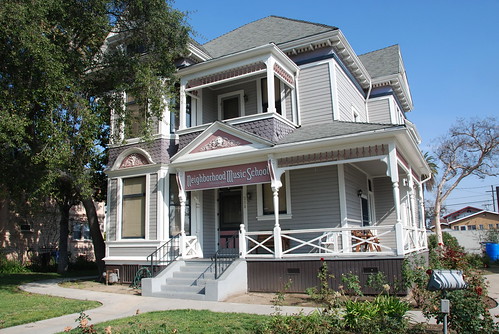
The Neighborhood Music School is exactly what it is. But it's also a Boyle Heights institution. Originally founded over 100 years ago when it was located on Mozart Street (orchestral rimshot), the school moved to this Victorian home in 1947 where it still offers music lessons to local youth and the public can drop by on weekends to attend free recital concerts.

6. Metro Division 20 Subway Car Yard & Site of Old Santa Fe LaGrande Station
1992 / 1893
320 S. Santa Fe Ave (visible from the 4th Street Viaduct), Arts District

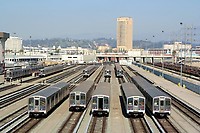
Take a break from riding/walking/skateboarding/pogo-sticking/etc. and take a glance off the north side of the bridge from the west bank of the River. This facility is where the 104 Italian-built subway cars of the Metro Red and Purple line cars are stored, repaired, serviced and cleaned. This was also the temporary storage and repair site of the Angels Flight railway cars after the fateful 2001 accident. The Militant actually visited this facility back in May 1992.

The subway cars are also serviced on the site of the old Santa Fe Railway La Grande Station (hence the name of the street) that was on Santa Fe and 2nd. Built in 1893, it was precisely where midwestern transplants arrived in Los Angeles after paying their $1 train ticket from Chicago. In 1933, the landmark dome was damaged by the Long Beach Earthquake and subsequently removed. In 1939, it was rendered obsolete by the opening of the new Los Angeles Union Passenger Terminal a few blocks north.

7. Metro 1st St /Central Station Site
2023
1st Street and Central Avenue, Little Tokyo

Prior to 2014, this lot was home to the popular Señor Fish taco joint (formerly the site of '70s-'80s punk venue Atomic Cafe) and Weiland Brewery Restaurant (which opened replacement locations in Echo Park and Uptown Long Beach, respectively). Both buildings were demolished in  to make room for this new Metro subway station for the  Regional Connector project, a new subway under Downtown Los Angeles that will re-align three light rail lines into two and provide continuous, transfer-free service from Azusa to Long Beach and East Los Angeles to Santa Monica. Although Little Tokyo already has a Gold Line station just yards away, that will be demolished and the station replaced with a new underground facility where the current construction activity exists. It's rather fascinating, and it's one way Little Tokyo will more resemble Big Tokyo.  The businesses around the station have been impacted by construction, so make sure you support them, not only during CicLAvia but after!

8. Site of Quaker Dairy, Original Little Tokyo Restaurant
1890
304 E. 1st St., Little Tokyo
On the southeast corner of 1st and San Pedro streets once stood the Quaker Dairy, a restaurant started on this site in 1890 by Sanshichi Akita, an immigrant from Japan. Though preceded five years earlier by another restaurant on First St (location unknown), this is the oldest traceable location of a Little Tokyo business. By the end of the 19th century, there were over 16 Japanese-owned restaurants in this stretch of 1st Street, creating what we know as Little Tokyo.

9. Los Angeles Sister Cities Monument
1987
1st and Main streets, Downtown

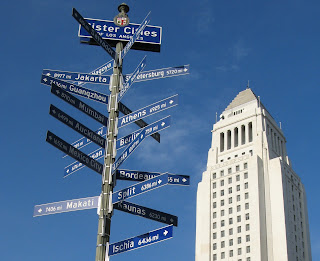
On the northeast corner of 1st and Main streets stands a pole bearing signs (in the "Blue Blade" style, no less) for every one of Los Angeles' 25 Sister Cities, each pointing towards their location. The signs range from Lusaka, Zambia (the farthest sister city, 10,017 miles) to Vancouver, Canada (the nearest, 1,081 miles) and everywhere in between. Nagoya, Japan is Los Angeles' oldest sister city (1959); Yerevan, Armenia is the newest (2007). Los Angeles, an Olympic host city (1932, 1984) also has that in common with sister cities Athens (1896, 2004), Berlin (1936), Mexico City (1968) and Vancouver (2010). Okay, the Militant is just filling up this paragraph with mindless trivia.

10. U.S. Federal Courthouse
2016
145 S. Broadway, Downtown
This big glass cube that is responsible for blocking your view of the Downtown Los Angeles skyline from Grand Park used to be a hole in the ground was once the site of the Junipero Serra State Office Building, which was damaged in the 1994 Northridge Earthquake and abandoned and demolished in 1998. This 10-story, 400-foot-tall U.S. Federal Courthouse building (don't we already have a few of those?), designed by Skidmore Owings and Merrill, opened in 2016. Do check out the embossed bald eagle situated over the main entrance on 1st Street.

11. Site of 1910 Los Angeles Times Bombing
1910
Northeast corner of Broadway and 1st Street, Downtown

This longtime empty lot, previously identified in this CicLAvia tour as the foundation of a state office building condemned after the 1971 Sylmar Earthquake has some additional history. It was recently dissevered to be the location of the 1910 bombing of the (then) Los Angeles Times building, which happened 104 years ago this week. The dynamite bombing was discovered to have been the work of Ortie McManigal and brothers John and James McNamara, all affiliated with the Iron Workers Union,  in what was meant to protest the newspaper's staunchly anti-union practices. 21 people died when the 16 sticks of dynamite exploded just outside the building at 1:07 a.m. on October 1, 1910, the explosion was exacerbated by natural gas lines which blew up a large section of the building. The Times since built a new building in its place, and later relocated across 1st Street to its current location. Today, the lot is being readied for an expansion of Grand Park.
NAVIGATIONAL NOTE: 
• If heading north to Chinatown, skip to #21.

12. Bradbury Building
1893
304 S. Broadway, Downtown

A building that's famously meh on the outside, but OMG from the inside, this building has been featured in movies from Chinatown to Blade Runner to 500 Days of Summer. Designed by Sumner Hunt and modified by George Wyman, this 5-story structure was designed to look like the 21st century from 19th century eyes. Despite the ahead-of-its-time design, this building has nothing to do with sci-fi author Ray Bradbury, but was named after developer and 1800s rich dude Lewis Bradbury, who founded his namesake city in the 626.

13. Biddy Mason Park

1991
331 S. Spring St (entrance on Broadway), Downtown

Born as a slave in Georgia over 200 years ago, Bridget "Biddy" Mason was a renaissance woman of her time. Having followed Mormon settlers west, she gained her freedom when California became a slavery-free Union state. As a nurse, she founded the first child care center in Los Angeles and later became a lucrative property owner and philanthropist, having founded the First AME Church, now a major institution in Los Angeles' African American community. She died in 1891 and was buried at ...Evergreen Cemetery (which you might have also seen earlier...see how things all tie together?). A century after her passing, this mini-park in DTLA, on the site of her house, was built and dedicated.

14. Broadway-Spring Arcade Building
1924
541 S. Spring St, Downtown

This unique building is actually three, opened in 1924 on the site of Mercantile Place, a 40-foot street cut between 5th and 6th streets connecting Broadway and Spring. Mercantile Place was a popular shopping and gathering locale in the early 1900s. Having fallen into decay by the 1970s, it was recently renovated and is now famous for, of all things, vendors selling rock band t-shirts. It also becomes an artistic venue during the DTLA ArtWalk. And The Militant probably doesn't need to mention that this building is home to the DTLA Guisado's.

15. St. Vincent Court
1868
St. Vincent Ct and 7th Street, Downtown

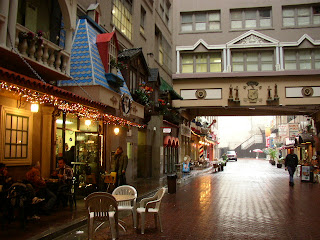
You'd hardly knew it was there, but this alley nestled between Broadway and Hill (blink and you'll miss it!), with its decorative brick pavement and European decor, seemingly belongs to another world. Originally the site of a Catholic college that was the predecessor of today's Loyola Marymount University, today it's a unique food court featuring Armenian and Middle Eastern eateries. The Militant calls it, "Littler Armenia." If the place looks familiar, it's also where Taylor Swift frolicked in the rain in the music video of her 2018 song, "Delicate." For more on St. Vincent Court, check out this 2008 Militant Angeleno post for more info!

16. Diamonds Theatre (Warner Theatre & Original Pantages Theatre)
1920
401 W. 7th Street, Downtown
This jewelry retail mart is actually a re-purposed theatre that was the original Pantages Theatre (remember from the last CicLAvia?) opened in 1920 by Greek American entertainment magnate Alexander Pantages for Vaudeville productions. Designed by B. Marcus Priteca (who also designed today's Pantages Theatre in Hollywood), it was sold in 1929 and eventually became the Warner Theatre, screening motion pictures from the WB during the days when the movie studios ran their own theatres. The theatre closed down in 1975 and became a jewelry mart in 1978.

17. The Bloc (Formerly Broadway Plaza/Macy's Plaza)
1973
7th Street between Flower and Hope streets, Downtown

A poster child for change in Downtown, this shopping center, originally built in 1973 and designed by Charles Luckman & Associates as the first suburban-style mall in DTLA combined an indoor (though massively truncated) indoor galleria, a hotel and a 32-story office building. Initially known as Broadway Plaza, named after the old upscale Southern California department store anchor tenant, its name was changed to Macy's Plaza in 1996 after The Broadway merged with the NYC-based equivalent Macy's. Its blocky, street-unfriendly design was derided by many, especially in an era where the outdoor mall format pioneered by Santa Monica's Third Street Promenade, and Rick Caruso's faux-urban monstrosities (and more recently, the newly-opened The Village at Westfield Topanga),  so in 2013 it was re-conceptualized as "The Bloc" and currently stands as a work-in-progress, (which also features a direct entrance to the 7th Street/Metro Center subway station).

18. Wilshire Grand Center
2017
900 Wilshire Blvd, Downtown

On this site rises the new Wilshire Grand Center, Los Angeles' (and the West's -- suck on it, Transbay Tower SF!) tallest building at 73 stories and 1,100 feet (kinda sorta, there's a spire, you see...). Opened in June 2017, it is the city's only modern skyscraper without a flat roof, the only Los Angeles building since Hollywood's Capitol Records tower in 1956 to feature a spire, the first skyscraper anywhere to sport a mohawk, and it also has its own irreverent Twitter account. ;) Owned by Korean Air (hence the red and blue taeguk LED logo), the tower houses the 900-room Hotel Intercontinental with its 70th-floor Sky Lobby and the unique Spire 73 skybar, with wonderful views of the south and west (the sunset vista from here is not to be missed). The building's construction site was the location of "The Big Pour" - which lasted from February 15 -16, 2014, where 21,200 cubic yards (81 million pounds) of concrete for the tower's foundation were continuously poured - earning it a Guinness World Record for that feat. Before the skyscaper, the site was home of the Wilshire Grand Hotel, formerly (in reverse chronological order) the Omni Hotel, Los Angeles Hilton, Statler Hilton and Statler Hotel.

19. City View Lofts/Young's Market Company Building
1924
1610 w. 7th St., Pico-Union

Ever wondered what's the deal with this 4-story Italian Renaissance-style building? It was built in 1924 as a liquor warehouse and original headquarters for Young's Market Company, which still operates today as the largest liquor distributor in the West. This building features actual marble columns and a decorative frieze made of terra cotta. The company, in the roaring, pre-depression 1920s, just felt like it. The building was looted and burned in the 1992 Riots and was rehabbed in 1997 to become the City View lofts. The building is in the National Register of Historic Places.

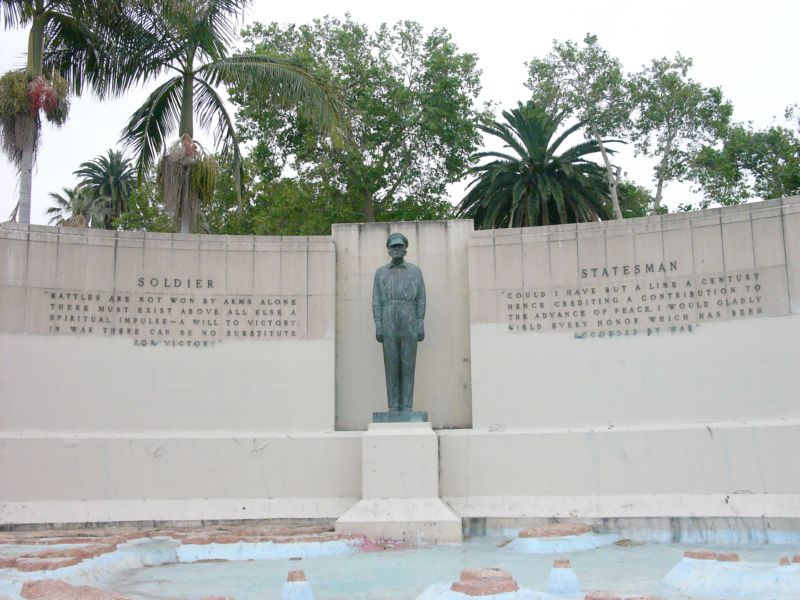
20. Gen. Douglas MacArthur Monument
1955
Southeast corner of MacArthur Park, Westlake

It's sort of strange how a monument to the park's namesake seems almost invisible (Gen John Pershing, MacArthur's WWI counterpart, could totally identify). In fact, most people don't know it's even there, but on the southeast shore of the lake is a dormant memorial fountain featuring a statue of the WWII general overlooking a model of the Pacific theatre (no, not that one) where he led allied forces to eventual victory. It was designed and built in 1955 by Roger Noble Burnham, who previously sculpted the Tommy Trojan statue on the USC campus and taught at the Otis Art School, formerly located nearby.

• North Spur to Chinatown

21. Site of Court Flight
1904 (demolished 1943)
Broadway between Temple and Hill streets, Downtown

With Angels Flight fiiiiiiiiiinally up and running again (fingers crossed), it's time to pay tribute to the city's other funicular, its cousin to the northeast, Court Flight. Built in 1904, it went up the northern end of Bunker Hill and was next to a former road called Court Street, hence its name. Even shorter than its more famous cousin at 200 feet, it ran steeper at a height of 200 feet. It was burned by a fire in 1943 and never reconstructed. The hill was eventually chipped away. The north side of the stairways going up to the Court of Flags (wonder if that was intentional there) in today's Grand Park is the precise location of ol' Courty.

22. Hall Of Justice

1926
Temple Street and Broadway, Downtown

No, you won't find Superman or any of the Super Friends here.  But this building, the oldest surviving government building in the Los Angeles Civic Center, was built in the mid-1920s as the original Los Angeles County Courthouse and Central Jail (which once housed the likes of Busy Siegel, Sirhan Sirhan and Charles Manson), as well as the headquarters for the Sheriff's Office, the District Attorney and the County Coroner. This Beaux Arts-style building was designed by Allied Architects Association, an all-star team of local architects put together to design publicly-funded buildings. The building is currently undergoing a major renovation project to modernize the facilities and repair damage from the 1994 Northridge Earthquake. It re-opened in 2015 as a LEED Gold Certified building (gotta be sustainable, y'all) with the return of the Sheriff's and District Attorney's offices.

23. Fort Moore Pioneer Memorial
1957
451 N. Hill St, Downtown

Way, way, waaaaay back before we had tall building and freeways, Downtown Los Angeles (well Los Angeles, period back then) had a bunch of hills, Bunker Hill being the most famed one. There was also Fort Hill, the site of a Mexican-American War encampment. On July 4, 1847 the facility was called Fort Moore (and the hill Fort Moore Hill), after Captain Benjamin D. Moore of the U.S. 1st Dragoons regiment, who was killed six months earlier in a battle near San Diego. The 1st Dragoons and the Mormon Batallion established the new fort and raised the U.S. flag during the first-ever observed Independence Day in Los Angeles. This event was immortalized in a bas-relief stone monument made in the 1950s. Speaking of forts, the very street you're riding (or walking, or skating, or scootering, or stand-up-paddling, or pogo-sticking) was once called "Fort Street," which inevitably led to directional problems some six blocks south of here. The monument also includes a fountain, which was shut off in 1977...due to the drought at the time.

So where's the actual hill, you ask? It was bulldozed away in the late 1940s to make room for the 101 Freeway (is this a recurring theme for this CicLAvia or what?!)

24. Chinatown Gateway Monument
2001
Broadway and Cesar E. Chavez. Avenue, Chinatown

Designed to be the symbolic entrance to Los Angeles' Chinatown District, The Chinatown Gateway Monument, a.k.a. the Twin Dragon Towers Gateway, depicts two dragons grabbing at a central pearl, which symbolizes luck, prosperity, and longevity. The 25-foot-tall structure was put up in 2001 and occasionally emanates steam coming from the dragons' mouths. Unlike Anglo dragons, the creatures in Chinese folklore are the good guys, meant to scare away evil spirits.

25. Capitol Milling Co.
1883
1231 N. Spring St, Chinatown

One of the last visible vestiges of Los Angeles' agricultural industry, this family-owned flour mill operated from 1831 to 1997, before moving its operation to a much larger facility in Colton. The facility that still stands today was built in 1883. The mill supplied flour to clients such as Ralphs, Foix French Bakery and La Brea Bakery. In 1999, the family-owned operation was purchased by industry giant Con-Agra Co.
The historic building, built even before the railroads arrived in Los Angeles, still has a horse-tethering ring, back to the days when grain was hauled by horse carriage from farms in the San Fernando Valley. The property is currently being adaptively reused into retail and creative office space.

26. Old (New?) Chinatown Central Plaza
1937
Gin Ling Way between Broadway and Hill, Chintown

The new northern terminus of CicLAvia is no stranger to public events; it was made for them. In the Summer it hosted three very popular Chinatown Summer Nights events. But don't let the "Old Chinatown" neon sign fool you -- This is actually Los Angeles' new Chinatown, which dates back to the 1930s. The real Old Chinatown was several blocks south, where a thriving community of Cantonese-speaking immigrants lived near the river, north of Aliso Street. Of course, they were kicked out in the early '30s to make room for Union Station. So they moved a few blocks north, in the former Little Italy, and they've been there ever since. Well, not really, since some of them moved east to the San Gabriel Valley and were supplemented with Mandarin-speaking immigrants from Taiwan and Mainland China. But you get the idea.

Happy CicLAvia, Los Angeles! Enjoy and STAY MILITANT!