Showing posts with label Gabrielino. Show all posts

Wednesday, October 5, 2011

Native Month: In Puvungna, The End Is The Beginning

On an unspecified day in September, The Militant hopped on the (M) Blue Line, got off at the Pacific Coast Highway station and rode his bike some four and a half miles east to an area near Bellflower Boulevard and Atherton Street, on the west end of the Cal State Long Beach campus.

Energized by his militant zeal for Los Angeles history, and his newfound obsession with Tongva culture, The Militant, after reading about it for quite some time, wanted to see it for himself, with his own eyes.

The place was the site of the Tongva village of Puvungna, known to their people as more than a village, but a sacred place.

In the 1990s, plans by the university to develop the land into a fast food-laden shopping plaza (a smack in the face on sooooo many levels), drew the ire of the Tongva community.

It was, or at least was close to, the place where ancient Tongva belief taught them the world began.

As it went, their creator god, Quaoar (CalTech scientists were nice enough to name an outer solar system planetoid after him), danced and sang to create a sky god and an earth goddess, which danced and sang together to create the sun and moon gods. Then they all sang together and created everything else. All life began at Puvungna. It was also the birthplace of a Christ/Buddha/Moses/Muhammad- like prophet named Chungichnish, who taught his people the ways of the universe. Furthermore, Puvungna was also the site of an ancient burial ground.

The fight to preserve the land apparently was successful, at least thus far -- the university president at the time promised not to exploit their land - a 39-acre field next to a parking lot consisting of some 40-or-so trees and native plants and grasses.

The Militant arrived there on his bike, and was instantly in awe of the natural landscape that lay before him, even despite the constant roar of traffic and the occasional Long Beach Airport-bound metal bird.

The sight of a ceremonial kutumut pole, greeted The Militant. The was definitely the place he was looking for:
Upon close inspection, pictures of people's ancestors hung from strings attached to the pole, and a stately white sage grew from the ground:

A smaller one nearby had seashells on the ground:
Just to be sure, instead of rolling his bike on the hallowed ground, he chose to carry it, and rested it against a tree.

When The Militant was younger, his family took a day trip to Mission San Juan Capistrano. After having a picnic in a nearby park, when it came time to leave, one of the doors of the family car mysteriously had the inability to close shut. Every attempt to close it failed. This perplexed everyone, until the Militant's mother said, "Excuse me!" in her native language to whatever spirits may be present. After that, the problem door finally was able to be closed normally...[Cue X-Files music here].
 
Because of that experience. though The Militant doesn't personally subscribe to Tongva spiritual beliefs, he is definitely respectful of them, even to the point of telling whatever spirits might reside there to excuse him,  that he was there to cause no harm or disrespect, and is only there for the sake of knowledge, and, most importantly to impart that knowledge to others, so that they may learn of the Tongva (The Militant is quite sure the ancient Tongva spirits might have a hard time understanding the concept of blogs and Tweets, so a general explanation was in order).

The Militant was quite sure his pardon request went heeded. He was able to observe the grounds undisturbed, and also felt a comforting sense of protection.

Even without a connection to Tongva culture, any undeveloped parcel of land in Southern California is a priceless gem; it serves as a virtual time machine. You can build a Burger King anywhere else.You can even demolish it and build a restaurant that looks identical to the original. But you can never replicate the natural landscape to the same degree.

There is a reason and rhyme to everything. Perhaps it's no coincidence at all that, like Kuruvungna Springs in West Los Angeles, this precious vestige of Tongva culture also exists on the campus of an educational institution. That it's an obvious sign that us 21st Century Angelenos need to be schooled by the Tongva. Many of us are guilty of disregarding or eradicating local history, and the history of the Tongva is the ultimate local history lesson. Buzzwords like "sustainability" and "eco-friendliness" weren't buzzwords for the Tongva, they were their lifestyle.

The Militant may or may not be destined to impart the history of the Tongva people to the blogosphere, but what is important is that you, after learning of it yourself, impart your new-found knowledge to others, and them to others (Insert your favorite '70s TV shampoo commercial reference here).

So perhaps it's fitting to end The Militant's Native Month series here.  The Militant ends his story at the place where the Tongva believed their own story began. And The Militant sincerely hopes that at the end of this particular Native Month adventure, that your own appreciation for the real natives of this land begins.

Stay Militant, always.

Tuesday, October 4, 2011

Native Month: Let's Learn Some Tongva!

As you may or may not know, over 224 languages are spoken in Los Angeles. So why not learn a little of the very first language spoken here?

The Tongva's language is considered by linguists to be of the Uto-Aztecan linguistic stock, the speakers of which spoke languages and dialects in an area that stretched from what is now Utah to Central Mexico.

But like most indigenous languages in North America, Tongva, was a purely oral tongue, there was no alphabet or written word, and thus no historical transcription the way, say, Greek, Latin, Chinese or Arabic was documented.

During Spanish colonization, they were forced to speak in Spanish, during the Mexican era, much of them adopted Spanish names and surnames, and assimilated into Mexican culture. And when the Red, White and Green flag ceded to the Red, White and Blue flag round these here parts, the poor folks had to adapt to yet another language and culture.

For much of the time since the 1780s, Tongva people spoke their language in clandestine settings.
The last fluent Tongva speaker was believed to have died in the 1970s. Fortunately a few linguistic scholars in the 19th century sat down with some Tongva folk and documented their vocabulary. Today, Tongva descendants have attempted since the 1990s to reconstruct their ancient mother tongue, using words found in songs and common expressions.

The Militant is by no means a linguistics expert. He even has a little trouble speaking the native language(s) of his parents from their unspecified home country. But in doing his militant research on the Tongva the past several weeks, he's noted down some words for all 'yall. So enjoy.

Note: Again, Tongva was not a written language, to any transcription of words into our characters of Roman origin are strictly phonetic in nature. Also, the Tongva nation, though sharing a common culture, displayed inevitable variations in pronunciation from village to village, which were largely independent of each other.

So here goes:


akara'apu'an - quail's plume
ahhoovaredoot - spiritual/medicine shaman
atochgna - funeral pyre
erow - fox
hunar - bear
joat - snowy mountain
ke-hi'e - acorn feast
kiche - house
kunasgna - cemetery, burial ground
kusirok - ashes, bones of the dead
kutumut - ceremonial pole to honor the dead
kwar - acorn meal
na - place
nachochan - how are you? / greeting
pako - enter
par - water
shev-ve - acorn
te'at - boat
tobikhar - settler
topa - above
toro - below
tova'at - pine nut
tumia'r - village chief
tuxu - old woman
we-ch - acorn mush
we't - oak
ya - poison oak
yitokahor - earthquake
yovarekam - ceremonial shaman


And here's the numbers:


pugu - one
vehe - two
pahi - three
vatcha - four
mahar - five
pavahe - six
vatchakabya - seven
veheshvatcha - eight
maharkabya - nine
vehesmahar - ten
pukuhurura - eleven
vehehurura - twelve

The Militant has yet to find out if there's a Tongva word for "militant," "unspecified" or the phrase, "May or may not," but he'll keep looking...

Monday, October 3, 2011

Native Month: The Water Still Flows In Kuruvungna

(Yes, it's October already, but seeing as Native Month started on September 5, he's still got the 30-day period to round out, so...let's continue...)

Los Angeles is often described as a "horizontal city," but The Militant actually sees it as a vertical one. No, not necessarily vertical as in high-rise structures, but vertical as in the stacked layers of various histories (Of course, only a militant Angeleno can see them...).

Take for instance University High School, the grade 9-12 campus in West Los Angeles which, since 1924 has produced alums such as Jeff Bridges, Judy Garland, Danny Elfman, Randy Newman, members of The Doors and Tone Loc. So it may or may not be fitting that the man who, in 1989, extolled the virtues of the Wild Thing,  walked from classroom to classroom in the presence of a wild spring.

Har har har.

For it is here on the Uni High campus that a series of natural springs churn out some 25,000 gallons of water daily (the city of Santa Monica once used it as a municipal water source), and have been since the Tongva.

One of the springs is smack dab in the middle of campus. The Militant visited Uni High recently during the afterschool hours and there it was:


While kids practiced soccer and parents stood watch just a few yards away, The Militant reached out his hand to touch the water. Supposedly it's clean enough to drink (The Militant wasn't that thirsty though...). It cascades down a man-made channel, parts of which are littered with snack food wrappers, and then descend into a drain, where it, along with H2O from the nearby Lost Creeks Of UCLA, empty into the Sepulveda Channel and into Ballona Creek.

The other spring is located towards in another part of campus. The Militant, having never stepped foot in this school before, had no idea where it was. But instinctively, he walked eastward, then south, then approached a tree-covered area with a staircase leading down into a parking lot. He kept walking....and then saw this through a fence...


It was a Tongva kiche. He gasped in awe. Did the ancient Tongva spirits lead him there? Was it just his native Angeleno instincts? No one knows for sure, but The Militant was in the Tongva village of Kuruvungna ("The place where we are under the sun.").

The other spring, regarded as a sacred site by today's Tongva descendants, percolates from a small lagoon, surrounded by native riparian trees and plants. The 1769 Portola Expedition stopped by here, and Father Juan Crespi documented the experience (before he started a chain of doughnut restaurants known as Crespi Kreme). The Militant obviously couldn't get to it at this time (and didn't wanna piss off the Tongva spirits by breaking in).

The site isn't that secret, though. It is a designated historic cultural monument by The City after all. And there was an annual Tongva Festival that just happened this past weekend, which The Militant may or may have missed (ARRRRGH! DAMNIT!!!).  

The site, on the southeast corner of campus, on Barrington, just north of Ohio Avenue, is open on the first Saturday of each month from 10 a.m. to 3 p.m. where the Gabrielino/Tongva Springs Foundation conducts free tours of the site and opens its small museum on an onsite LAUSD bungalow structure. 

As The Militant left the school, he searched the campus for any sort of visual sign acknowledging its Tongva connections. Lessee, there was an Obama mural and a generic "tree of knowledge"-type mural, but nothing Tongvaesque or even anything referencing that active natural water source there. How sad, but not surprising, given the LAUSD's penchant for destroying history over actually teaching it. History - much less local history - doesn't count in standardized tests anyway, so why even bother, right?

The Militant bothers. But more remarkably, the water from these springs still bother to flow.

Friday, September 16, 2011

Native Month: El Aliso - The Ancient Center Of Los Angeles

Kissing like a bandit, stealing time,
underneath the sycamore tree...

Much has been said about Los Angeles "not having a center." Back in 2008, while singlehandedly settling the whole Westside vs. so-called Eastside geographical dichotomy, The Militant did come to the conclusion that Los Angeles indeed has a center.
Many of you know that Los Angeles started out as El Pueblo de Nuestra SeƱora de la Reina de los Angeles del Rio Porciuncula. That pueblo was founded on the site of a Tongva village called Yangna, or Place of the Poison Oak (That oak is Poiiiisonnnnn!). Some of you are already aware of Yangna, though a few people out there have the concept all messed up.

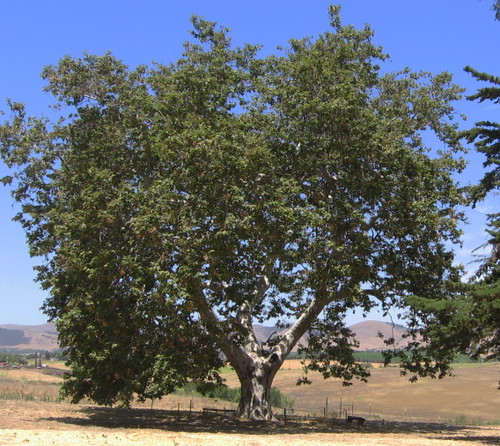
At the center of Yangna was a large, six-story sycamore tree that the Pobladores called "El Aliso." But to the native villagers of Yangna, it was no ordinary tree. It was a sacred site where chiefs of neaby villages would convene.

Over time, as the settlement grew, the Tongva were kicked out and their once-great village reduced to parcel property. In the 1830s, the land was bought by a Frenchman named Jean Louis Vignes, who used part of it as a vineyard. Name sounds familiar? You may or may not have been on the street that bears his name.

Here's a pic of the actual El Aliso tree
(note the "Philadelphia" in the lower right corner for the brewery)
Much thanks and props to militant reader Natalie Manarino for sending this to The Militant!

In 1892s, the tree was unceremoniously cut down for firewood to make more room for the Philadelphia brewery (damn those East Coasters...) which eventually became the Maier Brewing Company, and later Brew 102. The tree, which survived floods and droughts, was documented to have about 400 annual rings on it - when Columbus arrived from Europe, this tree was but a seed in the ground.

The early City planners were nice enough to name a street after the sacred Sycamore. The exact location of the tree was found to be in the Alameda on/off ramp for the 101 Freeway, just south of the train platforms of Union Station:

Next time you drive on the 101, ride on the (M) Gold Line on the overpass bridge or even visit that nearby strip club, take a moment to pay your respects to the Tongva people who once lived for millenia in the village of Yangna - The Los Angeles before Los Angeles.

Tuesday, September 6, 2011

Native Month: Know Your "Na!"


Yesterday's first installment of Native Week gave you a profile of the Real Los Angeles Natives - The Tongva Native American tribe. Today, The Militant will show you where they lived.

We now know Los Angeles (the region) as a bustling metropolis megalopolis of some 15 million people - larger than the population of nations like Ecuador, Guatemala or Cambodia (!) And rightfully so -- this was a nation.

The Tongva was also surrounded by other nations - the Chumash (Ventura and Santa Barbara counties), the Tataviam (North San Fernando Valley and Santa Clarita Valley), the Cahulla (eastern Inland Empire) and the Payomkuishum (North San Diego County).

Take a look at the names and locations of Tongva villages, superimposed over a map of today's Los Angeles (Map updated 9/16/2011):
(Click on map to crumulently embiggen!)
This map was done with much Militant research, but it is no means comprehensive. There were more villages, whose names escaped documented hustory. Some of the locations are generalized and not precise.

Of course, the Tongva nation wasn't nearly as populous - it only had somewhere between 5,000 and 10,000 people.

By looking at the map, you would notice a few things. First, the densities of the villages. Unlike modern Los Angeles, which has its development and poulation centered around Downtown Los Angeles and the area slightly to the west of it, the villages were largely located along the rivers (from west to east on the map: Ballona Creek (which once connected with the Los Angeles River during certain seasons), The Los Angeles River, The San Gabriel River and The Santa Ana River). There were also large swaths of nothingness, mainly because, there were no natural resources (water source, farmable/huntable land) to take advantage of.The Tongva, being a seafaring people, also lived along the coast (Yes indeed, they before anyone else knew the value of beachfront property). There are also a large accumulation of villages (exact locations estimated only) clustered around the San Fernando and San Gabriel areas - of course, those are where the Spanish settlers established the Missions.

Second, though most of these names sound strange and exotic, some of them sound very familiar, and rightfully so -- their present-day names were Hispanicized versions of the original Tongva village name. Places like Cahugna (Cahuenga), Topagna (Topanga), Tuyunga (Tujunga), Azucsagna (Azusa) and Kukamogna (Rancho Cucamonga).

Lastly, most of them end with the letters "-na" or "-gna" (That was too weird sounding for the Spaniards, so they pronounced it "-nga"). That suffix meant, "place." These days, people ask you, "Where you from?" or "Where you stay?" The Militant asks, "Where's your na?"

Can you spot your neighborhood or city on the map?

Here's a list of Tongva villages (their name meanings if known) and their present-day locations (List updated 9/16/2011):

Achois – San Fernando
Ahaugna - North Long Beach, near Los Angeles River
Ahwaagna – Long Beach (Downtown/coast)
Akuuragna - Pasadena-San Marino
Ajaarvongna - Puente Hills
Amupungna - Compton
Apachiagna - Boyle Heights/East Los Angeles
Ashawagna - Chatsworth
Atavsangna - West Hills
Atavayagna - Palos Verdes
Awigna  - La Puente
Alyeupkigna – Santa Anita
Azucsagna (“Place of the grandmother”) – Azusa
Cahugna (“Place of the hill”) – Hollywood/Studio City
Chokishgna – Bellflower
Chowigna – Palos Verdes
Cucamogna – Rancho Cucamonga
Engvangna – Redondo Beach/Torrance
Guaspita – Westchester bluffs (LMU campus)
Hahamongna – Glendale/Pasadena
Homhoangna - Colton
Houtgna – Monterey Park/South San Gabriel
Huachongna - Culver City
Hutukgna - Anaheim
Huutngna - Watts/Willowbrook
Isantkagna - Mission Viejo
Isanthcogna – San Gabriel
Joatngna - Mt. Baldy area
Juyubit – San Gabriel, along the river
Kenyaangna - Newport Beach
Kinkipar - San Clemente Island
Komiikrangna - Malibu Canyon
Kowagna – San Fernando
Kuruvugna – West Los Angeles
Lukupangna – Huntington Beach/Costa Mesa
Masaugna – San Pedro
Maugna – Los Feliz
Momwahomomutngna - San Dimas
Moniikangna - Palos Verdes
Motuucheyngna - Seal Beach
Moyogna – Newport Beach
Muuhungna - Sylmar
Nacaugna – Downey
Okowvinjha – San Fernando
Ongoovangna - Redondo Beach
Ongobehangna - Malibu area
Pahav – Corona (southeast)
Pasbengna - Santa Ana
Pasinogna – Chino Hills
Paxauxa - Norco
Peruksngna - City of Industry
Pimocagna ("Place of the running water") – Pacoima
Pimugna – Santa Catalina Island
Pubugna – Long Beach (Alamitos/CSULB campus)
Puntitavjatngna - Pasadena
Pwingkuipar (“Full of Water”) – Playa Del Rey/Westchester
Quapa - Encino
Saangna – Santa Monica/Venice/Marina Del Rey
Sawayagna – San Fernando
Sehatgna – Whittier Narrows
Sheshiikuanungna - San Marino
Shiishongna - Corona
Shwaagna – Harbor City/Wilmington/Lomita
Sibagna – San Gabriel
Sisitcanogna – Northeast Pasadena
Siutcangna - Sherman Oaks
Sonagna - Downtown Los Angeles
Suangna – Cerritos
Tajauta - Willowbrook
Tibagna - North Long Beach/Lakewood
Toibigna - Pomona
Topagna (“The place above”) – Topanga
Torojoatngna - Claremont
Totongna - Northridge
Tovimongna - Coastal Palos Verdes
Toviseagna – San Gabriel
Tuyugna ("Place of the mountain range") – Tujunga
Wajijangna - Chino Hills
Watsngna - Fontana
Weningna - Covina
Wenot (“River”) – Los Angeles, along the river
Wikangna - Verdugo Hills
Yangna (“Place of the poison oak”) – Downtown Los Angeles

Do you know your Na?

Monday, September 5, 2011

Native Month: We Are A Part Of The Tongva Nation

This week month, to celebrate 230 years of Los Angeles, the Militant will help you understand the Los Angeles before September 4, 1781 - the indigenous people, animals, plants and even the literal ground we walk/drive/bike/take transit/skate on. Lots of militant research went into this folks, so the Militant would not only appreciate your reads, but passing the links on to others so that they may learn as well. With a better understanding of the Los Angeles before Los Angeles, we can be better and smarter Angelenos. So welcome to The Militant's second weeklong topical series -- NATIVE WEEK! MONTH!

Nachochan?!*

From the get-go The Militant firmly and blatantly established and identified himself as a Native Angeleno -- meaning someone who was born and raised in this City. Ever a defender of his fellow natives...

But us (Contemporary) Natives are relative transplants themselves compared to the real natives of Los Angeles. Like us (Contemporary) Natives, the Indigenous Natives were derided, considered culturally inferior and largely treated as though they never really existed by their respective invaders.

Yesterday, we celebrated the 230th anniversary of the founding of The Pueblo of Our Lady Queen Of The Angels of The River of The Little Portion. But history being multi-layered, multi-faceted and most of all, of multi-perspectives, September 4, 1781 also marked the end of an entire nation, a culture, a way of life.

That nation, that culture, that way of life was the Tongva.

They weren't even given the benefit of self-identity. Most history books refer to them as "Gabrielinos," the name given to them by the Spanish settlers, referencing the San Gabriel Archangel Mission. But they called themselves Tongva.

The Militant doesn't claim to be an expert on Tongva or Native American culture (already he has revealed that his parents were immigrants of an unspecified third world country, so that kinda assumes he doesn't have Tongva blood (that he knows of, at least...)). But he has done hours upon hours of militant research, so that you will have a better understanding of who the Real Los Angeles Natives were.

To understand the Tongva people, one must throw out most of the preconceptions we have of Native Americans. The Tongva didn't live in teepees, wear moccassins or beat on drums.

The Tongva, which meant, "People of the earth and ocean," were considered by historians to be pretty advanced and civil among the 60-plus Native American tribes of California. They were only one of two tribes (the other was the neighboring Chumash, a related coastal tribe that inhabited today's Ventura, Santa Barbara and San Luis Obispo counties) who built seafaring boats, called a te'aat. The Tongva built their craft out of wood planks and tule reed (a native marsh plant that also gave origin to the name of Tulare, CA) and waterproofed with tar (The Tongva knew of many places where to find this). They used boats not just for fishing, but for transportation - to visit villages in the eight islands offshore that we now know as the Channel Islands.

They lived in large dome-like huts called kiches (pictured, right) made of willow and tule reeds. They were multi-family dwellings, housing up to some 40-50 people. They all had a single entrance, plus a hole at the roof of the dome to allow for smoke ventilation when food was cooked in the center.

Like many Native American tribes, the villages, which were scattered all across the Southland, from the San Fernando Valley down to southern Orange County, were led by chiefs, who succeeded by heredity, like monarchs. They also devised a dispute resolution system where disputes between two village chiefs were settled by having a third-party chief intervene, and his verdict became the final word on the matter. Guilty parties were fined in the form of food or animal skins.

They were considered to be thoughtful, rational and unlike many other tribes, never let inter-tribal issues escalate into killings. Robbery was an unknown concept in the tribe and murder extremely rare (There was a death sentence for the rare occasions those things did happen). An attack on a single family was considered an attack on the entire tribe. Also, if a man was caught cheating on another man's wife, then the other man took the first man's wife.

The Tongva created art, in the form of weaving baskets and making sand paintings. Their music was performed on flutes, rattles and vocal melodies or chants, which was played during wardances, celebrations or religious rituals.

They had their own religion and even built houses of worship - a circular enclsure made of wooden stakes and willow twigs. They prayed to a Supreme Being, in the form of victory thanksgiving, vengeance requests and honoring the souls of dead relatives. In their creation belief, animals were created first, then man, then woman. Then the Supreme Being went to a heaven where he receives the souls of all who died. And unlike some other Native American tribes, the Tongva did not believe in the concept of bad or evil spirits.

They revered certain animals - the dolphin, which they believed to be an intelligent being created to guard the world from harm. They respected owls, which they never killed. They believed the sight of a crow was a warning that a stranger was approaching. They never hunted whales, though whenever a dead whale washed ashore (considered a blessing), the Tongva would cook its meat and blubber and used its bones to make tools or structure frames. They did eat rabbits and other birds, which were hunted with a two-foot long curved flat stick.

The Tongva were also thought to be dominant in that when they made contact with other tribes or foreign cultures, they were the more influential ones. With nearly all Tongva wiped out by the Spanish, Mexicans and Americans, that might not have been the case in the overall picture, but the Tongva people still left their mark on today's Southern California.

For one, the trade routes they established were recognized and continued by all of the colonizing cultures that followed. The Ramona Parkway (now the San Bernardino Freeway) started out as a trade route, as did the Cahuenga Parkway (now the Hollywood Freeway).

Signal Hill, which the Militant visited in his Long Beach Week series back in June, was named so because of the smoke signals emanating from its peak to communicate with villagers across the water in Pimugna (Catalina Island).


There were an estimated 5,000 to 10,000 Tongva living in Southern California prior to the arrival of Spanish missionaries and settlers. Most of them died of foreign diseases introduced by the Spanish, and treatment by the Mexicans and Americans wasn't any better. A few hundred people today do claim Tongva blood and keep their cultural traditions alive, although the tribe is not currently recognized by the U.S. Government, which is why there is no Tongva Reservation anywhere.


Another matter is that today's Tongva is fraught with intra-tribal infighting -- one side aims to build a Tongva gaming casino (they'e eyed Long Beach, Inglewood and Garden Grove as possible sites), while the other side wants nothing of it. The Militant doesn't yet have an opinion either way on the casino issue, but he definitely thinks they deserve to be federally recognized once they work out their differences (Maybe get a third party to help mediate...).

This is by no means a comprehensive profile of the Tongva. If any experts of Native American cultures or better yet, Tongva descendants want to correct and chime in, The Militant welcomes your comments wholeheartedly. The Militant also wishes to make no absolute moral judgment on the genocide of our indigenous peoples, nor desire to revise history - if the Tongva nation were never disturbed, there would obviously never have been a Los Angeles (and therefore no Militant Angeleno), and certainly nearly none of us would be here today. But he does wish that everything could have been handled much better, and that the Tongva should have been still numerous and intact enough to contribute to Los Angeles' unrivalled tapestry of cultural diversity.The Militant simply wants the inhabitants of 21st Century Los Angeles - (Contemporary) Natives, Immigrants and Transplants alike - to learn about the most forgotten of forgotten histories. And to make a blatant reference to a certain unspecified online rival, the most hidden of hidden Angelenos.

The entire Spanish/Mexican/Californian/American histories of this City - combined - spanned for a mere 230 years. But Tongva history is believed to have lasted some 10,000 years. If a hardcore Contemporary Native bows down and gives massive respect to the Tongva, then it must mean the most recent, arrogant, self-entitled, fresh-off-the-Greyhound transplant needs to bow down to several masters. It's only right to respect and understand those who walked the land many more miles than you yourself did. So let's all give long-overdue props to the Real Los Angeles natives - The Tongva.

* Translation: "Whatup?!" in Tongva.