Showing posts with label Mar Vista. Show all posts

Saturday, March 2, 2019

The Militant's Epic Militant CicLAvia Tour XXIX!!!


For larger version of map, click here.


The first CicLAvia of 2019 is the earliest calendar date CicLAvia event and the second during the Winter season. And with a high temperature of 61 degrees, this will beat out the last CicLAvia in December in terms of coldest to date.

This is the 29th iteration of CicLAvia, with a 5.8-mile route that is a truncated version of the March 2017 "Culver City Meets Venice" course, and parts of which were also covered in the August 2015 and April 2013 open streets events.


You should know the drill by now, Share this link on your Facebooks, Twitters and Instagrams, visit the sights yourselves -- and if you do, use the hashtag, #EpicCicLAviaTourAnd here...we...go!


1. Site of King's Tropical Inn
1930
5879 Washington Blvd, Culver City

The sight of this Byzantine domed structure will strike a chord in many older Angelenos. Established in 1925 by restaurateur John G. King, in the era before Zankou, Koo-Koo-Roo, Pioneer Chicken or even Knott's Chicken Dinners, this was the place for a chicken dinner in the Los Angeles area. King's wooden tropical-style hut burned down in a 1930 fire, but was replaced later that year by the familiar domed building that featured an exotic koi goldfish pond in the front. The Southern-style chicken and jumbo squab (that's roast pigeon) dinners were still legendary and the place remained popular through the 1940s and '50s. The restaurant closed down in the mid-1960s and was eventually repurposed as tire and auto body shop in the 1980s. It was demolished in 1994 following damage from the Northridge Earthquake. A Culver City historical marker is placed at the location and the archway of the modern shopping center at Washington and La Cienega pays architectural homage to the dome.
2. Syd Kronenthal Park
1940
3459 McManus Ave, Culver City

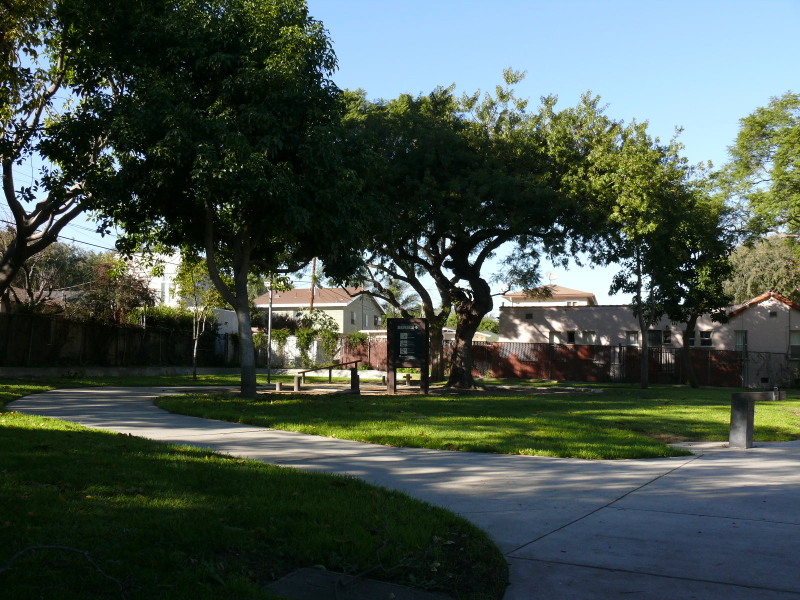
This six-acre park on the northeast corner of El Ciudad de Culver is in a unique location: Los Angeles-adjacent, situated along the banks of Ballona Creek, it opened in 1940 as McManus Park where Pacific Electric Red Cars sped by for the next 13 years. In 1992 the park was re-named after longtime Culver City municipal employee "Uncle" Syd Kronenthal (1923-2015) who, during his 52-year tenure, helped develop the city's Recreation and Parks department and established 14 parks in the Heart of Screenland. Today, the park, just two blocks south of the CicLAvia route, is also accessible via the Expo Line Bike Path and the Ballona Creek Bike Path.

3. Hayden Tract
1986
Area bounded by National Blvd, Ballona Creek, Higuera St and Hayden Ave, Culver City

This tell-tale set of architecturally-unique buildings makes up Culver City's Hayden Tract, a collection of offices, art galleries, design firms and entertainment and tech industry studios. What was once Culver City's oldest industrial district, architect Eric Owen Moss and developers Frederick and Laurie Samitaur Smith created the Hayden Tract in 1986 as a redevelopment project and economic development engine fueled by arts and design. The result is buildings known as "The Beehive," "The Stealth" and "The Umbrella," a dance studio known as Conjuntive Points, Moss' own design studio and one of Los Angeles' most innovative design centers.

4. Helms Bakery
1931
8758 Venice Blvd, Los Angeles

From 1931 to 1969, Angelenos knew their bread, and it came from blue-and-yellow delivery trucks from the legendary Helms Bakery, founded at this site, with eventual satellite bakeries in Montebello and San Bernardino. It was the official bread of the 1932 Olympic Games here in Los Angeles, and the bread was so renowned, it was provided to the U.S. Olympic teams in subsequent Olympiads. It was even the first bread eaten on The Moon, as part of the Apollo 11 astronauts' food rations. But you couldn't buy the bread in any store, it was only from their delivery trucks (yes, the food truck craze is not new round here) with their tell-tale "TOOT! TOOT!" whistle. Ultimately, after an era where people bought food from delivery trucks, the Helms brand succumbed to the rise of the supermarket. This building and its trademark neon sign stand, adaptively reused, as a testament to its history and impact on Southern California. But everything old is new, and the Helms Bakery plans to re-open again!


5. Culver City Metro Expo Line Station/Site of Culver Junction
2012
Venice and National boulevards, Culver City

You may or may not have arrived at CicLAvia via the Metro Expo Line, which is the modern reincarnation of the Pacific Electric Santa Monica Air Line. Not only can you experience Los Angeles' transportation present, but you're also in the clear presence of its past -- this area was also the site of Culver Junction, where not one, not two, but three Pacific Electric Red Car lines converged, going to Santa Monica, Venice and Redondo Beach. TIP: Make sure you buy a Day Pass or that your TAP card is well-loaded before CicLAvia, so you don't have to queue at the ticket machines! The Militant says "You're Welcome."


6. Ince Boulevard/The Culver Studios
1918
Ince Blvd & Washington Ave, Culver City

As you make your first turn going westbound on the CicLAvia route, take note of the street name: Ince.

If you know your Culver City history, the town was a planned community built by landowner Harry H. Culver, a Spanish-American war veteran who worked for SFV pioneer Isaac N. Van Nuys and purchased a large section of the old Rancho La Ballona. In 1913 he established the town and filmmaker Thomas Ince moved his operation here from Pacific Palisades (via his Triangle Studios down the street -- more on this later...) and bought this section of land from Culver himself to establish the Ince Studio, which featured a large mansion fashioned after George Washington's Mt. Vernon residence, that remains in full view today. Ince's studio was sold to Cecil B. DeMille after his mysterious death and had changed hands and names over the years, finally adopting its current name of The Culver Studios in 1970. Legendary Hollywood films were shot this studio, including Gone With The WindKing KongE.T. and The Matrix.

7. Pacific Electric Ivy Substation
1907
Venice and Culver boulevards, Palms

Downtown  Culver City is already rich in retail and artistic activity, and has a bevy of well-known eateries, like the popular Father's Office. The Militant can cover that in its own post (and kinda already did before). But welcoming people to Downtown Culver City along Venice Blvd (though technically located in the Los Angeles neighborhood of Palms), a block from the Culver City station is an appropriate link to the past - the Ivy Substation. The single-story Mission Revival-style structure served as a powerhouse for the Pacific Electric Railway from 1907 to 1953, when the Expo Line's predecessor, the Santa Monica Air Line, ceased operation. Today, it's a 99-seat venue for The Actor's Gang theatre company, renovated in the early 1990s. How interesting that a building originally built for transportation infrastructure was repurposed into a building for the arts, which in turn attract people using the new transportation infrastructure.


8. Culver Hotel
1924
9400 Culver Blvd, Culver City

This 6-story triangular building, originally named Hotel Hunt, opened in 1924 as Culver City's first skyscraper (it was the tallest building between Downtown Los Angeles and Venice)  and housed Harry Culver's personal office on the second floor. Numerous Hollywood stars have stayed here, such as Joan Crawford, Clark Gable, Greta Garbo and Ronald Reagan, and most notably the little people actors who played the Munchkins in The Wizard of Oz during its filming down the street. Actor John Wayne was one of the later owners, and it was fully restored in the 1990s.

9. The Washington Building
1927
9718 W. Washington Blvd, Culver City

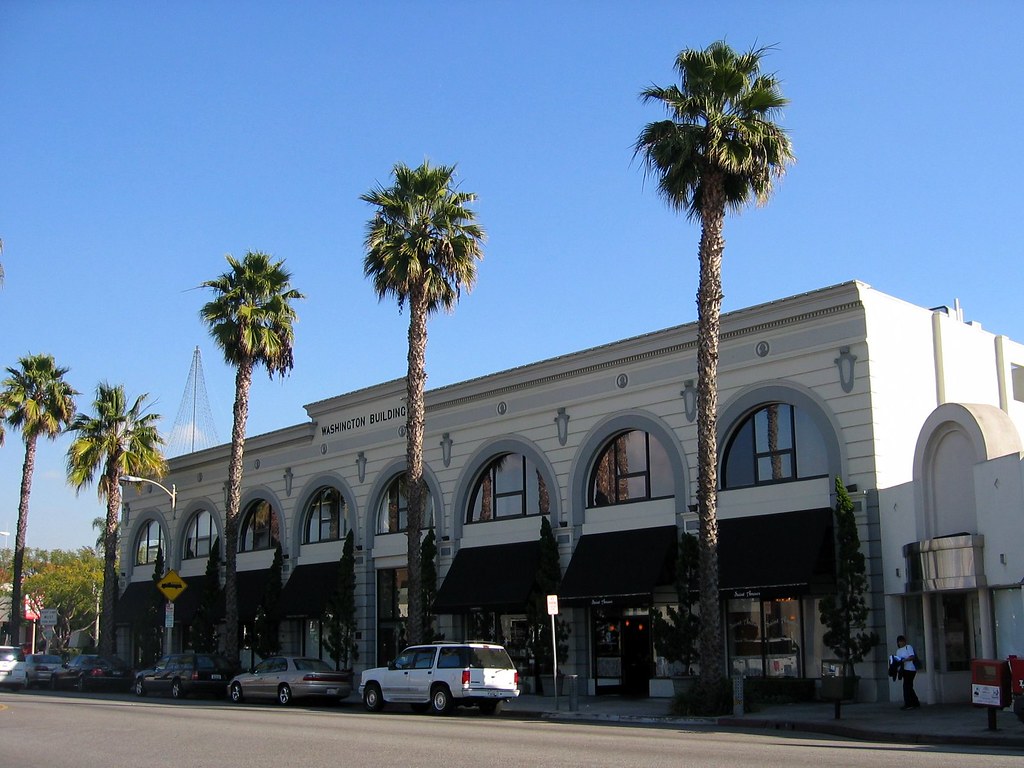
Culver City's other 1920s-era triangular building is just down the street from The Culver Hotel. Built by Charles E. Lindblade, a business associate of Harry Culver who also bears a city street name of his own, this Beaux Arts-style building was designed by Arthur D. Scholz and Orville L. Clark. As it is today, the building housed numerous retail and office businesses over the years, including the Culver City post office, the MGM Studios Fan Club and Lindblade's real estate company.


10. Kirk Douglas Theatre/Culver Theatre
1946
9820 W Washington Blvd, Culver City

Built in 1946 as The Culver Theatre, a 1,100-seat Streamline Moderne cinema designed by Karl G. Moeller that screened 20th Century Fox films as part of the Fox West Coast Theatres chain.
It was later operated by the National General and Mann Pictures chains, and finally as an independent theatre. It was split into three screens circa 1970s, and closed in 1989. In 1994, it suffered damage from the 1994 Northridge Earthquake and underwent a major $8 million renovation later in the '90s, re-opening in 2004 as The Kirk Douglas Theatre (with Spartacus himself as a the major contributor in the renovation), operated by Center Theatre Group. It currently features two stages, one seating about 300 and a smaller stage seating around 100.

11. Sony Pictures Studios/MGM Studios
1915
10202 West Washington Boulevard, Culver City

One can't mention Culver City without mentioning its massive movie lot, originally Thomas Ince's (remember him?) Triangle Studios operation until he moved to the Culver Studios property and sold this site to D.W. Griffith and Mack Sennett.  In 1918, the studio was sold to Samuel Goldwyn, which became Metro Goldwyn Mayer in 1924 (following the merger of Metro Pictures, Goldwyn Studios and Louis B. Mayer Productions). It became the Columbia Pictures studios in 1989 and Sony Pictures Studios from 1992 to the present. On this lot was filmed a countless list of Hollywood productions, most notably The Wizard of Oz in 1939 (you will be riding next to the actual Land of Oz, think about that...), and currently, TV shows like Jeopardy! and Wheel Of Fortune. Not to be outdone by Universal and Warner Brothers, but you can also take a tour of this studio lot (weekdays only).

If heading northwest along Motor Avenue, please skip to #21.


12. La Ballona Elementary School
1865
10915 W Washington Blvd, Culver City

This local school is literally some old school Culver City right heah! Established in 1865, it's one of the oldest schools in Los Angeles County still in operation. Back in the day, it had an enrollment of 158 pupils between the ages of 5-15, being taught by one teacher, a Miss Craft who made $50 a month, and the school year lasted seven months, since it revolved around the agricultural calendar of the surrounding area.
When it was established, it was in an unincorporated area that eventually became Palms, which was annexed to the City of Los Angeles in 1914. When Culver City was founded the year before, it had no schools within its boundaries, so another school was built in the area in 1916. Eventually La Ballona was annexed into Culver City in 1920.

13. King Fahad Mosque
1995
10980 Washington Boulevard, Culver City

This Islamic house of worship was built in 1995 as a gift from Saudi Prince Abdulaziz bin Fahad to serve the growing community of Muslims in the Westside, named after the king of Saudi Arabia at the time. Its facade features hand made marble tiles from Turkey, and a 72 foot-high minaret topped with a gold leaf crescent.


14. Tellefson Park/Rollerdrome Site
1976/1928
1105 W. Washington Pl, Culver City

There's a designated activity hub here at this 1.5-acre Culver City park, which was dedicated in 1976 as part of the U.S. Bicentennial celebrations. It was named after former Culver City councilman and city attorney Mike Tellefson, who served the city for 31 years. In 2013, the body of a suicide victim was discovered in the park.

But longtime Culver Citizens remember this site as a legendary roller skating rink called The Rollerdrome,  a wooden structure which opened in 1928 and had a characteristic rounded roof. Roller skating events were centered around the rink's organ, which was played by a live organist, and provided memorable evenings for local families and youths. It was torn down in 1970, which was a shame, since roller skating enjoyed a renaissance of sorts in the '70s.

15. Tito's Tacos
1959
11222 Washington Pl, Culver City

Many Angelenos already know of this longtime Westside (American) taco joint known as Tito's Tacos, which as we all know, was founded in 1959 by a businessman who may or may not be an actual Mexican guy named Tito. Everyone has their opinion on Tito's, but three things are indisputable truths: 1) It's a Culver City Institution; 2) It's not authentic Mexican food and 3) People come here for the nostalgia anyway.

During the "Culver City Meets Venice" CicLAvia in August 2015, a minor controversy erupted when the restaurant's owner threatened to sue Culver City government for potential lost revenue due to the CicLAvia route, and everyone, including The Militant got all in on that, but ultimately, cooler heads prevailed, and after an intervention by the CicLAvia organization, Tito's Tacos warmed up to the route, and likely did a 180 once crowds queued up along their sidewalk service windows. Titogate 2015 was now history. All is good now, and Tito's is a mainstay of every Culver City CicLAvia. The moral of the story? Never fear CicLAvia, and a little communication and understanding goes a long way.

16. The Oval District/Palm Place
1912
Area within Washington Place, McLaughlin Ave, Venice Blvd & Inglewood Blvd, Mar Vista

You might not see much from the street level, but this neighborhood just north of the CicLAvia route, a Historic Preservation Overlay Zone known as "The Oval District" is one of the first automobile-oriented property tract developments in Southern California.

When seen from a map or an aerial view. the streets of this 200-unit housing development of predominantly 1- and 2-story homes resembles an hourglass shape with an oval road in the center (which caught The Militant's eye and caused him to investigate the history of the place).

The 137-acre neighborhood was developed in 1912 by a Lillian Charnock Price (there is a "Charnock Road" two blocks north of Venice, BTW) who hired renowned landscape architect and urban planner Wilber David Cook, Jr. (who worked for legendary late 19th/early20th-century landscape architect Frederick Law Olmsted to design an "Aristocratic Suburb" marketed as “Palm Place."

The large-sized lots were unique, and park-like in their large setback from the street and the palm tree-lined parkways, but only a small number of homes were built. Price sold the development to Robert Sheman, who was the stepson of Moses Sherman, the developer of the Los Angeles and Pacific Railway, which built the original rail line on nearby Venice Boulevard. What was originally intended to be the first car-oriented development was going to be a transit-oriented development!

But those didn't sell either. The lots were still too large and pricey. So Sherman sold it to a financier group that marketed it as "Marshall Manor" in 1920 and interest began to pick up. But it wasn't until after World War II, when suburbanization was in vogue and Los Angeles' Westside development boom commenced, that the rest of the lots got built.

17. Mar Vista Hill (a.k.a. The 'Mar Vista' in Mar Vista)
1924
Centinela Ave & Rose Ave, Mar Vista

Everyone know that "Mar Vista" is EspaƱol for "sea view." But riding along Centinela or Venice during CicLAvia, you can't even see the sea. Where is it?

Well, The Militant will tell you where to see the "Mar Vista" in Mar Vista. He implores you to take a short detour from the CicLAvia route and continue north along Centinela Avenue, switch your gears (or pedal harder, you fixie heads), and go up the hill (Mar Vista Hill) until you reach Rose Avenue. Then turn right and go  up the hill to the open space that contains the baseball field and community garden. Look to the west, stand on top of the telephone poles laying on the ground in front of the small parking lot, and you can have a semi-unobstructed (damn you, DWP power lines!) view of Santa Monica Bay from the Palos Verdes peninsula to the Santa Monica Mountains.

Mar Vista Hill is a 203-foot-above-sea-level promontory that was once a garbage dump, and was later the site of the Venice Reservoir in 1940 (smart, huh). The reservoir was decommissioned in the 1960s and replaced with the baseball fields you see today.

So come on up to Mar Vista Hill, where you can see the sea, to see all that you can see!

Go visit Mar Vista Hill and tweet a pic of the ocean with the hashtag #EpicCicLAviaTour!


18. State Route CA 187
1964
Venice Boulevard between Lincoln Blvd and the 10 Freeway

You may or may not know that Venice Boulevard, in addition to being a two-time CicLAvia route, was also a Pacific Electric Red Car line, but did you know it's also a designated California State Highway? In 1964, CalTrans designated State Route 187 starting at the Pacific Ocean. In 1994, it was shortened to the 5.4 miles from Lincoln Boulevard to the 10 Freeway. The number "187" also happens to be a reference to the California Penal Code designation for murder, which is most likely why a young, '90s-era, pre-commercialized Snoop Dogg is standing by the sign in this photo.

19. Mario's Brothers Market
12904 Venice Blvd, Mar Vista

No deep history behind this neighborhood Mexican corner market on Venice and Beethoven, but the name caught The Militant's eye. He's seen some of you CicLAvians ride in CicLAvia in Mario/Nintendo cosplay, so this would be a perfect photo/selfie opportunity.

While you're here, support the business and buy something inside. Maybe it really is owned by a Mario. Or a Luigi. Ask where The Princess is. If they're successful enough, they might move to a larger location and rename themselves "Super Mario's Brothers." Tweet a pic of yourself (or your group) in front of Mario's Brothers with the hashtag "#EpicCicLAviaTour"!


20. Venice High School
1920
13000 Venice Blvd, Venice

Venice's namesake secondary school was one of three on-location sites for Rydell High in the 1978 motion picture Greaseand was the school scene in the Britney Spears video for her debut hit, "...Baby One More Time." The main Moderne-style school buildings, built in 1935-37  were designed by local architects John C. Austin and Frederick M. Ashley, who also designed the Griffith Observatory. The campus is also famous for its statue of legendary Hollywood actress and famous alumna Myrna Loy at the front of the school. Other famous alumni include Beau Bridges, Crispin Glover, the late Ivory Queen of Soul, Teena Marie and In-N-Out Burger founder Harry Snyder. Go Gondoliers!

Motor Avenue Branch:21. Digital Imaging Center
10354 Venice Blvd, Culver City

Not historic, but this is The Militant's go-to place for making physical prints of his digital photographs. Nice folks, nice prices and quick service!


22. The Original Location of Versailles Cuban Restaurant
1981
10319 Venice Blvd, Palms

Home of their legendary garlic chicken and black beans, among other menu items, this restaurant was founded at this location by Cuban immigrant Orlando Garcia in 1981 after opening a restaurant called El Rincon Criollo near Downtown Los Angeles in the late 1970s. So why is does an iconic Cuban restaurant bear the name of a historic palace in France? Originally to be named "El Rincon Criollo #2," it was named "Versailles" at the urging of his son and current owner William Garcia, who recalls visiting a fishing village called Versailles during his youth with his father, and stayed at Miami's Versailles hotel after his own wedding. And during his honeymoon, the cruise ship's dining room was also called Versailles. So his geographical leitmotif won out. The restaurant, now a local chain, eventually grew to five locations, but three (including locations in Encino and near Beverly Hills) operate today.

23. The Guy on Motor and Venice
2002
3771 Motor Ave, Palms

While waiting for his digital prints at Digital Imaging Center and after shopping for the latest camo threads at The Surplus Store across the street, The Militant stumbled on this rather random, eclectic and interesting thrift/antique store, which, depending on your tastes and interests, is either The Most Awesome Place Evar or a total P.O.S.  -- you decide. The guy is one Rick Lamb, who has run this place since 2002 and donates the proceeds of his sales to the organization Friends of Animals.


24. Iman Cultural Center
2006
3376 Motor Ave, Palms

This cultural center, school and house of worship for Los Angeles' Iranian American Shia Muslim community, most of which live in the Westside. Unlike the immigrants from Iran who identify as Persians (who are mostly Jewish) or other Muslims (who are mostly Sunni Muslims, the majority sect of Islam that has had a 1,387-year tiff with the Shiites) this minority-within-a-minority community holds this venue in high regard. And it's expected to be kickin' in a few weeks when it hosts the Nowruz, or Persian New Year festival on March 21.

25. The National Bend
National Blvd & Rose Avenue, Palms

Whatup with National Boulevard? It is perhaps one of the most perplexing throughfares in all of Los Angeles with its constant, excessive twists, turns and bends. But alas, our Freeway Culture is to blame: Before the late 1950s, National was a somewhat more straightforward street but was consequently chopped up and made into a crooked mess due to the construction of the Santa Monica Freeway. This sharp turn near Rose Avenue features an eclectic, multicultural array of restaurants, markets and shops usually not found in the Westside, such as the Simpang Asia Indonesian market, Madre Oaxacan Restaurant, Hu's Szechuan Restaurant, The Vegan Joint, and just around the corner, Mama's Pizza and the Irish Times pub. The Militant covered this curious corner back in 2007.

See you or not see you on the streets this Sunday! Low chance of rain in the morning, but always remember - THE SUN ALWAYS SHINES ON CICLAVIA! Happy CicLAvia!

Thursday, March 23, 2017

The Militant's Epic Militant CicLAvia Tour XX!!


Interactive map - click and zoom! Click here to view the map separately!


Ahhh, Spring is finally in the air. A time for more daylight, colorful native floral blooms, Dodgers baseball and...CicLAvia! The first Cicla of 2017 brings us back to a virtual re-run of the August 2015 "Culver City Meets Venice" route from The Heart of Screenland (which will be celebrating its 100th birthday this September) to Abbot Kinney's canal city via Mar Vista - although there's a minor modification - the addition of two streets and an alleyway forming a pedestrian zone in Mar Vista between Centinela and Grand View avenues.

This is the 20th iteration of CicLAvia, and The Militant still has yet to miss a single one. So for those of you 20-timers who will be on the streets this Sunday, The Militant will celebrate by pouring a Dos Equis at an unspecified bar or restaurant along the route. If you happen to spot him (not very likely, but who knows?) Then drinks are on The Militant!

You should know the drill by now, Share this link on your Facebooks and Twitters, visit the sights yourselves -- and if you do, Tweet with the hashtag, #EpicCicLAviaTour to stroke The Militant's ego and make him feel like his several days of staying up late at night to research and write all this was worth his while. And most of all, Stay Militant and Enjoy CicLAvia this Sunday! See you or not see you on the streets!

1. Culver City Metro Expo Line Station/Site of Culver Junction
2012
Venice and National boulevards, Culver City

You may or may not have arrived at CicLAvia via the Metro Expo Line, which is the modern reincarnation of the Pacific Electric Santa Monica Air Line. Not only can you experience Los Angeles' transportation present, but you're also in the clear presence of its past -- this area was also the site of Culver Junction, where not one, not two, but three Pacific Electric Red Car lines converged, going to Santa Monica, Venice and Redondo Beach. TIP: Make sure you buy a Day Pass or that your TAP card is well-loaded before CicLAvia, so you don't have to queue at the ticket machines! The Militant says "You're Welcome."

2. Ince Boulevard/The Culver Studios
1918
Ince Blvd & Washington Ave, Culver City

As you make your first turn going westbound on the CicLAvia route, take note of the street name: Ince.

If you know your Culver City history, the town was a planned community built by landowner Harry H. Culver, a Spanish-American war veteran who worked for SFV pioneer Isaac N. Van Nuys and purchased a large section of the old Rancho La Ballona. In 1913 he established the town and filmmaker Thomas Ince moved his operation here from Pacific Palisades (via his Triangle Studios down the street -- more on this later...) and bought this section of land from Culver himself to establish the Ince Studio, which featured a large mansion fashioned after George Washington's Mt. Vernon residence, that remains in full view today. Ince's studio was sold to Cecil B. DeMille after his mysterious death and had changed hands and names over the years, finally adopting its current name of The Culver Studios in 1970. Legendary Hollywood films were shot this studio, including Gone With The WindKing KongE.T. and The Matrix.

3. Pacific Electric Ivy Substation
1907
Venice and Culver boulevards, Palms

Downtown  Culver City is already rich in retail and artistic activity, and has a bevy of well-known eateries, like the popular Father's Office. The Militant can cover that in its own post (and kinda already did before). But welcoming people to Downtown Culver City along Venice Blvd (though technically located in the Los Angeles neighborhood of Palms), a block from the Culver City station is an appropriate link to the past - the Ivy Substation. The single-story Mission Revival-style structure served as a powerhouse for the Pacific Electric Railway from 1907 to 1953, when the Expo Line's predecessor, the Santa Monica Air Line, ceased operation. Today, it's a 99-seat venue for The Actor's Gang theatre company, renovated in the early 1990s. How interesting that a building originally built for transportation infrastructure was repurposed into a building for the arts, which in turn attract people using the new transportation infrastructure.

4. Culver Hotel
1924
9400 Culver Blvd, Culver City

This 6-story triangular building, originally named Hotel Hunt, opened in 1924 as Culver City's first skyscraper (it was the tallest building between Downtown Los Angeles and Venice)  and housed Harry Culver's personal office on the second floor. Numerous Hollywood stars have stayed here, such as Joan Crawford, Clark Gable, Greta Garbo and Ronald Reagan, and most notably the little people actors who played the Munchkins in The Wizard of Oz during its filming down the street. Actor John Wayne was one of the later owners, and it was fully restored in the 1990s.

5. The Washington Building
1927
9718 W. Washington Blvd, Culver City

Culver City's other 1920s-era triangular building is just down the street from The Culver Hotel. Built by Charles E. Lindblade, a business associate of Harry Culver who also bears a city street name of his own, this Beaux Arts-style building was designed by Arthur D. Scholz and Orville L. Clark. As it is today, the building housed numerous retail and office businesses over the years, including the Culver City post office, the MGM Studios Fan Club and Lindblade's real estate company.

6. Kirk Douglas Theatre/Culver Theatre
1946
9820 W Washington Blvd, Culver City

Built in 1946 as The Culver Theatre, a 1,100-seat Streamline Moderne cinema designed by Karl G. Moeller that screened 20th Century Fox films as part of the Fox West Coast Theatres chain.
It was later operated by the National General and Mann Pictures chains, and finally as an independent theatre. It was split into three screens circa 1970s, and closed in 1989. In 1994, it suffered damage from the 1994 Northridge Earthquake and underwent a major $8 million renovation later in the '90s, re-opening in 2004 as The Kirk Douglas Theatre (with Spartacus himself as a the major contributor in the renovation), operated by Center Theatre Group. It currently features two stages, one seating about 300 and a smaller stage seating around 100.


7. Sony Pictures Studios/MGM Studios
1915
10202 West Washington Boulevard, Culver City

One can't mention Culver City without mentioning its massive movie lot, originally Thomas Ince's (remember him?) Triangle Studios operation until he moved to the Culver Studios property and sold this site to D.W. Griffith and Mack Sennett.  In 1918, the studio was sold to Samuel Goldwyn, which became Metro Goldwyn Mayer in 1924 (following the merger of Metro Pictures, Goldwyn Studios and Louis B. Mayer Productions). It became the Columbia Pictures studios in 1989 and Sony Pictures Studios from 1992 to the present.

On this lot was filmed a countless list of Hollywood productions, most notably The Wizard of Oz in 1939 (you will be riding next to the actual Land of Oz, think about that...), and currently, TV shows like Jeopardy! and Wheel Of Fortune.

8. La Ballona Elementary School
1865
10915 W Washington Blvd, Culver City

This local school is literally some old school Culver City right heah! Established in 1865, it's one of the oldest schools in Los Angeles County still in operation. Back in the day, it had an enrollment of 158 pupils between the ages of 5-15, being taught by one teacher, a Miss Craft who made $50 a month, and the school year lasted seven months, since it revolved around the agricultural calendar of the surrounding area.
When it was established, it was in an unincorporated area that eventually became Palms, which was annexed to the City of Los Angeles in 1914. When Culver City was founded the year before, it had no schools within its boundaries, so another school was built in the area in 1916. Eventually La Ballona was annexed into Culver City in 1920.


9. King Fahad Mosque
1995
10980 Washington Boulevard, Culver City

This Islamic house of worship was built in 1995 as a gift from Saudi Prince Abdulaziz bin Fahad to serve the growing community of Muslims in the Westside, named after the king of Saudi Arabia at the time. Its facade features hand made marble tiles from Turkey, and a 72 foot-high minaret topped with a gold leaf crescent.


10. Tellefson Park/Rollerdrome Site
1976/1928
1105 W. Washington Pl, Culver City

There's a designated activity hub here at this 1.5-acre Culver City park, which was dedicated in 1976 as part of the U.S. Bicentennial celebrations. It was named after former Culver City councilman and city attorney Mike Tellefson, who served the city for 31 years. In 2013, the body of a suicide victim was discovered in the park.

But longtime Culver Citizens remember this site as a legendary roller skating rink called The Rollerdrome,  a wooden structure which opened in 1928 and had a characteristic rounded roof. Roller skating events were centered around the rink's organ, which was played by a live organist, and provided memorable evenings for local families and youths. It was torn down in 1970, which was a shame, since roller skating enjoyed a renaissance of sorts in the '70s.

11. Tito's Tacos
1959
11222 Washington Pl, Culver City

Many Angelenos already know of this longtime Westside (American) taco joint known as Tito's Tacos, which as we all know, was founded in 1959 by a businessman who may or may not be an actual Mexican guy named Tito. Everyone has their opinion on Tito's, but three things are indisputable truths: 1) It's a Culver City Institution; 2) It's not authentic Mexican food and 3) People come here for the nostalgia anyway.

During the last "Culver City Meets Venice" CicLAvia in August 2015, a minor controversy erupted when the restaurant's owner threatened to sue Culver City government for potential lost revenue due to the CicLAvia route, and everyone, including The Militant got all in on that, but ultimately, cooler heads prevailed, and after an intervention by the CicLAvia organization, Tito's Tacos warmed up to the route, and likely did a 180 once crowds queued up along their sidewalk service windows. Titogate 2015 was now history. The moral of the story? Never fear CicLAvia, and a little communication and understanding goes a long way.

12. The Oval District/Palm Place
1912
Area within Washington Place, McLaughlin Ave, Venice Blvd & Inglewood Blvd, Mar Vista

You might not see much from the street level, but this neighborhood just north of the CicLAvia route, a Historic Preservation Overlay Zone known as "The Oval District" is one of the first automobile-oriented property tract developments in Southern California.

When seen from a map or an aerial view. the streets of this 200-unit housing development of predominantly 1- and 2-story homes resembles an hourglass shape with an oval road in the center (which caught The Militant's eye and caused him to investigate the history of the place).

The 137-acre neighborhood was developed in 1912 by a Lillian Charnock Price (there is a "Charnock Road" two blocks north of Venice, BTW) who hired renowned landscape architect and urban planner Wilber David Cook, Jr. (who worked for legendary late 19th/early20th-century landscape architect Frederick Law Olmsted to design an "Aristocratic Suburb" marketed as “Palm Place."

The large-sized lots were unique, and park-like in their large setback from the street and the palm tree-lined parkways, but only a small number of homes were built. Price sold the development to Robert Sheman, who was the stepson of Moses Sherman, the developer of the Los Angeles and Pacific Railway, which built the original rail line on nearby Venice Boulevard. What was originally intended to be the first car-oriented development was going to be a transit-oriented development!

But those didn't sell either. The lots were still too large and pricey. So Sherman sold it to a financier group that marketed it as "Marshall Manor" in 1920 and interest began to pick up. But it wasn't until after World War II, when suburbanization was in vogue and Los Angeles' Westside development boom commenced, that the rest of the lots got built.

13. The Mar Vista Pedestrian "Canals"
2017
CicLAvia route between Centinela and Grand View avenues

The end of the CicLAvia route might be more associated with canals, but this newly-added section of the course features a pedestrian-friendly (a.k.a. Dismount City, folks!) zone of activities in the Mar Vista area. The zone includes the Mar Vista Farmers' Market, a couple cafes, a yoga studio and a pet store that features a pet adoption event (on National Puppy Day Weekend, no less).

14. Mar Vista Hill (a.k.a. The 'Mar Vista' in Mar Vista)
1924
Centinela Ave & Rose Ave, Mar Vista

Everyone know that "Mar Vista" is EspaƱol for "sea view." But riding along Centinela or Venice during CicLAvia, you can't even see the sea. Where is it?

Well, The Militant will tell you where to see the "Mar Vista" in Mar Vista. He implores you to take a short detour from the CicLAvia route and continue north along Centinela Avenue, switch your gears (or pedal harder, you fixie heads), and go up the hill (Mar Vista Hill) until you reach Rose Avenue. Then turn right and go  up the hill to the open space that contains the baseball field and community garden. Look to the west, stand on top of the telephone poles laying on the ground in front of the small parking lot, and you can have a semi-unobstructed (damn you, DWP power lines!) view of Santa Monica Bay from the Palos Verdes peninsula to the Santa Monica Mountains.

Mar Vista Hill is a 203-foot-above-sea-level promontory that was once a garbage dump, and was later the site of the Venice Reservoir in 1940 (smart, huh). The reservoir was decommissioned in the 1960s and replaced with the baseball fields you see today.

So come on up to Mar Vista Hill, where you can see the sea, to see all that you can see!

Go visit Mar Vista Hill and tweet a pic of the ocean with the hashtag #EpicCicLAviaTour!


15. State Route CA 187
1964
Venice Boulevard between Lincoln Blvd and the 10 Freeway

You may or may not know that Venice Boulevard, in addition to being a two-time CicLAvia route, was also a Pacific Electric Red Car line, but did you know it's also a designated California State Highway?

In 1964, CalTrans designated State Route 187 starting at the Pacific Ocean. In 1994, it was shortened to the 5.4 miles from Lincoln Boulevard to the 10 Freeway.

The number "187" also happens to be a reference to the California Penal Code designation for murder, which is most likely why a young, '90s-era, pre-commercialized Snoop Dogg is standing by the sign in this photo.

16. Mario's Brothers Market
12904 Venice Blvd, Mar Vista

No deep history behind this neighborhood Mexican corner market on Venice and Beethoven, but the name caught The Militant's eye. He's seen some of you CicLAvians ride in CicLAvia in Mario/Nintendo cosplay, so this would be a perfect photo/selfie opportunity.

While you're here, support the business and buy something inside. Maybe it really is owned by a Mario. Or a Luigi. Ask where The Princess is. If they're successful enough, they might move to a larger location and rename themselves "Super Mario's Brothers."

Tweet a pic of yourself (or your group) in front of Mario's Brothers with the hashtag "#EpicCicLAviaTour"!


17. Venice High School
1920
13000 Venice Blvd, Venice

Venice's namesake secondary school was one of three on-location sites for Rydell High in the 1978 motion picture Greaseand was the school scene in the Britney Spears video for her debut hit, "...Baby One More Time." The main Moderne-style school buildings, built in 1935-37  were designed by local architects John C. Austin and Frederick M. Ashley, who also designed the Griffith Observatory.
The campus is also famous for its statue of legendary Hollywood actress and famous alumna Myrna Loy at the front of the school. Other famous alumni include Beau Bridges, Crispin Glover, the late Ivory Queen of Soul, Teena Marie and In-N-Out Burger founder Harry Snyder. Go Gondoliers!

18. Old Venice Civic Center
1911
681-685 Venice Blvd, Venice

Venice, originally founded as part of Santa Monica, seceded from that city in 1911 and for the next 15 years, functioned as an incorporated city. In 1926, due to political mismanagement and crumbling infrastructure, it was annexed into the City of Los Angeles. Its vestigial remnants of its civic government still remain, though. The old Venice City Hall still stands at 685 Venice Blvd (pictured), now the venue for Beyond Baroque Theatre. Next door on 681 Venice Blvd is the old Venice Police Station, now the home of the Social Public Arts Resource Center (SPARC), the community arts nonprofit that spearheaded the modern urban mural movement. It's interesting to note that both of these government buildings were adaptively re-used for arts purposes. The Militant is looking at the old LAPD Parker Center in DTLA and wonders if it could make some sort of badass performing arts venue...

19. Electric Avenue
1905
Electric Ave and Venice Blvd, Venice

No, '80s singer Eddy Grant didn't rock down to this street to take it higher (VROOOM!) But this street was so-named because it was one of the old Pacific Electric Red Car rights-of-way, which included Pacific Avenue (of course) and Venice Blvd. The railway, of course, was built to serve (and sell property in and around) Abbot Kinney's Venice of America development. Rock on to Electric Avenue towards Brooks Avenue and look to your left for actual remnants of Pacific Electric tracks at Millwood Avenue, Westminster Avenue and Broadway. If that kind of stuff excites you, be on the look out for The Militant's upcoming Pacific Electric Archaeology Map (view the preview edition map here, including Venice sites). And then we take it higher (Oh yeah)!

20. Abbot Kinney Blvd
1992
Abbot Kinney Blvd between Washington Blvd and Main Street

New arrivals to Los Angeles are likely oblivious to the fact that Venice's upscale arts and boutique corridor is technically one of its newest streets. Until 1992, that stretch was confusingly known as West Washington Blvd, which, along with Washington Street and Washington Way, was a source of disorientation among motorists. A small group of business owners lobbied to re-name the stretch after the community's founder. Ignorance of local history was so bad back then, that then-City Councilman Zev Yaroslavsky, who grew up in the Westside, asked aloud at a Los Angeles City Council committee meeting, "Who is Abbot Kinney?" (Really, Zev?!?!) Thankfully, due to a street name change, and other things, we're a lot better at our Los Angeles history.

21. Venice Of America Centennial Park
2005
Venice & Abbot Kinney boulevards

This park, which neighbors the Venice-Abbot Kinney Memorial Branch Library and built for Venice's centennial year of 2005,  was made on the very same median that carried the Pacific Electric Railway tracks, and in honor of that, the design on the park's paving resembles that of railroad tracks. The Militant went there in a famous bike ride to Venice Beach in 2008 and encountered a bunch of ducks walking in this park.

22. Venice Traffic Circle and the Lost Canals
1929
Grand and Windward avenues, Venice

Traffic circles, or "roundabouts" as they're known in Britain, are not a common sight in the US, much less Los Angeles, though a dozen or so are known to exist here (more in a future post). So what up with this one? This part of Venice was part of Abbot Kinney's original "Venice of America," replete with its own canals. But unlike their Italian counterpart, these canals were not physically connected to the ocean, and the water had gone stagnant and kinda gross. By the 1920s, the Venice city infrastructure was falling apart (which meant little resources or political will to maintain the canals), and the automobile had started to conquer the streets of the Southland. So they were filled in circa 1929. The CicLAvia course on Grand Avenue was once the Grand Canal, and the traffic circle was formerly the location of a large saltwater swimming lagoon. The surviving canals, located south of Venice Blvd, were built by a different developer a couple years after Kinney's canals opened.

23. Windward Hotel/Pacific Electric Station
1905
Windward and Pacific avenues, Venice

The Windward Hotel, now a traveler's hostel, is not only the oldest hotel building in Venice, but its eastern ground floor entrance also functioned as Venice's Pacific Electric station. For the first half of the 20th Century, Venice was a popular western destination for the Red Cars, and the preferred way to go. North of Windward Way, there was no Pacific Avenue, but a dedicated "Trolleyway" for the Red Cars. When passengers disembarked at the Venice station before 1929, they were treated to an awe-inspiring view of the large lagoon (now the traffic circle) and canals just across the street, welcoming them to Venice of America. Now, for CicLAvia, when you arrive here, use your imagination and pretend to be transported back to a time when you didn't need cars to get around. On this day, it won't be that hard.

24. Pacific Electric Grand Canal Bridge
1905
Grand Canal at Venice Blvd, Venice


Ride just a few blocks down Pacific Avenue to Venice Boulevard to see Venice's characteristic namesake -- it's system of canals, built in 1905 by the aforementioned Mr. Kinney. The ornate concrete bridge spanning two side of the Los Angeles City parking lot near the Grand Canal is the original bridge that carried the Pacific Electric Venice Short Line tracks until 1950.

Monday, August 10, 2015

10 Reflections on Sunday's "Culver City Meets Venice" CicLAvia


The Militant so far has a perfect 14 out of 14 CicLAvia attendance record, and having gone though this thing that many times, it can certainly feel nearly routine. He most certainly had a wonderful time (most likely because he showed up at the route relatively early and did not have to "rush the route" as he had to do in the past), but a certain well-publicized controversy that got diffused in time probably added some tension and drama to the mix, along with a Hollywood Happy Ending. And this CicLAvia was also great due to the fact that, hey, we were all headed to the beach again.

And sure, the day began cloudy and overcast, but by the afternoon, the day of the week lived up to its name for the 14th consecutive time, burning off the clouds to reveal a virtually cloudless, blue Summer sky, which wasn't even that hot for an August day.

The Militant hates clickbaitey listicles, but most people don't read stuff on the Internet these days that's not formatted in list form, so, he grudgingly presents these Ten Reflections on this past Sunday's "Culver City Meets Venice" CicLAvia:


1. Let's TACO Bout This

Certainly what would have been the proverbial Elephant In The Room was the much-publicized ranting of Tito's Tacos that doth protested the CicLAvia route running in front of their front door, only to do an about-face two days before the event, because maaaaybe they suddenly discovered that the negative backlash would cost them business either way.  At any rate, despite people not getting the update and still sharing two-days-old news articles on their social media feeds, SeƱora Lynne Davidson did not sue Culver City and the event went on without a hitch.

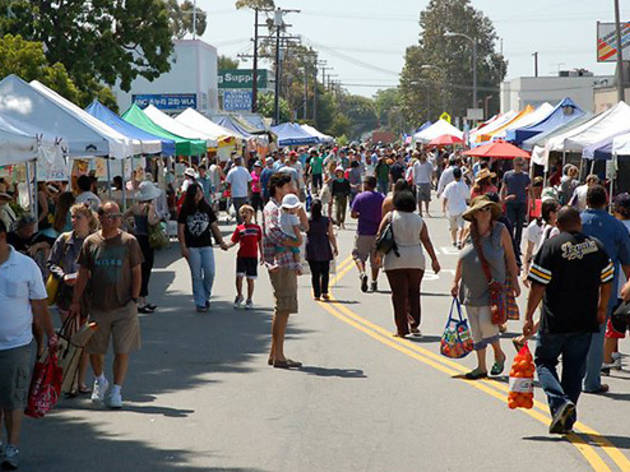
And as you can see by the photo above and below, the crowd was, at worst, equivalent to a normal weekend day there without an open streets event.


There were bike racks provided by "Some Non-Profit Organization" on the Tuller Avenue cul-de-sac adjacent to the Westside crunchy taco institution, as well as signs on Sepulveda directing regulars on cars to the alley to access the Tito's parking lot (like they never used the alley before).


Sra. Davidson's fears of not only a lack of customers (their parking lot was just as full as it is during the other 364 days of the year that there is no CicLAvia on Washington Place), but of customers not purchasing insanely mass quantities of tacos in those cardboard boxes, were unfounded, as many CicLAvians arrived in groups of their own and purchased tacos in mass quantities.

Twitter user @fig4all Tweeted this pic of Sra. Davidson being interviewed by KABC-TV's Eyewitness News crew, apparently showing her eating humble pie next to CicLAvians ordering their crunchy tacos:

However, upon watching the KABC news report, they quoted Sra. Davidson as having a "let's wait and see" attitude regarding the raw numbers from Sunday. Hmph.

You know, in a way, The Militant is kind of glad Titogate happened, because it set a clear precedent for a well-known local institution (that no doubt has name recognition) having initial concerns about not being able to get customers during CicLAvia. Granted, her initial impression of the event probably resembled a marathon or a bike race, not the reality of CicLAvia that we all know and love. But perhaps from here on out, this well-publiczed precedent set by Tito's Tacos can be shown clear to any future local institutions that find themselves on future CicLAvia routes.

And who knows, after all the numbers come in, SeƱora Davidson will sue on the grounds that the next CicLAvia route won't be going in front of her eatery.


2. Both Sides Now

Remember back in April, 2013 when we had that big-ass 17-mile CicLAvia where we all rode from Downtown to Venice Beach? And how, despite how totally awesome that was, that it kinda sucked because CicLAvians were only allowed to use the Westbound lanes of Venice Boulevard?

This time around, CicLAvians got to use BOTH sides of Venice Boulevard (mostly), eliminating that crazy bottleneck of traffic for most of the route. Of course, west of Lincoln, it was the same old thing as two years ago, though at least for just a short segment of the route:


3. Stand Up And Be Counted

Did you see these things along the route?


Since these instruments did not appear to be releasing poisonous chemicals designed to kill every CicLAvian on the route (removes tinfoil hat), these appeared to be counting devices of some sort to count how many participants were on the streets at CicLAvia, to be compiled later by some expensive Beverly Hills accounting firm (or most likely by CicLAvia themselves, in cooperation with UCLA or another local educational institution). We wait the number for this one!

4. Just A Lot More Bikes

CicLAvia The Organization likes to stress the fact that the event is not just for bicycles, and smaller routes like Wilshire Boulevard and the short-but-sweet Pasadena route last May certainly brought out more non-cyclists, but the non-bike minority seemed even smaller this time around.


5. People On Skates Pushing Strollers At CicLAvia Are A Thing

For the non bicycle-riding CicLAvians, The Militant did notice a number of people pushing strollers while wearing rollerblades or roller-skates like this dude above along Washington Place. The Militant has never really seen that many people do that in previous CicLAvias. Count it as a thing now.


6. That Taco Tuesdays Song

Twice during CicLAvia, The Militant happened to ride near the Midnight Ridazz Taco Tuesdays ride contingent, which featured a trailer adorned with a sugar skull y corazon y sound system blasting their Taco Tuesdays Theme Song, which The Militant can't seem to get out of his head.

7. Abbot Kinney - The CicLAvia-Adjacent Corridor

Arriving at Venice Beach, The Militant met up with one of his operatives at the route's end, wanted to get something to eat, but they were local enough not to fall into the tourist trap that is the Venice Beach Boardwalk. So they opted for Abbot Kinney Boulevard, just a short distance east. Although this street was not part of the CicLAvia route and had normal automobile traffic (as well as detoured Metro Bus lines), it might as well have been as the street was crowded with CicLAvians also patronizing their restaurants and shops. Certainly, past CicLAvias have had participants spill over into non-route streets, but this was the first time The Militant has seen this phenomena in such an obvious form. Be on the look out for more of these in the future.


8. Big Media Companies Along CicLAvia Are Weird

Thousands of people rode by Sony Picture Studios in Culver City, and the corporation gets props for being listed as one of the event's sponsors, but The Militant didn't see much participation from the media giant beyond that. No Sony employees riding the route? No celebrities? Not even some gratuitous promotion (and maybe some swag) of their films and TV shows? It's strange, stupid, yet totally not surprising for this Los Angeles native to see how disconnected "Hollywood" is from the community.

At the same time, down the street, the NFL Network had a banner saying "The NFL Network Supports CicLAvia, but they were not listed as one of the event's sponsors, nor was there any sort of interactivity from them outside their office (Best practice: Coca-Cola giving away drinks outside their Central Avenue bottling plant in previous CicLAvias). Apparently the NFL Network was special enough to have their own private auto-acces barrier driveway -- the only business along the route to have one. Wait, it's because we don't have an NFL team, right?

9. The #EpicCicLAviaTour

Many of you read The Militant's #EpicCicLAviaTour post from last week to gain knowledge and familiarity with the route, and some of you even tried to visit all 25 sites. And some of you really had fun with that. This makes The Militant smile (behind his bandana mask, of course).

10.  Next Time Around...

The next CicLAvia is just two months away! It's going to be a familiar route for us CicLAveteranos. It's time to flip the scrip. The Militant may or may not try to walk the whole thing. It will also be a celebration of CicLAvia's 5th anniversary. It's definitely a part of our city and it's still growing.

Speaking of which, how bout some new routes? Venice isn't the only beach we have. How about a CicLAvia in San Pedro (how about ending the route at Point Fermin Park)? Or a Beach Cities CicLAvia?