View The Militant Angeleno's CicLAvia Tour 3.0!!! in a larger map
The Militant doesn't have to tell you what
CicLAvia is. You know it already. And even if you haven't yet experienced the sheer joy of walking or biking on car-free streets in Los Angeles under a glorious sunny Sunday (like maybe you were out of town, or in jail, or live in f'ing Rancho Cucamonga or Fontana something), at least you've heard of it before, or at least seen your Facebook feed filled with pics people on bikes with huge smiles on their faces, posing in front of the Downtown skyline on the 4th Street Bridge.
If still not, then you're a lost cause.
Anyways, the classic CicLAvia route has had its first major change. No more are the Hel-Mel Bike District or Hollenbeck Park the termini for the route. CicLAvia has grown up and stretched out into some new territory. The Militant brought you his Epic Militant CicLAvia Tour before, now it's time for version 3.0.
1. Soto Street
1890
Soto Street (duh), Boyle Heights
It's one of the main thoroughfares of the Eastside - after all, Cheech Marin gave the street a shout-out in his hit 1985 parody, "Born In East L.A." It runs from Lincoln Heights in the north to Huntington Park in the south. The street was
not named after the late Mexican American State Assemblyman
Phil Soto, as local lore has it (Though he was a native of Boyle Heights, the street was first paved when he was but one year old).
2. The Hollenbeck Bend
Circa 1900s
1st St and Chicago St, Boyle Heights
Notice how 1st Street zig-zags a little in this section of Boyle Heights? It's the neighborhood's town square, where the original LAPD Hollenbeck Police Station was located (now located just yards west) with a public plaza/green space out front and the LAPL's
Benjamin Franklin Branch Library across the street.
3. Eastside Luv
2006 (Built 1940)
1835 E. 1st St, Boyle Heights
One of The Militant's favorite hangouts in the Eastside, this bar, started by a bunch of friends who grew up in nearby City Terrace, took over the former Metropolitan bar six years ago and updated it to a more contemporary Eastside-style flavor. Don't call it gentrification, call it
gentefication.
4. Mariachi Plaza
1889
1st St and Boyle Ave, Boyle Heights
This is the new town square for Boyle Heights, anchored by the historic 1889
Boyle Hotel on the historic Cummings Block, where Mariachi musicians have been hanging out to get picked up for since the 1930s. The
Kiosko, or bandstand, that sits in the plaza is actually not that historic. It was given as a gift from the Mexican state of Jalisco, who literally shipped it over in 1998 where it was assembled in place. But it only gets used once a year for the Santa Cecilia Festival around every November 21.
The plaza is also home of the Metro Gold Line station of the same name, which opened in 2009. The unique lending library
Libros Schmibros relocated here earlier this year. This place could warrant a Militant blog post in itself -- no, an entire week of posts!
5. Simon Gless Farmhouse
1887
131 S. Boyle Ave., Boyle Heights
Back in the totally radical '80s...That's the
1880s, Boyle Heights was an open, rural area and French Basque immigrant Simon Francois Gless built a Queen Anne style house on his sheepherding farm at this location. Today, the house is a City Historic Cultural Monument and is a home that's rented out to -- Mariachi musicians! Just a few blocks west of here is Gless Street, and you might have heard of Simon's great-granddaughter -- actress
Sharon Gless, who starred in the series
Cagney and Lacey, which aired a century after her
arrière-grand-père first settled in Boyle Heights.
6. Neighborhood Music School
1947 (Built 1890s)
358 S. Boyle Ave, Boyle Heights
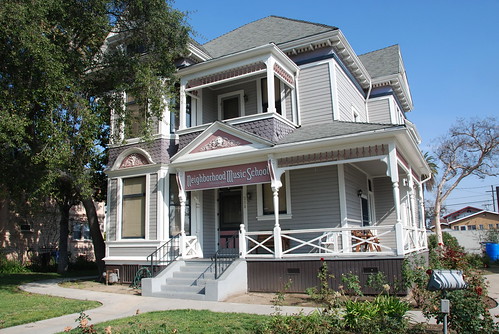
The Neighborhood Music School is exactly what it is. But it's also a Boyle Heights institution. Originally founded 98 years ago when it was located on Mozart Street (orchestral rimshot), the school moved to this Victorian home in 1947 where it still offers music lessons to local youth and the public can drop by on weekends to attend free recital concerts.
7. Keiro Retirement Home/Jewish Home For The Aging
1974/1916
325 S. Boyle Ave, Boyle Heights
With Boyle Heights being a historically Jewish and Japanese community, how's this for an ultimate Boyle Heights institution? This property was originally built in 1916 as the
Jewish Home for the Aging (now operating in Reseda), and in 1974, the Keiro Senior Health Care organization, basically their Japanese American counterpart. With the
Hollenbeck Palms retirement home just down the street (and site of the
John Edward Hollenbeck Estate, remember?) Boyle is a popular corridor for Senior Livin.'
 8. Metro Division 20 subway car yard and site of old Santa Fe LaGrande Station
1992 / 1893
320 S. Santa Fe Ave (visible from
the 4th Street Viaduct), Arts District
Take a break from riding/walking/skateboarding/pogo-sticking/etc. and take a glance off the north side of the bridge from the west bank of the River. This facility is where the 104
Italian-built subway cars of the Metro Red and Purple line cars are stored, repaired, serviced and cleaned. This was also the temporary storage and repair site of the Angels Flight railway cars after the fateful 2001 accident. The Militant actually visited this facility back in May 1992.
The subway cars are also serviced on the site of the old
Santa Fe Railway La Grande Station (hence the name of the street) that was on Santa Fe and 2nd. Built in 1893, it was precisely where midwestern transplants arrived in Los Angeles after paying their $1 train ticket from Chicago. In 1933, the landmark dome was damaged by the Long Beach Earthquake and subsequently removed. In 1939, it was rendered obsolete by the opening of the new Los Angeles Union Passenger Terminal a few blocks north.
9. Site of Quaker Dairy, Original Little Tokyo Restaurant
1890
304 E. 1st St., Little Tokyo
On the southeast corner of 1st and San Pedro streets once stood the Quaker Dairy, a restaurant started on this site in 1890 by Sanshichi Akita, an immigrant from Japan. Though preceded five years earlier by another restaurant on First St (location unknown), this is the oldest traceable location of a Little Tokyo business. By the end of the 19th century, there were over 16 Japanese-owned restaurants in this stretch of 1st Street, creating what we know as Little Tokyo.
 10. Los Angeles Sister Cities Monument
Circa late 1980s
1st and Main streets, Downtown
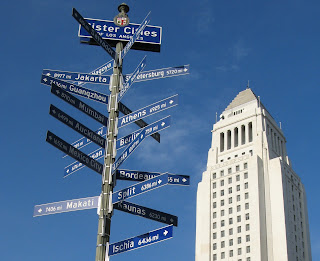
On the northeast corner of 1st and Main streets stands a pole bearing signs (in the "Blue Blade" style, no less) for every one of Los Angeles' 25
Sister Cities, each pointing towards their location. The signs range from
Lusaka, Zambia (the farthest sister city, 10,017 miles) to
Vancouver, Canada (the nearest, 1,081 miles) and everywhere in between.
Nagoya, Japan is Los Angeles' oldest sister city (1959);
Yerevan, Armenia is the newest (2007). Los Angeles, an Olympic host city (1932, 1984) also has that in common with sister cities Athens (1896, 2004), Berlin (1936), Mexico City (1968) and Vancouver (2010). Okay, the Militant is just filling up this paragraph with mindless trivia.
11. New Los Angeles City "Chevy Logo" Street Signs
2009
Various locations along 1st Street, Downtown
Speaking of Blue Blades, and since you're on 1st Street, don't forget to see
Los Angeles' new street signs! Featuring a reflective background and typeface,
the City Seal and shaped like the Chevrolet logo, these were the subject of
The Militant's now-legendary recent post on Los Angeles street signs. Now you can see them for yourself!
12. Los Angeles Police Administration Building
2009
100 W. 1st St, Downtown
Having opened just three years ago to replace the old Parker Center down the street, and featuring large open public spaces surrounding it, there's nothing really historic about this building, but do stop and take a picture of City Hall's reflection from the facade's glass panel. It's like, the thing to do.
 13. Old State Office Building Foundation
1931 (Demolished 1971)
1st and Spring streets, Downtown
Ever wonder about that park-like area across the street from City Hall, and why there appears to be a foundation but no building? It was once the site of the State Office Building (pictured left, looking north on Spring), which was built in 1931. Forty years later, the 6.4 Sylmar Earthquake rendered it unsafe, and it was demolished. The land was once an openly-accessible parkspace; the Militant remembers going to a demonstration there as a child (Oh this Militant stuff sure started early...)
NOTE: If going on the northern leg to Chinatown, skip down to 22.
If continuing south on Spring Street, read on:
 14. Site of the Wilcox Building, First National Bank
1896
2nd and Spring streets, Downtown
John Edward Hollenbeck of Boyle Heights fame made some serious bank! No, really, he
literally did. He founded a bank called the First National Bank of Los Angeles, which made its original home here on the southeast corner of 2nd and Spring in what once stood the Wilcox Building. Check this out: First National Bank merged with the
Farmers and Merchants Bank to become the Security-First National Bank, which became
Security Pacific National Bank (1967), and was eventually purchased by
Bank of America in the 199os.
 15. Site of Hollenbeck Hotel
1884
2nd and Spring streets, Downtown
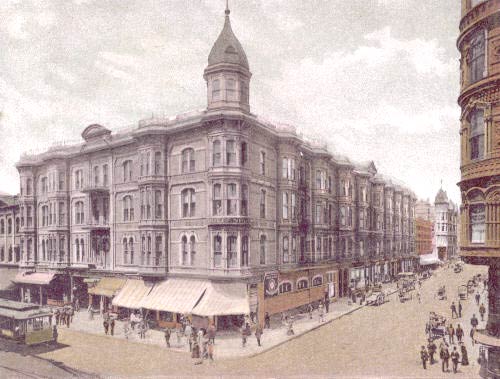
Man, this Hollenbeck dude got around! We're not quite through with him yet. Directly across Spring Street from the bank (on what is now a parking lot) stood the Hollenbeck Hotel, a pretty swanky, bougie inn back in the day. He owned not just the hotel, the entire block the hotel stood on (He sooo money!). As more hotels were being built in Downtown, this one eventually lost ground to its competitors and was demolished in 1933.
16. Site of Original Ralphs Supermarket
1873
6th and Spring streets, Downtown
Before the Hotel Hayward building was built in 1905, George A. Ralphs (see, that's why there's no apostrophe) and his brother Walter B. started the Ralphs Bros. Grocers on the southwest corner of 6th and Spring.
Their company still continues to this day, and in 2007, the company that started in DTLA
returned to the area after some 50 years.
17. St. Vincent Court
1868
St. Vincent Ct and 7th Street, Downtown
You'd hardly knew it was there, but this alley nestled between Broadway and Hill (blink and you'll miss it!), with its decorative brick pavement and European decor, seemingly belongs to another world. Originally the site of a Catholic college that was
the predecessor of today's Loyola Marymount University, today it's a unique food court featuring Armenian and Middle Eastern eateries. The Militant calls it, "Littler Armenia."
Check out this Militant Angeleno post on St. Vincent Court from 2008 for more info!
18. Wilshire Grand Hotel
1952
7th and Figueroa streets, Downtown
What we see today as the now-closed
Wilshire Grand Hotel is the latest in a long lineage of hotels that operated from that building. Originally built as the Los Angeles
Statler Hotel (one of a dozen nationwide in that chain) in 1952, it became the Statler Hilton, then the Los Angeles Hilton, then the Omni Los Angeles Hotel, and finally the Wilshire Grand. Take a good look at this hotel, though - the hotel's owner, Korean Air Lines, will soon demolish it and put up
a big-ass hotel with
crazy-ass LED advertisements on the building in the next few years.
NOTE: If going on the southern leg to Exposition Park, skip down to 27.
If continuing west on 7th Street, read on:
 19. City View Lofts/Young's Market Company Building
1924
1610 w. 7th St., Pico-Union
Ever wondered what's the deal with this 4-story Italian Renaissance-style building? It was built in 1924 as a liquor warehouse and original headquarters for Young's Market Company, which
still operates today as the largest liquor distributor in the West. This building features actual marble columns and a decorative frieze made of terra cotta. The company, in the roaring, pre-depression 1920s, just felt like it. The building was looted and burned in the 1992 Riots and was rehabbed in 1997 to become the
City View lofts. The building is in the
National Register of Historic Places.
 21. Gen. Harrison Gray Otis Statue
1920
Northeast corner of Wilshire and Park View, Westlake
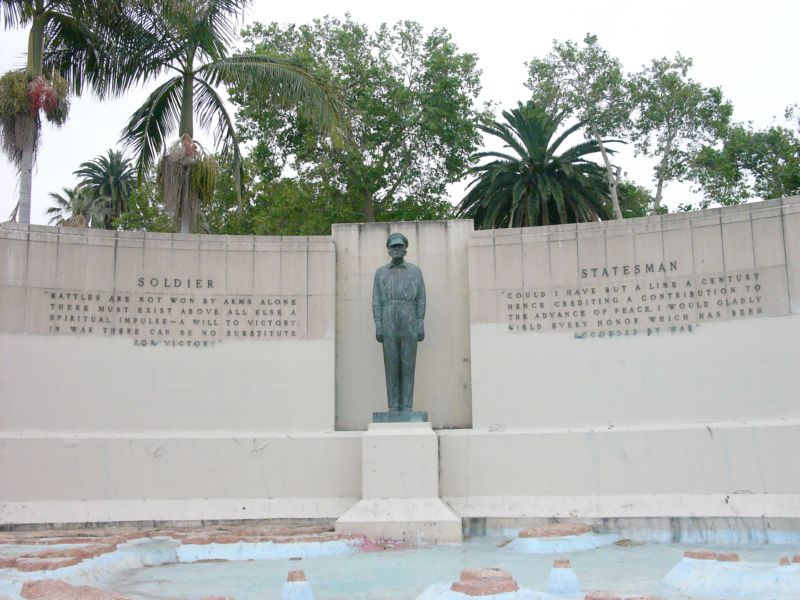
Gen. Otis is perhaps the most visible statue at the park, which predates MacArthur's WWII service. This general served in the Spanish-American and Philippine-American wars, and also fought as a Union soldier in the Civil War. But in Los Angeles, he is most known for being the founder, owner and publisher of the
Los Angeles Times.
So why is he here? His Wilshire Blvd mansion, called The Bivouac, was located across the street, was later donated to Los Angeles County and became the original campus of
Otis Art Institute. It's thought that his statue is pointing to the site of the Elks Lodge, but he's probably just pointing to his old house.
NEW! Northern Leg (To Chinatown):
22. Grand Park
1960, 2012
Open space between Grand Avenue and Spring Street, Downtown
The Militant was there on its opening day back in July, which was only the opening of half of the new park, which isn't really a new park, but a renovation and re-branding of what used to be the Los Angeles County Mall. But the eastern half opens the day before CicLAvia, so many Angelenos will get to enjoy this part of the park for the first time. And those
Occupy folks will have an entirely new place to camp out in. Did The Militant just say that? Mic Check...1-2...Hello, is this thing on?
23. Site of Los Angeles' French Quarter
c. 1830s-1960s
Aliso Street and Arcadia Street, Downtown
Beleive it or non, Los Angeles had a French ethnic enclave, called The French Quarter. Before today's Hollywood Freeway trench and nearby parking lots was
a bustling community of Franco-American businesses and institutions. When Frenchman Jean-Louis Vignes bought up land on
the Yangna village site a few blocks east on Aliso Street, he essentially became the anchor of our French community. In 1912, businessman Marius Taix opened the Champ D'Or Hotel on Commercial Street and then
opened his namesake restaurant in the same building in 1927. But the most famous constibution to our French Quarter was Philippe Mathieu's restaurant, which opened in various locations in the area. In 1918, his restaurant on 246 Aliso Street
gave birth to The French Dip sandwich. But urban development (and cultural assimilation by the community) destroyed the French Quarter. In 1951, Philippe's moved a few blocks north to their present location on Alameda Street due to Hollywood Freeway construction, and Monsieur Taix's restaurant moved a decade later to Echo Park.
24. Buu Dien
c. 1990s
642 N. Broadway (Facing New High St, south of Ord), Chinatown
If you're ever in some TV trivia contest on your way to being a millionaire and the host asks you, "What is the Militant Angeleno's favorite Vietnamese banh mi place west of the Los Angeles River?" you won't need to call a lifeline, because the answer is Buu Dien. When the Militant has only $4 in his pocket and wants to get a meal in Downtown, this is his go-to joint. A literal hole in the wall in every regard, this place serves bomb-ass (do people still use that phrase) Viet sammiches for less than $3 a pop. And the bread is awesome. And nice and warm. Plus they also serve up spring rolls, desserts, pastries, Vietnamese coffee and pho (never had it here yet, but The Militant's favorite pho WOTLAR is Pho 79 just up the street). People complain about parking in his micro-mini mall, but this is CicLAvia!
25. Capitol Milling Co.
1883
1231 N. Spring St, Chinatown
One of the last visible vestiges of Los Angeles' agricultural industry,
this family-owned flour mill operated from 1831 to 1997, before moving its operation to a much larger facility in Colton. The facility that still stands today was built in 1883. The mill supplied flour to clients such as Ralphs, Foix French Bakery and La Brea Bakery. In 1999, the family-owned operation was purchased by industry giant
Con-Agra Co.
The historic building, built even before the railroads arrived in Los Angeles, still has a horse-tethering ring, back to the days when grain was hauled by horse carriage from farms in the San Fernando Valley.
26. Old (New?) Chinatown Central Plaza
1937
Gin Ling Way between Broadway and Hill, Chintown
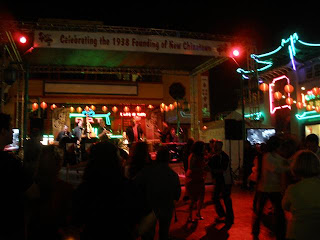
The new northern terminus of CicLAvia is no stranger to public events; it was made for them. In the Summer it hosted three very popular
Chinatown Summer Nights events. But don't let the "Old Chinatown" neon sign fool you -- This is actually Los Angeles' new Chinatown, which dates back to the 1930s. The real Old Chinatown was several blocks south, where a thriving community of Cantonese-speaking immigrants
lived near the river, north of Aliso Street. Of course, they were kicked out in the early '30s to make room for Union Station. So they moved a few blocks north, in the former Little Italy, and they've been there ever since. Well, not really, since some of them moved east to the San Gabriel Valley and were supplemented with Mandarin-speaking immigrants from Taiwan and Mainland China. But you get the idea.
NEW! Southern Leg (to Exposition Park):
27. Original Pantry Cafe
1950
877 S. Figueroa St, Downtown
Y'all know this establishment for its coffee, its cole slaw and its current owner, former mayor Richard Riordan. It was one of DTLA's first 24-hour restaurants when it opened in 1924 and hasn't closed since. But did you know it was originally located a block away? Its original location was 9th and Francisco streets, which had to be torn down to make room for a Harbor Freeway off-ramp in 1950. Today it remains a Downtown institution, popular for dining after nearby sporting events, clubbing or drunken bar-hopping.
28. Convention Center/Site of Georgia St. Streetcar Facility
1901
Georgia St and 11th St, Downtown
This site is home of today's
Convention Center and what may or may not be tomorrow's
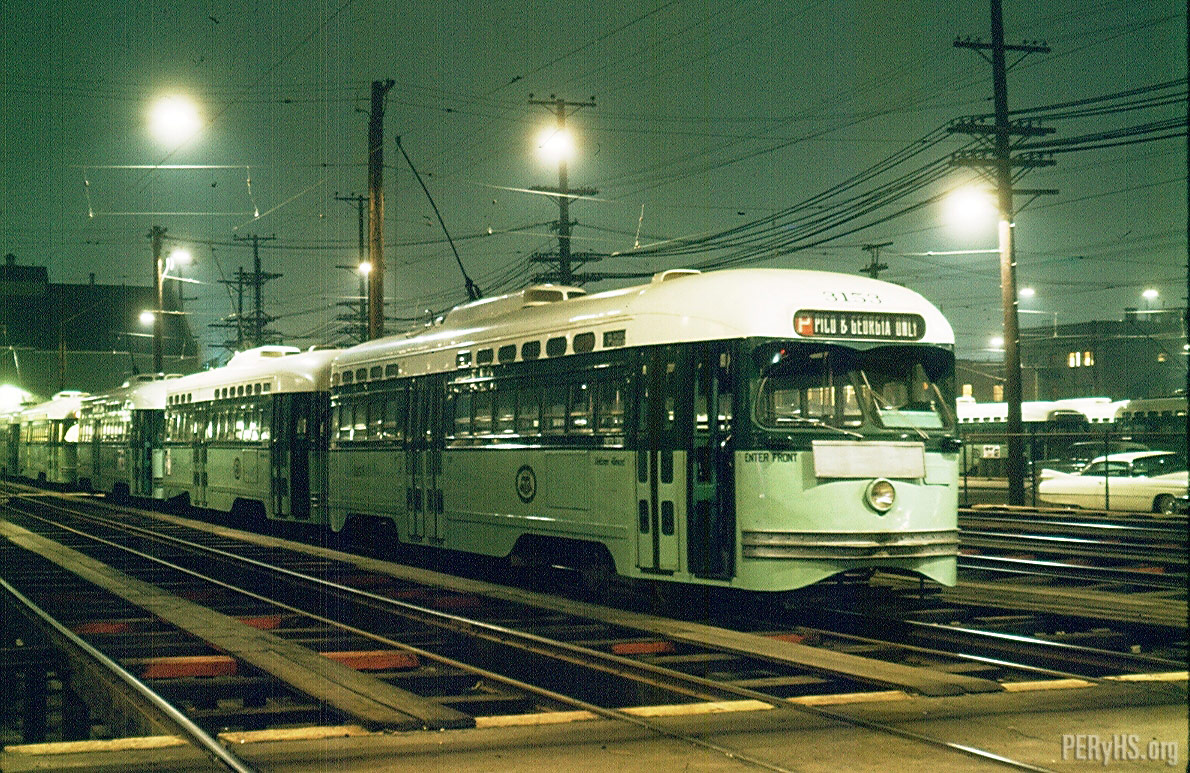
Farmers Field, but it was also the Georgia Street Shops - a major streetcar maintenance facility in yesterday's world serving trolleys for the old Los Angeles Railway (Yellow Cars). After the system ended in 1963, the large swath of land became a prime location for the city's Convention Center, once proposed to be located where Dodger Stadium now stands.
29. The Cathedrals at Figueroa & Adams
c. 1920s
Figueroa St and Adams Blvd, West Adams
At the intersection of Figueroa and Adams stands three cathedrals built in the 1920s - Two to Christendom and one to the automobile. On the northwest corner is the
Churrigueresque-style (Think Million Dollar Theater)
St. Vincent de Paul Catholic Church, built in 1923 and designed by local architect Albert C. Martin, Sr., who also designed today's Los Angeles City Hall. On the southeast corner is the Neo-Romanesque
St. John's Episcopal Cathedral (1925; designed by brothers Pierpont and Walter Davis) and on the southwest corner is the
Automobile Club of Southern California's Spanish Colonial Revival headquarters, built in 1922 and designed by Summer P. Hunt and Silas R. Burns, who also designed the Southwest Museum.
30. Felix Chevrolet
1957
3330 S. Figueroa St, University Park
This long-standing automobile dealership has stood at Figueroa and Jefferson since the late 1950s, Named after founder Winslow Felix, who originally established his dealership at 12th and Grand in 1921,
the famous cartoon cat became part of the branding image of the car lot thanks to Felix's friend, Pat Sullivan, the animator who created the animated feline.
31. USC Widney Alumni House
1880
Childs Way and Pardee Way, west of Figueroa St, University Park
The original building of one of Los Angeles' most prominent institutions of higher learning (one of the schools which The Militant may or may not have graduated from) stands just yards from the Expo Park/USC station at the relatively new entrance of the
University of Southern California, on Exposition Blvd and Pardee Way.
The Widney Alumni House is the oldest building on campus, built when the university was founded in 1880. Though it has moved a few times from its original location, it's considered a sacred historical artifact by the university.
32. Exposition Park
1872
Exposition Blvd, Figueroa St, Martin Luther King Jr Blvd and Vermont Ave, Exposition Park
Built in 1872 as "Agricultural Park" (when much of Los Angeles was farmland), it was given its present name a century ago. Not because it hosted a World's Fair/World Expo (it never did), but because it was part of the late 1800s-early1900s
"City Beautiful Movement" urban planning philosophy that created beautified streetscapes and monumental structures in cities across North America. The 160-acre park in its present form began with the establishment of the Museum of Science and Industry (now
California ScienCenter - soon to be the new home of the Space Shuttle Endeavour, arriving next weekend), the National Armory, the Natural History Museum and the
Rose Garden (at one time the largest rose garden in the world).
33. Los Angeles Memorial Coliseum
1923
3939 S. Figueroa St, Exposition Park
You already know this venue as Los Angeles' most revered and historic, yet most neglected, athletic stadia. It's the only building in the world to host The Olympics (
twice, in fact), the Super Bowl and The World Series. It's served as home base for the Rams, the Chargers, the Raiders, the Trojans, the Bruins, the Dodgers and even the now-defunct Aztecs and Xtreme. The Lakers, Kings and Clippers also played on the Coliseum grounds. The Militant was personally there to see
the world's largest-attended baseball game evar and the
Lakers' 2009 championship celebration. This is the home of Los Angeles sports, baby.
It's also hosted everything from
religious ceremonies to
porno videos, from motocross to concerts (This was where, in 1981, the opening act for The Rolling Stones was boo'ed offstage by the crowd...
it was some dude named Prince).
That said, it's in desperate need of new seats.
But from now on, you have absolutely no need to park at or near the Coliseum for any of its events!
34. Historic Southern Pacific Palm Tree
Re-planted 1914
3939 S. Figueroa St, Exposition Park
A palm tree. So what. We got a lot of 'em round here.
Well, this one is different. Back in the late 1800s-early 1900s, the Southern Pacific Railroad operate out of a train station called the Arcade Station, on 5th and Alameda streets. A lone palm tree stood outside the station and functioned as a landmark for arriving passengers coming in from San Francisco or points east. In 1914 the Arcade Station was demolished (no, it wasn't consumed by a fire) to make way for a more modern station, called Central Station, and the palm tree had to go. So sentimental was the palm tree, instead of being cut down, it was moved to Exposition Park, where it has stood ever since. Like its soon-to be neighbor the Space Shuttle Endeavour, it was a popular icon back in its day, and it's probably safe to assume that its transport through town was an event in itself. A little-known historic market at the base of the tree tells the whole story.
Here's' a picture of the tree in its younger days, in front of the old Arcade Station.
Enjoy CicLAvia and Stay Militant!